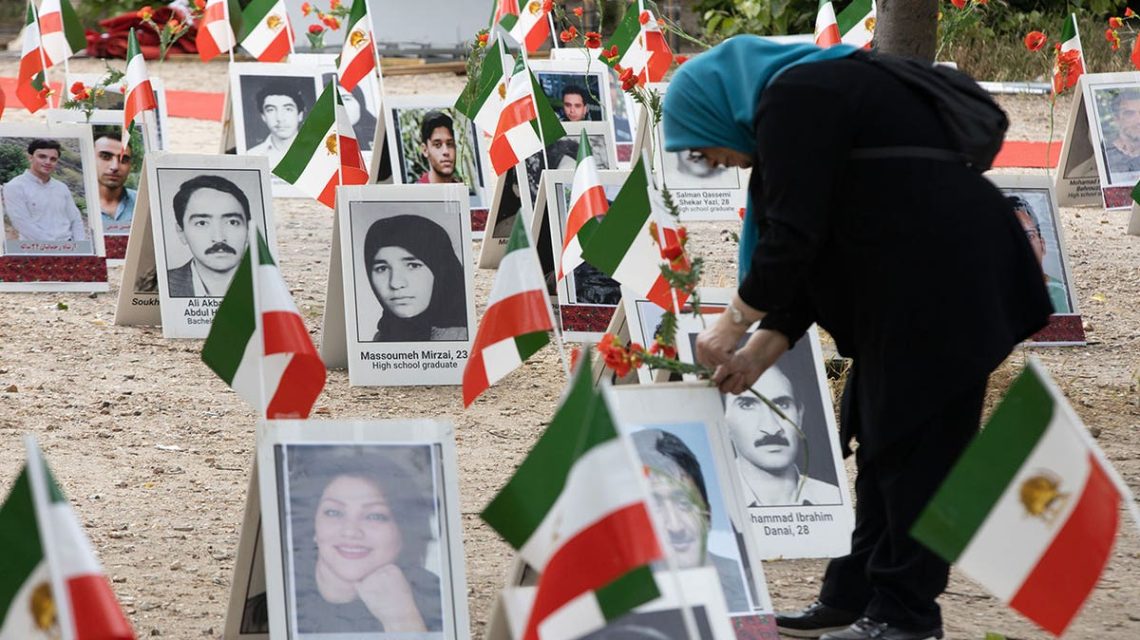
The Islamic Republic of Iran is intensifying executions of dissidents and activists. Government restrictions on internet access obscure the true scale of these actions. Since the January uprisings, Tehran has increased its repression of opponents.
The Iran Human Rights Society recorded 784 executions in 2026. A spokesperson indicated these numbers reflect a significant rise in executions since March. They noted the number of political prisoner executions is unprecedented in the past 37 years.

A U.S. State Department official expressed alarm over the increase in executions in Iran. Condemning these actions, they stressed that Iranians suffer torture and unfair trials leading to executions. Often, convictions rely solely on forced confessions.
The National Council of Resistance of Iran (NCRI) reported that Iran executed at least 18 prisoners between May 31 and June 1. The executions involved 12 on May 31 and six more on June 1, including a public hanging.
The NCRI counted 32 executions between March 19 and June 1. This includes members of the People’s Mojahedin Organization of Iran (PMOI/MEK) and others from the January protests.
Documents from the NCRI on June 7 indicated a looming threat of execution for five political prisoners in Ahvaz’s Sheiban Prison. Four of these individuals face death for their alleged membership in PMOI/MEK.
Maryam Rajavi, the NCRI’s President-elect, called on the U.N. for urgent intervention to stop these executions. Previously, she urged the U.N. Security Council and the European Union to condemn and act against Iran’s execution of political prisoners.
The Iran Human Rights Society supports the NCRI’s data on executions. They gather information from sources like prisoners’ families, lawyers, and local contacts. Although internet restrictions hinder data collection, they persist in documenting the executions.
Alp Toker of NetBlocks noted that Iran’s internet connectivity remains limited, affecting users’ access to international sites. Authorities often throttle internet speed and filter messaging apps.
While official figures are concerning, the real number of executions is likely higher. Authorities often conduct executions secretly, especially in remote areas. These acts often go unreported for some time.
On June 20, up to 100,000 Iranian expatriates are expected to gather in Paris to call for an end to these executions. The rally will include lawmakers, officials, and former state leaders, as noted by the NCRI.
Beth Bailey reports on regions including Afghanistan, the Middle East, and Central America. She previously served as a civilian intelligence analyst for the U.S. Army. Follow Beth on X @BWBailey85.
 United States Secures Arctic Defense Pact
  Trump’s Engagements at the UN: Focus on Ukraine and White House Developments
  Trump Administration to Admit 17,500 Afrikaner Refugees from South Africa
  Trump’s Vision for Global Security: Iran, AI, and the Role of the U.S.
  Concerns Raised Over Canadian Assisted-Dying Program
  Lithuanian President Urges U.S. to Maintain Military Presence Amid NATO Challenges