The World Health Organization has declared the Ebola outbreak in Congo and Uganda a public health emergency of international concern. More than 250 suspected cases and 80 suspected deaths have been identified. Officials caution that the real spread of the outbreak could be even larger, as efforts to screen and trace contacts intensify.
Although the outbreak does not meet the criteria for a pandemic emergency like COVID-19, the WHO advises against closing international borders. Reports indicate eight laboratory-confirmed cases, 246 suspected cases, and 80 suspected deaths in Congo’s Ituri province, the epicenter of the outbreak. In Uganda’s capital, Kampala, two more laboratory-confirmed cases, including one death, were reported; these cases involve people who traveled from Congo, though no direct connection between them is identified by the WHO.
The Africa CDC noted 246 suspected cases and 65 deaths in Congo. However, regional health authorities have stated they believe there could be over 300 probable cases altogether. It’s significant to note that at least six Americans encountered Ebola in the Democratic Republic of Congo, but it’s unclear if they were infected, according to sources from international aid organizations.
The outbreak was announced last Friday. Residents of Bunia, the capital of Ituri, are expressing fear amid frequent burials. Jean Marc Asimwe, a local, expressed concern, saying, “Every day, people are dying.” The Congolese Health Minister, Samuel-Roger Kamba, confirmed eight laboratory cases and four deaths. This outbreak involves the Bundibugyo virus, an Ebola variant.
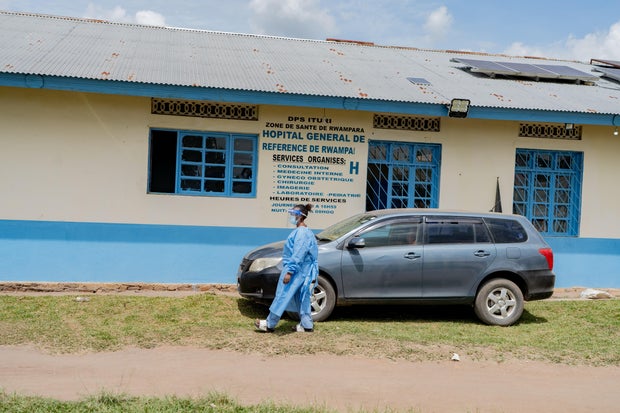
A health worker in protective gear walks outside a hospital in Bunia, Congo, emphasizing the seriousness of the outbreak.
Ebola is highly contagious, transmitting through bodily fluids like vomit, blood, or semen. Though rare, Ebola often proves fatal. The Bundibugyo virus has been responsible for two previous Ebola outbreaks in Uganda and Congo. CBS News medical correspondent Dr. Céline Gounder highlights the lack of approved vaccines or treatments for this strain, expressing concern about containment challenges.
The first known case in this outbreak was a nurse who died in a Bunia hospital on April 24. Although test results were not confirmed, symptoms suggested Ebola was the cause.
**Outbreak Expands to Uganda**
Uganda confirmed an Ebola case deemed imported from Congo, resulting in death at the Kibuli Muslim Hospital in Kampala. The Africa CDC raised concerns about the proximity of affected regions to Uganda and South Sudan. Medical aid organization Doctors Without Borders is preparing a large-scale response due to the rapid spread.
Uganda’s health ministry reported that the body was returned to Congo, and no new local cases have been confirmed. Safety measures are in place, as residents express concerns reminiscent of past pandemics.
Kenya announced a moderate risk of Ebola importation, forming a preparedness team and enhancing surveillance efforts.
**Logistical Challenges**
Congo’s size and ongoing conflicts complicate outbreak management. Ituri is about 620 miles from Kinshasa, with militant activity complicating logistics. WHO’s Dr. Abdi Rahman Mahamud emphasizes the challenges in this volatile region.
Three health zones in Ituri are affected. Out of 13 blood samples tested, eight confirmed the Bundibugyo strain. Meanwhile, Ituri residents continue their normal activities, despite concerns.
Resident Adeline Awekonimungu hopes officials take swift action to control the outbreak.
**Ebola Risk to Americans Low**
The U.S. CDC describes the risk of Ebola to Americans as low. The agency coordinates with global health officials to manage the outbreak and prevent further spread. CDC response manager Dr. Satish Pillai highlighted efforts to deploy additional CDC workers.
The CDC issued travel advisories to Americans in the region and monitors symptoms at entry points. Former Ebola patient and expert Dr. Craig Spencer expressed concern about the capacity of the U.S. to quickly respond to such outbreaks, though he acknowledges some existing capacities.
Despite challenges, Spencer notes the U.S. is well-prepared for managing high-risk pathogens like Ebola, referencing the handling of a hantavirus case. The commitment stems from lessons learned from past outbreaks.
 Trump’s Engagements at the UN: Focus on Ukraine and White House Developments
  Trump Administration to Admit 17,500 Afrikaner Refugees from South Africa
  Trump’s Vision for Global Security: Iran, AI, and the Role of the U.S.
  Lawsuits Claim Vision Loss Risk from GLP-1 Medications
  Concerns Raised Over Canadian Assisted-Dying Program
  States Tighten Regulations on Tianeptine, Known as ‘Gas Station Heroin’