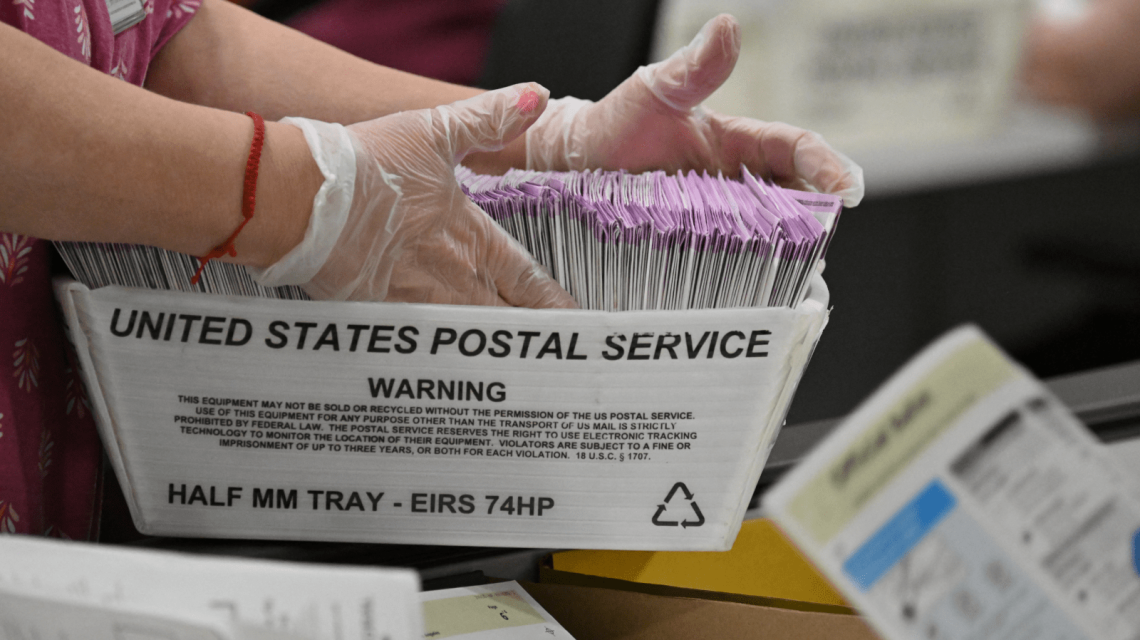
States and USPS Clash Over Mail Voting Rules
Some states predominantly using mail for elections are now at the forefront of a debate concerning new USPS rules. These rules are linked to a 2026 executive order by President Donald Trump on election processes. The order demands states send comprehensive lists of mail voters to ensure ballot delivery. States not complying may see ballot deliveries stopped.
With over 48 million Americans voting by mail in 2024, this change could severely affect states where mail is the main voting method. Twenty-three Democratic-led states and Washington, D.C., are challenging these rules, with a federal court ruling anticipated this summer.
Key Provisions and Their Implications
The executive order titled “Ensuring Citizenship Verification and Integrity in Federal Elections” urges the Department of Homeland Security to create voter lists. The USPS must enforce that ballots only go to individuals on certified lists, and all mail ballots must feature unique barcodes for tracking. This shift in USPS role from mail handler to active participant in election oversight has met with legal challenges.
The American Civil Liberties Union (ACLU) describes this as a radical move, potentially making USPS an “arbiter” in voting processes, which contradicts the constitutional allocation of election management to states and Congress.
USPS’s Proposed Role Transformation
USPS’s proposed regulations demand states submit voter-specific data including ballot barcodes. Non-compliance could result in mail rejection or return, a significant change from its historical logistics role. In 2024, USPS efficiently delivered over 99.22 million ballots, demonstrating reliability. However, the new rules would shift responsibilities, adding voter verification tasks.
Anton Hajjar, a former USPS executive, argues this rule indirectly regulates elections, though postal unions have raised concerns about compliance with new mandates.
Impact on States Relying on Mail Voting
The effect will be significant in states where mail voting forms the core electoral process. California, Oregon, Washington, and Colorado, where ballots are routinely mailed to registered voters, would find mail network interruptions detrimental. These states view the USPS as essential to elections, similar to polling facilities elsewhere.
Data suggests eight states, along with Washington, D.C., employ mail-heavy voting, and disruptions could undermine voter participation.
Battleground States and Potential Disruptions
States like Arizona, Nevada, and Michigan, where mail voting is popular but not exclusive, could see complex consequences from regulation disputes. These states often experience tight election races, suggesting any mail voting complications might sway results.
The readiness to comply varies; larger jurisdictions might handle new protocols easily, whereas smaller areas face challenges in adjusting to new mandates.
Data and Legal Battles
The central issue isn’t strict mail protocol but data transmission requirements. Federal demands for voter data, coupled with court rulings against data sharing, emphasize underlying disputes. Amanda Gonzalez of Colorado expressed concern over indirect attempts to access state-held voter information.
Constitutionally, the responsibility to set election procedures lies with states, not the executive branch, underscoring current legal arguments. The controversy over data demands adds another layer of complexity to the court challenge.
Execution Feasibility of USPS Plans
Even if court-approved, executing these new rules remains questionable. USPS plans hinge on a not-yet-existing digital platform to manage lists and track ballots. Concerns grow about USPS capacity given its existing responsibilities.
Mailing ballots on time has been a USPS strength, with ballots reaching voters swiftly in previous elections. However, significantly expanding its remit raises operational challenges.
Future Developments
The upcoming ruling from the D.C. Circuit Court of Appeals will be pivotal. Beyond legal decisions, USPS’s platform development, citizen list release, and state cooperation will shape the eventual outcome.
The USPS rule issue holds long-term consequences. Mail voting, a widespread practice, relies heavily on federal mail infrastructure. With potential changes in gatekeeping, the landscape of U.S. elections, particularly in the context of mail voting, could transform.
 Rahm Emanuel Discusses Potential 2028 Presidential Bid and Faith
  JD Vance’s RNC Speech Fuels 2028 Presidential Speculation
  Hayley Williams Criticizes ICE Amid Rising Attacks on Federal Officers
  Efforts to Combat Obamacare Fraud Intensify
  Jay Clayton Appointed as White House AI Czar
  Candidates Discuss NIPSCO Oversight, Data Centers, and Affordable Housing