
The Tenth Amendment of the U.S. Constitution, composed of 28 words, captures the essence of American federalism: The powers not delegated to the United States by the Constitution, nor prohibited by it to the States, are reserved to the States respectively, or to the people.
For about sixty years after the New Deal, this amendment was largely ignored by the courts, treated more as a philosophical nod than a functional rule. While there have been some changes over the past thirty years, the damage from the era dominated by the Commerce Clause remains largely unrepaired.
James Madison explained it clearly in The Federalist No. 45: The powers delegated by the proposed Constitution to the federal government are few and defined. Those which are to remain in the State governments are numerous and indefinite.
The Founding Fathers intentionally crafted a government with enumerated powers to prevent authority from being determined by ambition. The Tenth Amendment was meant to affirm that federal authority is limited to what the Constitution explicitly provides.
The New Deal brought significant changes. For instance, in the 1942 case of Wickard v. Filburn, the Supreme Court supported federal regulation over wheat a farmer grew for personal use. The justification was its overall economic impact on interstate commerce, bringing it under Congress’s influence. This broadened interpretation of interstate commerce sidestepped the Tenth Amendment, transforming congressional powers from limited to expansive.
In subsequent decades, the courts started to push back. The U.S. v. Lopez decision in 1995 was pivotal, as it was the first time in decades that a limit was set on the Commerce Clause. Chief Justice Rehnquist’s 5-4 ruling determined that the Gun-Free School Zones Act exceeded Congress’s authority because carrying a firearm near a school wasn’t an economic activity with a significant impact on interstate commerce. This rationale extended to cases like U.S. v. Morrison in 2000 and NFIB v. Sebelius in 2012, where similar limits were applied.
Further developments came with West Virginia v. EPA in 2022, establishing the major questions doctrine requiring Congress to clearly delegate significant regulatory power. In Loper Bright Enterprises v. Raimondo (2024), the court overturned the Chevron deference, which had previously required courts to accept agency interpretations of ambiguous laws. This shift allows courts to independently judge agency authority.
Despite these decisions indicating progress, they do not fully counteract decades of power expansion. A noteworthy doctrine, anti-commandeering, comes into focus with Printz v. United States (1997), where Justice Scalia ruled that federal authority cannot conscript state officers to implement federal initiatives.
The ruling in Murphy v. NCAA (2018) extended this to legislative commandeering, establishing that Congress can’t command state legislatures on what they should legislate. The application of this is notable in sanctuary city policies, where the federal government cannot mandate local enforcement of immigration laws, as clarified in the Printz and Murphy cases.
However, the anti-commandeering doctrine is often misunderstood. While it shields states from being used as tools by federal powers without agreement, it does not exempt state officials from accountability to their constituents. An official refusing an immigration enforcement request makes a policy decision and should be accountable to the voters for its outcomes.
Observations in California over three decades show aggressive regulation in areas neglected by federal standards, along with claims of state autonomy wherever federal demands are challenging, particularly in matters of immigration, environmental policy, and public pension management.
The Tenth Amendment’s protection of state power isn’t inherently conservative. States can misuse autonomy as much as the federal government can misuse its granted authority. The original intention was to ensure that government authority was closer to the people, making decision-makers more accountable. When the federal government overrides local policies, it erodes the accountability structure designed to let voters correct poor decisions without resorting to federal litigation.
Madison’s succinct framing was meant to guard against unchecked federal expansion. Historically, Congress and agencies expanded authority because it served legislators and agency goals. The partial reversal of recent years is a step forward, but the overall landscape remains largely unchanged.
Authored by Jay Rogers, a financial professional with over 30 years of experience in the fields of private equity, private credit, hedge funds, and wealth management.
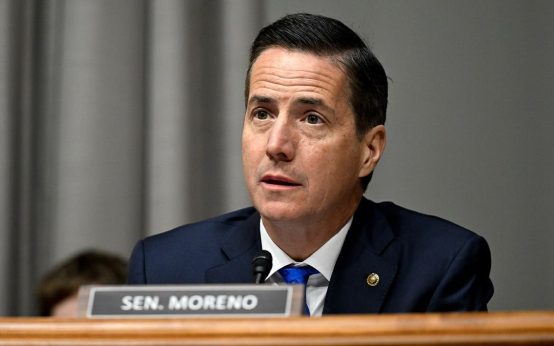 Senator Criticizes Drug Policy After Ohio Tragedy
  Israeli Leader’s Upcoming U.N. Assembly Speech Marked by Controversy
  Republicans Call for Quick Resolution to Iran Conflict
  United States Secures Arctic Defense Pact
  Senator Warren Seeks to Restrict Private Equity in Restaurant Chains
 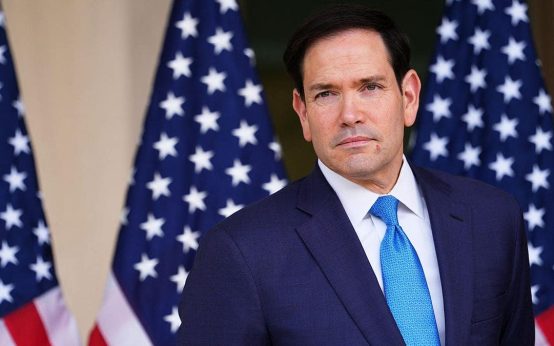 Marco Rubio’s Expanding Role in Trump Administration