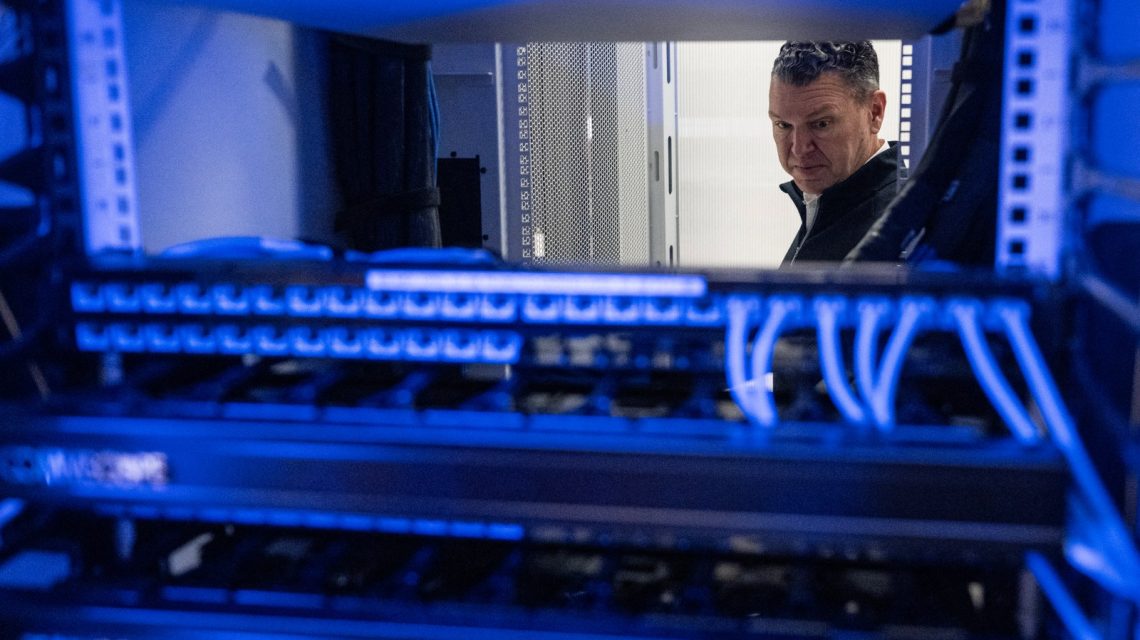
The Trump administration is considering a ban on a Chinese-made component used in data centers. This move arises from concerns about potential risks to America’s AI infrastructure due to reliance on Chinese products. Plans are underway to prohibit Chinese imports of optical transceivers by the end of 2026, according to sources cited by Reuters. However, the Federal Communications Commission might still alter these plans.
This development forms part of the broader U.S.-China competition concerning AI, covering not only technology but also the infrastructure supporting it. The U.S. has already imposed stringent export controls on advanced AI chips to China, aiming to hinder technological advancements that might benefit the Chinese military.
Simultaneously, U.S. intelligence has reported instances of Chinese state-backed hackers infiltrating crucial American infrastructure. Such breaches highlight vulnerabilities that could be exploited during future crises. Adam Segal, from the Council on Foreign Relations, emphasized concerns regarding data collection, disruption, and dependence on Chinese suppliers.
Understanding Optical Transceivers
Optical transceivers are vital to modern communications systems, including Ethernet and long-distance telecommunications. They convert electrical signals into light pulses to transmit data through fiber-optic cables. Their role is crucial in AI data centers, forming high-speed connections between AI chips to process extensive data sets.
Reasons Behind the Proposed Ban
Beyond cybersecurity concerns, U.S. officials fear that dependence on Chinese suppliers for key components like optical transceivers may leave the country vulnerable. Dmitri Alperovitch from Silverado Policy Accelerator noted that banning these imports could help secure the AI supply chain and lessen dependencies on China.
China, possessing dominance over rare earth minerals, has previously utilized its position during trade tensions with the U.S. and has recently directed export curbs at Japan. Such actions point to possible future supply disruptions if China decides to exploit its control over certain products.
Despite the strategic advantages of the proposed ban, analysts caution about potential drawbacks. Adam Segal warned that it might increase costs and uncertainty for companies with large cloud infrastructures, negatively affecting AI development in the short term.
China’s response to U.S. technology export restrictions has been critical. They view these measures as distortive and damaging to global supply chains. Liu Chang, from the Chinese embassy in Washington, called for the revocation of these restrictions, labeling them as market-distorting acts of bullying.
 Data Centers Stir Controversy in Texas Amid Growth Boom
 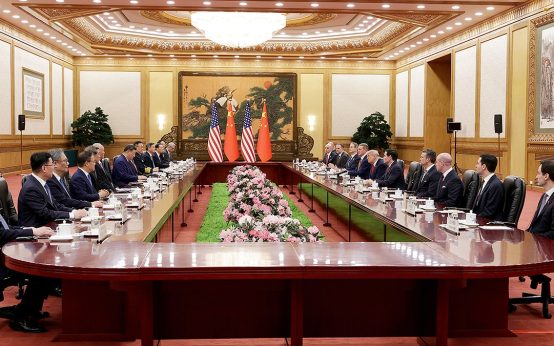 The Technology Rivalry: Trump’s Meeting with Xi and the AI Ecosystem Clash
  Ways to Protect Your Finances from Cyber Threats
  Interview with Nvidia CEO Jensen Huang: AI Outlook and Business Strategy
  Concerns Rise Over Addictive Design of Sports Betting Apps
  Seton Hall National Security Graduate Fellowship Provides Hands-On Experience