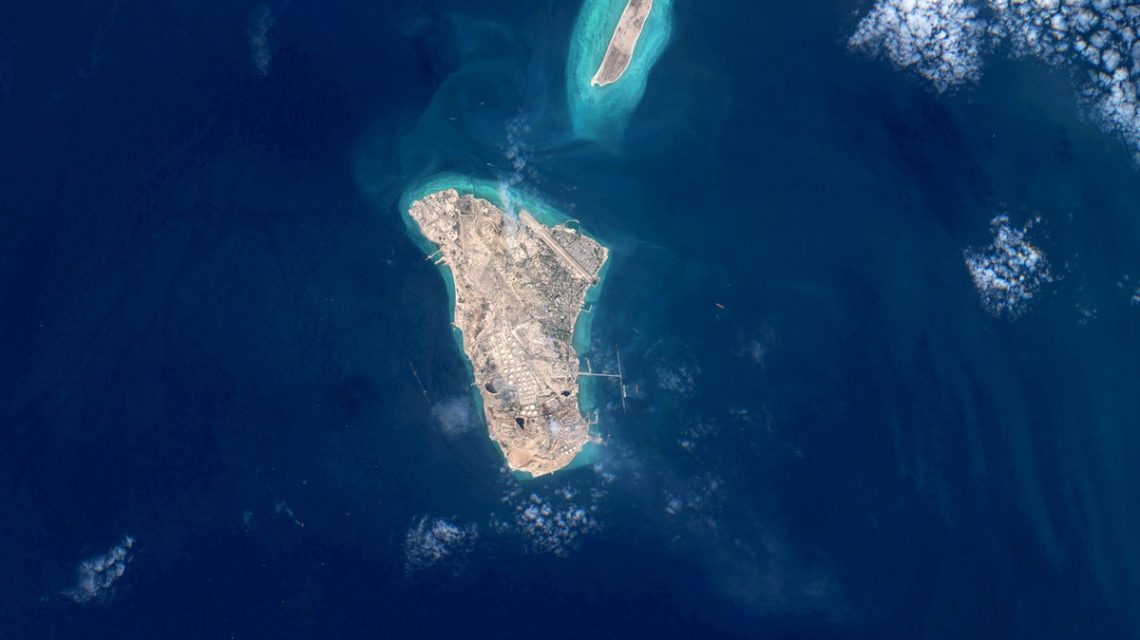
U.S. military experts have envisioned a scenario for a potential operation on Iran’s Kharg Island. This island is vital as it handles about 90% of Iran’s crude oil exports. Experts speculate that a possible U.S. operation would involve Marines storming the island while naval and air forces establish control. A warning would be issued to Iranian forces to surrender to avoid an escalation.
During an interview, former U.S. Central Command Deputy Commander, Vice Adm. (Ret.) Robert Harward, discussed the plan’s focus. He mentioned using a Marine Expeditionary Unit for an amphibious assault, supported by naval and air forces. The objective would not only be to capture the island but also to preserve the oil infrastructure, which could be significant for a post-Islamic Republic government in Iran.
U.S. forces have previously avoided targeting oil facilities on Kharg Island due to its global economic impact. However, holding the island against retaliation from the Iranian mainland is a concern. Kharg Island’s location is within reach of Iranian missiles, drones, and anti-ship weapons, raising the possibility of significant conflict.
Strategically, Kharg Island has historical importance. The British occupied it twice in the past for strategic confrontations with Persia, and Iran later turned it into a major oil terminal. Today, Iran’s anti-access strategies, including missiles and drones, aim to deter U.S. forces.
Military planners recognize the challenges of maintaining control of Kharg. The primary threat would be missile and drone attacks. Successful operation would rely on intelligence about Iranian defenses and preparations.
Alternative strategies exist, focusing on intensifying economic pressure without committing ground troops. These might include targeting Iran’s overland routes and air traffic. Harward suggests that the strategy involves synchronizing military, economic, and political pressures against Tehran.
Some strategists question Kharg as the most strategic target. Greater Tunb, Lesser Tunb, and Abu Musa near the Strait of Hormuz may present better strategic opportunities.
Harward concludes that for long-term regional stability, it’s crucial for a future Iranian government to renounce its current policies and focus on the Iranian people, dropping nuclear ambitions and proxy support. Whether or not the U.S. decides to seize Kharg Island, the broader implications and potential for regional escalation remain substantial.
 Tensions Escalate in Iran Conflict as Global Leaders Weigh Options
  White House Approves F-35 Sales to Saudi Arabia Amidst Regional Tensions
  Inside the Secret Deals Powering the President’s Push to Deport Migrants to Countries Not Their Own
  Navigating the Challenges of Third-Country Deportations
  Midair Altercation on Bangladesh to London Flight
  Ukraine Missile and Drone Barrage Hits Russia Amidst Elections