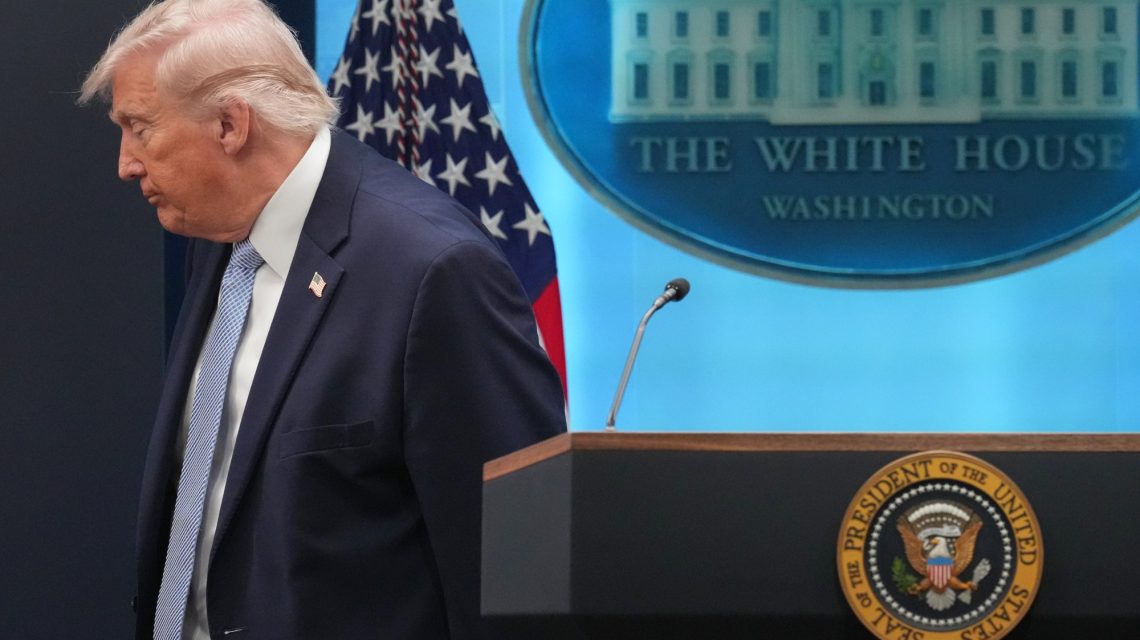
President Donald Trump departed a news conference at the White House on April 6, 2026, following discussions with reporters. The focus was on Iran’s quick violations of the U.S.-negotiated ceasefire. Trump’s agreement with Iran is perceived as damaging to U.S. and Western interests compared to President Obama’s Joint Comprehensive Plan of Action (JCPOA). Trump criticized the JCPOA for failing to curb Iran’s nuclear program and for providing a significant financial sum of $300 billion to Iran.
The new deal favors Iran and its anti-Western allies. Despite this, the four-month conflict temporarily hindered Iran’s nuclear weapons program, naval and air force capabilities, and air defense and missile programs. However, Trump agreed to pay billions to Iran through the Gulf States and private investors, described by Iran as ‘reparations’ for damage from U.S. bombing. There is no compensation for U.S. losses or American lives lost due to Iran’s actions.
Israel also suffered losses due to Iran’s aggression without compensation. The profits Iran earned from illegally selling oil through Hormuz remain unaccounted for. The situation is expected to weaken U.S. credibility in future confrontations with adversaries like China, Russia, and North Korea. Critics point to Trump’s willingness to exercise military power only with strong allies or in quick actions, such as the killings of Qasem Soleimani and Abu Bakr al-Baghdadi or action in Venezuela.
Trump’s initiative, while effective in some military actions, shows a tendency to abandon objectives, as seen in Ukraine, Venezuela, and Iran. This raises concerns about future conflicts, particularly with China over Taiwan, where strategic patience could test U.S. resolve.
The conflict highlights a strategic vulnerability in Western economic dependencies on vital maritime straits like the Taiwan Strait, similar to Hormuz’s role in oil shipping. High-tech weapons cannot eliminate threats in these narrow waterways, suggesting the need for protective measures against asymmetric threats.
The Panama and Suez Canals face risks of sabotage and blockages, requiring deterrence and defense strategies alongside a U.S. commitment to defend critical interests. Trump must use diplomatic skills to engage allies in proactive defense planning, with NATO Secretary-General Mark Rutte expressing admiration for Trump’s leadership.
The Trump administration is urged to pursue regime change in Iran to eliminate a hostile threat, with experts like Joseph Bosco, former director for China and humanitarian efforts in Asia-Pacific regions, supporting this move. Bosco is affiliated with various advisory bodies, including the Institute for Corean-American Studies and the Global Taiwan Institute.
© 2026 Nexstar Media Inc. All rights reserved.
 Allan Lichtman’s Framework for Assessing Presidential Greatness
  Tensions Escalate in Iran Conflict as Global Leaders Weigh Options
  Florida Senate Race Tightens as Recent Polls Show Dead Heat
  Ethics Complaint Targets Colorado Representative Lauren Boebert
  White House Approves F-35 Sales to Saudi Arabia Amidst Regional Tensions
  Ken Paxton’s Campaign Funding and Polls