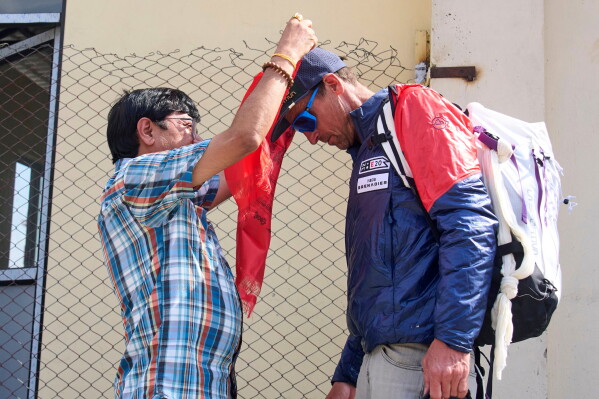
President Donald Trump of the United States announced significant progress toward an agreement with Iran concerning the Middle East conflict. The agreement, negotiated largely over the weekend, comes after consultations with Israel and regional allies.
While enthusiasm was evident in Trump’s announcements, other officials advised caution. Secretary of State Marco Rubio remarked on the substantial progress achieved but noted that the deal had not reached fruition. Rubio, on a diplomatic tour through India, expressed hope for a positive outcome soon.
Rubio highlighted one of Trump’s major goals: eliminating the fear of a nuclear Iran. Over the weekend, Trump engaged in discussions with leaders from Saudi Arabia, UAE, Qatar, Pakistan, Turkey, Egypt, Jordan, Bahrain, and notably Israel. Details regarding the final agreement are anticipated shortly.
Throughout the past week, the U.S. considered renewed strikes against Iran, which could have disrupted a fragile ceasefire.
Emerging Details of the Agreement
The potential agreement mandates that Iran abandon its pursuit of nuclear weapons. Teheran agreed to relinquish its enriched uranium stockpile according to two regional sources with direct negotiation knowledge. Discussions on this point will continue for sixty days.
It is expected that part of Iran’s 440.9 kilograms of uranium enriched to 60% purity will be diluted, while the remainder might be transferred to another country, possibly Russia. The Strait of Hormuz will gradually reopen as the United States lifts its blockade of Iranian ports.
The U.S. will also allow Iranian oil sales under sanction exemptions. This and the release of frozen Iranian funds will form part of negotiations over the sixty-day period.
The draft agreement reportedly includes ending hostilities between Israel and Hezbollah and a commitment from regional actors to respect national sovereignty.
Tensions with Hezbollah
Concerns exist in Israel over Hezbollah, a Lebanese group allied with Iran, and its potential threat. Prime Minister Benjamin Netanyahu warned Trump of Israel’s stance, emphasizing freedom of action against threats, including Hezbollah.
Netanyahu communicated to Trump the necessity for Iran to dismantle its nuclear program completely and remove all enriched uranium before any agreement is finalized.
Gila Gamliel, Israeli Minister of Science and Technology, indicated on Israel Army Radio a cautious approach, opting to watch developments unfold.
The Lebanon-Israel conflict, despite a U.S.-mediated ceasefire, continues with ongoing skirmishes. More than 3,000 casualties have been reported according to Lebanese health officials, alongside Israeli military and civilian deaths due to Hezbollah’s attacks.
The situation in the region remains tense as diplomatic efforts progress toward a resolution.
Reporting contributed by journalists in Tel Aviv, New Delhi, and Islamabad.
 Storm Updates and Impact Reports in the Southeast
  Pope Leo XIV Labels Death Penalty an Assault on Human Dignity
 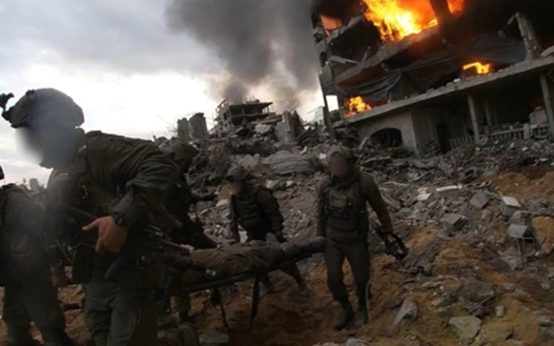 Advancements in Israeli Military Medicine Aid U.S. Efforts
 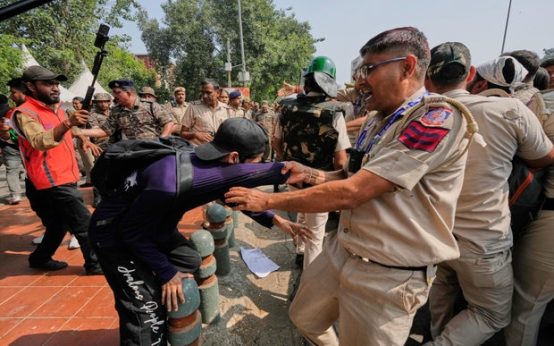 Mass Arrests in New Delhi During Protest Against Voter List Revision
  Concerns Over Russia’s Biological Weapons Programs
  Russian Strikes Result in Casualties Amid Diesel Deal Controversy