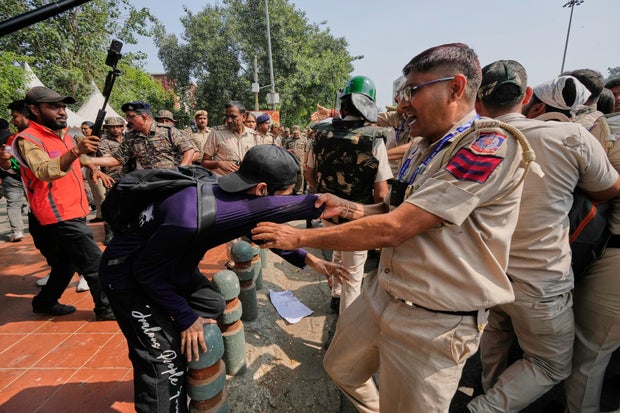
Indian authorities launched a significant security operation across New Delhi on Saturday, detaining thousands of protesters. The action targeted members of the youth-led “Cockroach” movement, who aimed to escalate their campaign against a controversial voter list revision. This change has sparked widespread anger towards Prime Minister Narendra Modi’s government and election officials.
Police disrupted the demonstration before it began, intercepting participants on their way to Jantar Mantar, the designated protest site in the city center. Officers chased off some protesters and detained others, dragging them into police vehicles bound for temporary detention centers. Key leaders of the movement, along with opposition politicians and student activists, were detained before reaching the protest, effectively stifling the gathering before it could start.
Police detain protesters during a demonstration demanding the resignation of Chief Election Commissioner Gyanesh Kumar. – Manish Swarup via AP
The crackdown extended beyond the protest site. Authorities set up checkpoints on routes into the capital, stopping and searching buses, cars, and other vehicles for demonstrators. Jantar Mantar was barricaded, and anti-riot vehicles equipped with tear gas lined important routes. Mobile internet restrictions and limited access to parts of the city further challenged participants.
Police claimed the protest was denied permission due to a late submission request. Sambit Patra, a spokesperson for Modi’s party, dismissed the protesters as “anarchic elements” and declared their effort a failure.
Large-Scale Crackdown
The extent of the security measures highlighted the authorities’ determination to disrupt the protest that engaged thousands of young people, gained opposition backing, and increased scrutiny of Modi. The protest follows an episode where the same youth movement led demonstrations that led to the education minister’s resignation in July due to exam paper leaks.
Leadership figures Abhijeet Dipke, Saurav Das, and Ashutosh Ranka were detained upon arrival in Delhi from Mumbai. Their arrest was part of a planned action to incapacitate today’s protest leadership, according to a statement from the movement.
Loudspeakers at the protest site announced a ban on gatherings of more than five people in parts of New Delhi. This information reflects an atypical level of security restrictions in the capital. Journalists faced limitations, with some experiencing brief detainment.
Detained youth protesters shout slogans as police drive them away in a van from a demonstration. – Manish Swarup via AP
Some participants managed to break through police barriers, chanting slogans against Modi and election officials before being captured. Tanya Negi, a college student from Mumbai, questioned why peaceful protests are suppressed and why the government is wary of young voices.
The police response showed an extraordinary use of force in a capital where Modi’s government often restricts public dissent. This pattern raises concerns about the space for protest in India, the world’s largest democracy.
Opposition Leaders Criticize Government
Opposition leaders criticized the government’s actions, accusing it of stifling dissent. “Is there a democracy in this country?” asked opposition lawmaker John Brittas, who was later detained. The protests focus on the Election Commission’s Special Intensive Revision, which the opposition argues disenfranchises millions by removing over 130 million names from voter lists.
The Election Commission and government refute allegations of voter manipulation, stating the revision aims to remove duplicate and ineligible entries. For the “Cockroach” movement, this dispute presents an opportunity to extend their campaign.
Originally gaining attention online in May, the movement advanced through demonstrations and hunger strikes concerning exam paper leaks, culminating in a political setback for Modi when the education minister resigned. These protests challenge Modi in the middle of his third term, though the political impact remains unclear. While national elections are slated for 2029, upcoming state elections will test BJP’s standing, especially in Uttar Pradesh and Gujarat.
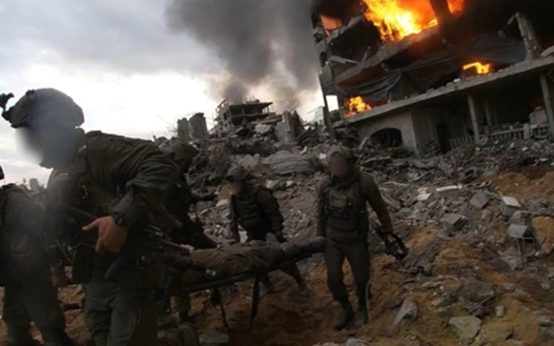 Advancements in Israeli Military Medicine Aid U.S. Efforts
  Concerns Over Russia’s Biological Weapons Programs
 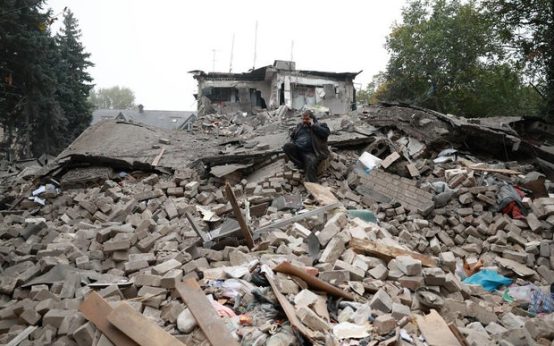 Russian Strikes Result in Casualties Amid Diesel Deal Controversy
  Cartel Dynamics Shift Amid Changing Political Landscape
  Investigating France’s Student Protests: A Web of Far-Left and Socialist Influences
  Recovery of Stolen Renoir Paintings