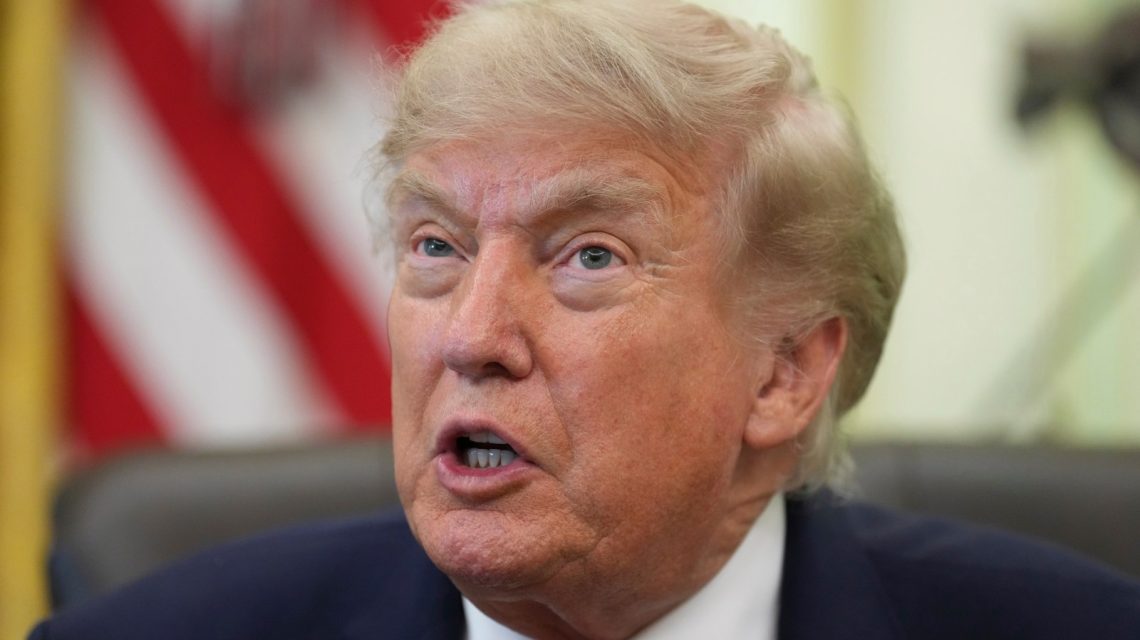
President Donald Trump has called Congress’ bipartisan housing package “a big yawn,” even as the voting legislation he wanted in return for signing it seems unlikely to pass the Senate. This situation leaves the 21st Century ROAD to Housing Act’s future uncertain at a time when housing affordability is one of Americans’ top financial issues.
On June 29, in the Oval Office, Trump said he hadn’t decided whether to sign the bill, stating, “I don’t know. I think it’s so unimportant compared to the SAVE America Act.” He noted the legislation’s strong bipartisan support but implied it includes parts he might not agree with, emphasizing that interest rates, rather than regulations, impact housing supply. He expressed concern that increasing market supply might decrease existing home values.
The bill follows months of negotiation by Senate Banking Committee Chairman Tim Scott and Ranking Member Elizabeth Warren, combining the Senate’s ROAD to Housing Act with the House’s 21st Century Housing Act into a bipartisan compromise. It incorporates Republican goals of reducing housing construction barriers with Democratic demands for consumer protections and affordability.
The legislative package passed with substantial bipartisan support, reflecting a rare consensus on the need for federal action to enhance housing supply and affordability.
Democrats Reject Trump’s Approach
Democratic leaders criticize Trump for linking the housing package to the unrelated SAVE America Act, arguing the legislation tackles a significant economic challenge that demands immediate action. House Minority Whip Katherine Clark and Representative Pramila Jayapal emphasized the urgency of addressing the housing affordability crisis, urging Trump to pass the bill without delay.
The ROAD to Housing Act combines bipartisan proposals to expand housing and improve affordability. Key components include streamlining environmental reviews, modernizing mobile housing regulations, enhancing workforce development in construction, and limiting large institutional investors by applying certain provisions only to firms owning fewer than 350 homes.
Supporters argue the reforms address structural obstacles contributing to underbuilding, while critics doubt the package will quickly lower housing costs. Nevertheless, the legislation garnered overwhelming bipartisan support, passing the Senate 85-5 and the House 358-32.
Trump’s Leverage Weakens
Trump recently canceled a signing ceremony, insisting on Senate approval of the SAVE America Act, a Republican-backed election measure. He admitted, however, that the legislation is unlikely to succeed in the Senate. This reduces Trump’s leverage in holding up the housing package.
House Speaker Mike Johnson suggests the impasse may be ending, expressing confidence that the bill will become law once transmitted to the White House. Upon receipt, Trump will have 10 days, excluding Sundays, to decide. If Congress stays in session and Trump neither signs nor vetoes the bill, it becomes law after the review period, expected to conclude on July 10, 2026.
The housing bill now seems closer to enactment, a significant step as public attention focuses on housing, not election reform.
Public Focus on Housing Affordability
Polls show Americans prioritize housing costs and the cost of living over election issues. A Housing Narrative Lab/Voss Research survey found 78 percent of respondents support policies increasing affordable housing access. Similarly, a Redfin survey indicated 77 percent support governmental efforts to make homeownership more affordable.
Gallup’s May 2026 survey ranked high living costs as the main problem for Americans, with only 2 percent citing election-related issues as critical. Furthermore, housing costs rank among the top personal financial concerns for many Americans.
Younger generations face significant obstacles to homeownership. A Pew Research survey revealed 89 percent of adults under 40 believe buying a home today is harder than in their parents’ time.
Data supports this perception. From 1975 to 2024, median home values rose from $154,100 to $350,000, while median household income only increased from $62,900 to $100,900. Between 2019 and 2024, inflation-adjusted home values soared by 30 percent, while incomes for those under 40 grew by just 9 percent.
About 43.5 million U.S. households are now cost-burdened, spending more than 30 percent of their income on housing.
Political Divide
Despite growing housing affordability issues, election policy debates have gained more traction among lawmakers. Polls reveal low confidence in U.S. election fairness, though economic concerns, particularly housing, remain voters’ primary focus.
With the bipartisan housing act nearing a potential enactment and election legislation encountering resistance, the political leverage seems increasingly imbalanced.
The housing bill’s resolution could have a more immediate impact on Americans facing rent, mortgage, and affordability challenges than ongoing election debates.
 Laura Loomer’s Predictions and Poll Insights on Midterm Elections
  Voter Sentiment Against President Rises in Recent Poll
  Media Backlash Against Trump’s Press Exclusions
  U.S. Considers Belarus for Potash Purchases to Cut Fertilizer Costs
  Gov. JB Pritzker Reveals Type 2 Diabetes Diagnosis and Weight Loss Journey
  Trump’s Media Ban Affects Event Coverage