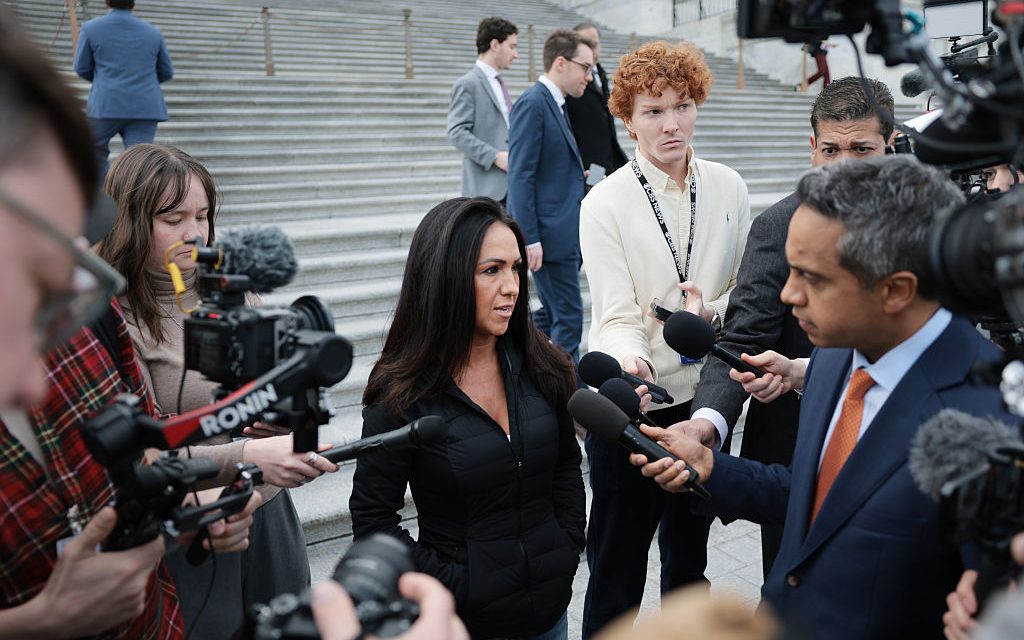
Trump’s Pressure on Congress
President Donald Trump is urging Congress to renew a critical surveillance law before its expiration on June 12. He emphasizes its importance for security during the upcoming FIFA World Cup. However, his efforts face resistance from both parties, risking a lapse in the program.
A group of GOP lawmakers, who opposed a recent extension, may play a key role again. The debate focuses on Section 702 of the Foreign Intelligence Surveillance Act (FISA), a tool allowing U.S. intelligence agencies to monitor foreign communications.
Newsweek contacted House Speaker Mike Johnson’s office for comments.
Important Facts
- FISA Section 702 will expire at midnight on June 12 without action.
- Trump links its renewal to World Cup security.
- Some Democrats oppose reauthorization due to Bill Pulte’s appointment.
- Several Republicans demand warrant reforms.
- Numerous GOP House members opposed a recent extension.
Understanding FISA Section 702
FISA Section 702 enables U.S. intelligence agencies to collect electronic communications of foreign targets outside the U.S. despite such communications passing through American servers or involving Americans. Supporters see it as a crucial counterterrorism tool, while critics highlight concerns about capturing Americans’ communications without warrants. Agencies like the CIA, NSA, and FBI operate under this act.
Earlier Extension and Current Resistance
In April, Congress approved a 45-day extension of FISA Section 702, now set to expire. However, gathering support for a longer-term extension proved challenging.
Republicans, including Representatives Thomas Massie and Lauren Boebert, lead opposition to FISA. Massie describes it as lacking adequate warrants and accountability. Some Republicans, like Senator Rick Scott, advocate for reforms, such as focusing surveillance on foreigners.
Senator Mike Lee advocates for a warrant requirement to protect the Fourth Amendment rights of American citizens. Meanwhile, Representative Scott Perry echoes concerns over government surveillance.
Yet not all Republicans oppose reauthorization. Senate Majority Leader John Thune emphasized the legislation’s importance to national security and its role in preventing terrorist attacks.
Trump’s Stance on FISA and Pulte Appointment
Trump accuses Democrats of holding national security hostage due to disagreements over Bill Pulte’s appointment. Pulte is set to become Acting Director of National Intelligence, a choice some Democrats question.
Trump emphasizes FISA 702’s significance to military and public safety, especially during major events like the World Cup. He requested a short-term extension to secure more time for confirming a permanent director.
Democratic Concerns
House Minority Leader Hakeem Jeffries opposes reauthorization if Pulte heads the agency. This opposition could sway other Democrats, challenging FISA’s renewal.
Jeffries voiced concerns over Pulte’s lack of qualifications and potential biases. Representative Delia Ramirez criticized FISA 702, referencing Trump’s administration and citing over-surveillance issues.
Next Steps
- Congress must reach a resolution before midnight on June 12.
- Potential outcomes include a short-term extension or a lapse.
- GOP cross-voting and Democratic opposition complicate FISA’s reauthorization.
- The Senate must clear a 60-vote threshold for approval.
 Trump Suggests Renaming Bodies of Water at Campaign Rally
  Texas Senate Race Intensifies Between Talarico and Paxton
  Controversy Surrounding Nidal Hasan’s Execution Livestream
  Debate Over Livestreaming Execution of Fort Hood Shooter
  Controversy Surrounds Pennsylvania’s 10th Congressional Race
  Pope Leo XIV Labels Death Penalty an Assault on Human Dignity