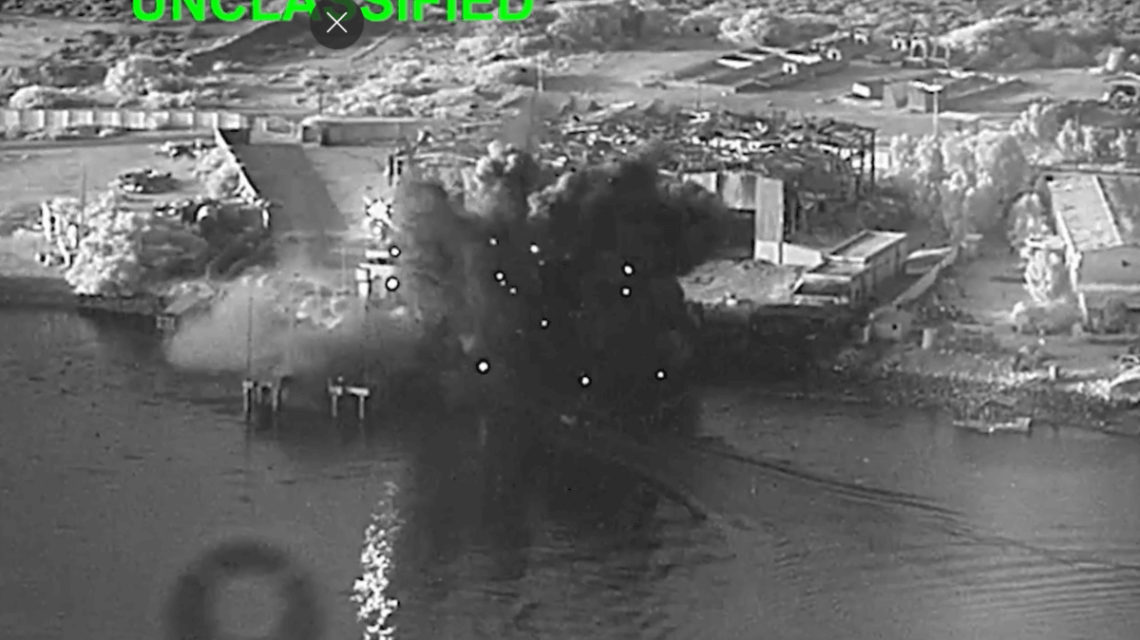
The U.S. military has employed sea drones in combat for the first time, targeting a southern Iranian location used for submarine repairs. While Ukraine has actively used drones against Russian ports in the Black Sea since 2022, Iran’s fast-attack boats have disrupted shipping in the Strait of Hormuz, leading to U.S. action.
Details of the Attack
The deployment involved three Corsair naval drones hitting the Iranian naval base in Bandar Abbas, located north of the Strait of Hormuz. Bandar Abbas houses significant Iranian naval forces. The U.S. strikes mark the first use of explosive sea drones by a major Western military in wartime.
Saronic, based in Texas and the manufacturer of Corsair sea drones, expressed pride in the technology’s contribution to the mission. These drones, measuring 24 feet, achieve speeds of 40 miles per hour and can cover 1,150 miles. Saronic produces three types of autonomous surface vessels, with Corsair being the smallest.
Military Contracts and Impact
The U.S. Navy secured a $392 million agreement with Saronic for Corsair drones in December 2025. Last month, these drones played a rescue role for two U.S. soldiers near the Strait of Hormuz.
U.S. Central Command released footage of the drones striking Bandar Abbas, displaying the moment of impact. Newsweek was unable to verify this clip independently.
Consequences in Southern Iran
Three fatalities were reported in southern Iran, with the U.S. military stating that the strikes impaired Iran’s capability to threaten commercial shipping.
A third night of U.S. strikes on Iran occurred, as Tehran’s military reported targeting two tankers owned by the United Arab Emirates in the Strait of Hormuz. This escalation affects the tenuous memorandum of understanding between the U.S. and Iran, intended to provide a platform for peace negotiations.
Regional Escalation
The Emirati government reported one death and eight injuries following Iranian missile strikes on the tankers in Oman’s waters. Iran also targeted U.S. military sites in Jordan and Bahrain.
The conflict between the U.S. and Iran escalated with U.S.-Israeli attacks in February, prompting Iranian retaliations against U.S. allies and vessels in and around the Strait of Hormuz.
Efforts to reopen the Strait of Hormuz have stalled, with President Donald Trump reinstating a blockade of Iranian ports and imposing a 20 percent surcharge on goods through the strait.
Iran responded by introducing a bill to tighten control over the Strait of Hormuz, following reports of U.S. drone losses overnight.
 Ukraine Missile and Drone Barrage Hits Russia Amidst Elections
  U.S. Strategic Goals Remain Unmet Amid Prolonged Conflict
  New Photos Reveal Damage from Iranian Strikes in the Middle East
  Assassin of Chilean Diplomat Orlando Letelier Faces Deportation 50 Years After Assassination
  Gorillaz and Macklemore Respond to Controversy Over Israel-Palestine Statements
  Investigation into Lion Deaths in Tanzania