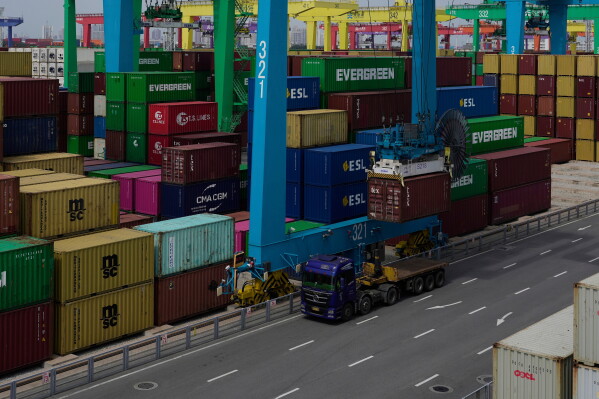
President Donald Trump announced new tariffs on Thursday against numerous U.S. trading partners. These double-digit tariffs are set to be imposed on imports from 60 countries. The decision comes just before the expiration of provisional tariffs previously ordered following an unfavorable Supreme Court decision.
The tariffs, ranging from 10% to 12.5%, target nations covering 99% of U.S. imports. The U.S. accuses these countries of failing to enforce bans on goods produced using forced labor. “The United States has had a prohibition on forced labor related imports for nearly a century and enforces it rigorously. It’s time our trading partners do the same,” stated Jamieson Greer, U.S. Trade Representative.
The new tariffs coincide with the expiration of a global 10% provisional tariff on Friday. Trump resorted to temporary tariffs after the Supreme Court largely invalidated his broader tariff policy in February.
These longer-term tariffs are enabled under Section 301 of the Trade Act of 1974. This provision allows the president to impose tariffs on imports and other sanctions against countries engaged in “unjustifiable,” “unreasonable,” or “discriminatory” trade practices. During his first term, Trump used Section 301 to place significant tariffs on China, which survived judicial challenges.
More tariffs are likely under Section 301. The U.S. Trade Representative’s office is probing whether 16 countries have engaged in excessive production, undercutting prices and disadvantaging American businesses globally. The investigation remains ongoing.
Trump claims tariffs will rejuvenate U.S. manufacturing. Last year, he broke from decades of U.S. policy favoring lower tariffs and increased free trade. He invoked the International Emergency Economic Powers Act of 1977 to impose double-digit tariffs globally, arguing the persistent U.S. trade deficit constituted a national emergency. However, the Supreme Court ruled that the Act did not allow tariff implementation, forcing reimbursements to importers.
In response, Trump introduced global 10% tariffs under Section 122 of the 1974 Trade Act. These tariffs are valid only for 150 days and will expire on Friday.
Initially proposed last month, the forced labor tariffs have since seen some countries enhancing measures against forced labor, qualifying for lower tariffs, according to an anonymous senior official. For instance, tariffs on imports from India were initially set at 12.5% but are now 10%.
Certain products, such as oil, gas, and fertilizers, are exempt from new tariffs. Products qualifying for tariff-free status under the U.S.-Mexico-Canada Agreement, negotiated by Trump during his first term, are also exempt.
The announcement prompted immediate criticism. “Today’s justification based on forced labor is too convenient,” said Representative Richard Neal, the highest-ranking Democrat on the House Ways and Means Committee. “Forced labor is a real and widespread problem in our supply chains that demands serious implementation. It should never become a pretext for tariff policy built on questionable legal theories and personal grievances.”
Brazil, facing a 12.5% tariff, deemed the measure “arbitrary and unjustified” in a statement. Brazil plans to activate its reciprocity law, potentially imposing retaliatory tariffs against the U.S., and will lodge a complaint with the World Trade Organization. Brazil asserts the U.S. “chose to manipulate a major human rights issue to accuse 59 countries and the EU of unfair practices.”
Countries subject to tariffs were identified by the U.S. for not enacting or inadequately enforcing bans on importing goods made with forced labor. The International Labor Organization’s Forced Labour Convention of 1930 defines the practice as “all work or service extracted under threat of any penalty for which the person has not offered voluntarily.” The ILO reported 27.6 million people were subject to forced labor globally in 2021.
Martina Vandenberg from The Human Trafficking Legal Center noted, “We’ve long supported import bans as a potentially effective tool to combat forced labor globally.” She cautioned that tariffs should be implemented gradually, allowing countries time to apply meaningful and enforceable import bans. “Countries need time to build import ban mechanisms that are significant and enforceable.”
Despite skepticism about the effectiveness, there have been international responses. The threat of tariffs prompted countries like India to adjust foreign trade policies, incorporating forced labor import bans. The EU’s forced labor regulations set to start next year also contribute, signaling countries are taking these issues seriously.
 Vice President JD Vance’s Task Force Targets Fraudulent Enrollments in Health Care Program
  Utah Senator Urges Judiciary Committee to Investigate Presidential Family Ties
 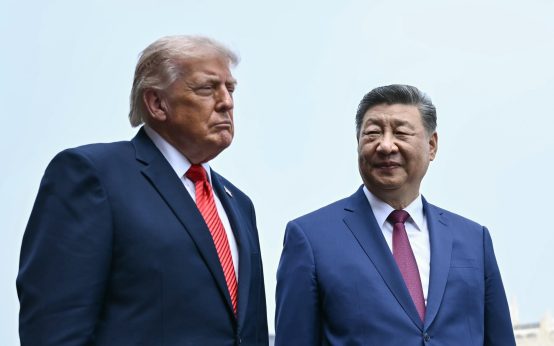 U.S.-China Summit: High Stakes in Washington
  Pentagon Implements New Assessment for General Promotions
  Bush and Cornyn: Fundraising Dynamics in Texas Politics
  Lawsuit Filed Against Trump Over Truth Social Subscriber Program