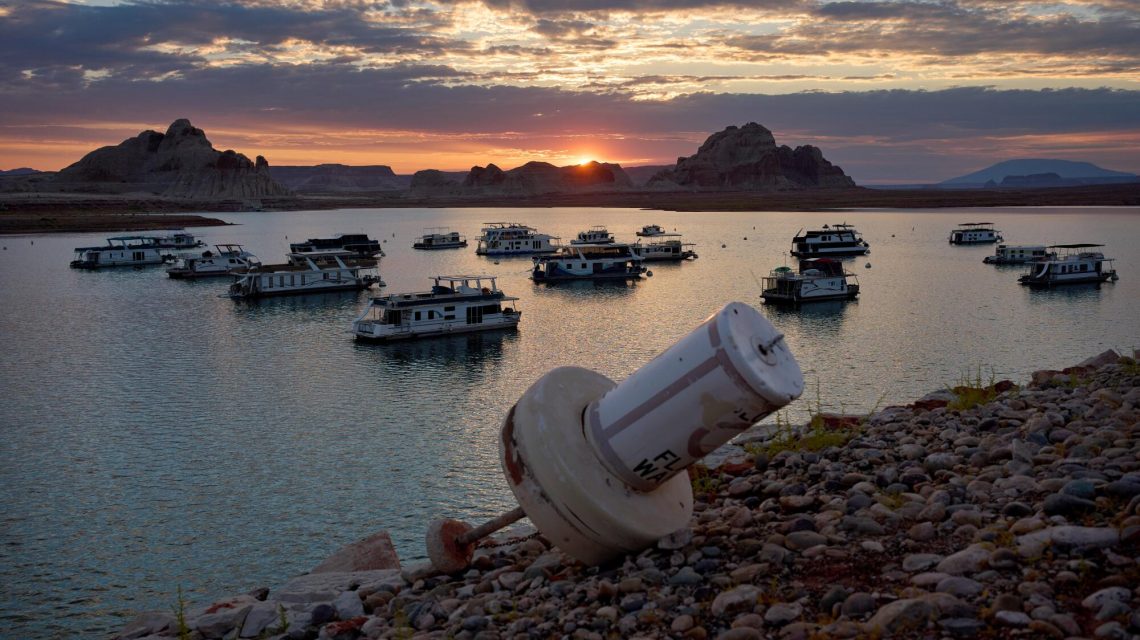
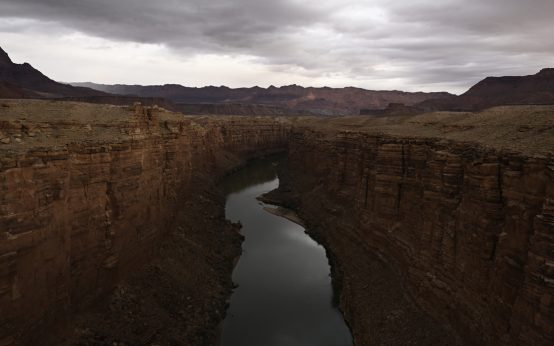
A buoy that once floated now sits above Lake Powell. This scene unfolds at the Glen Canyon National Recreation Area, near Page, Nevada. The image reflects the severe water challenges facing the region.
The Trump administration has introduced a 10-year plan addressing water shortages along the Colorado River. The plan could impose drastic water reductions on California, Arizona, and Nevada. These states might have to cut as much as 3 million acre-feet yearly, representing up to 40% of their combined allotments.
State and local officials report that the administration has accepted a more moderate reduction for the first two years. They agreed to a total reduction of 3.2 million acre-feet by 2028, avoiding immediate severe cuts.
The administration’s effort seeks to mediate between the downstream states of California, Arizona, and Nevada, and the upstream states of Colorado, Wyoming, Utah, and New Mexico.
The plan aims to respond to what Andrea Travnicek, assistant secretary for water and science at the Interior Department, described as “unprecedented hydrologic conditions.” Factors like a 25-year drought and foreseeable arid conditions complicate the development of new regulations.
Notably absent from the announcement was a reference to climate change. Research consistently links global warming, driven by fossil fuel use and other emissions, to worsening heat and drought conditions.
The two-year agreement, yet to be released, outlines percentage reductions for the states involved. California will decrease its Colorado River usage by about 12%, Arizona by approximately 31%, and Nevada by around 28% through 2028.
The Interior Department describes its methodology as adaptable, allowing adjustments based on evolving conditions until 2036.
The Colorado River sustains seven U.S. states and northern Mexico. Since 2000, it has significantly diminished. The major reservoirs—Lake Mead and Lake Powell—recorded their lowest combined levels. The government was compelled to establish new regulations due to the expiring former rules.
Negotiations among the seven states have struggled, while reservoir levels have consistently declined. Research shows that about half of the river’s reduced flow results from increased temperatures. Each 1.8-degree temperature rise could result in an additional 9% drop in the average flow.
Ian James, an environmental reporter, covers this topic extensively. Before joining the Los Angeles Times, he reported on environmental issues at the Arizona Republic and the Desert Sun. Previously, he served as a correspondent in the Caribbean and as bureau chief in Venezuela for the Associated Press. Follow his updates on Bluesky and X.
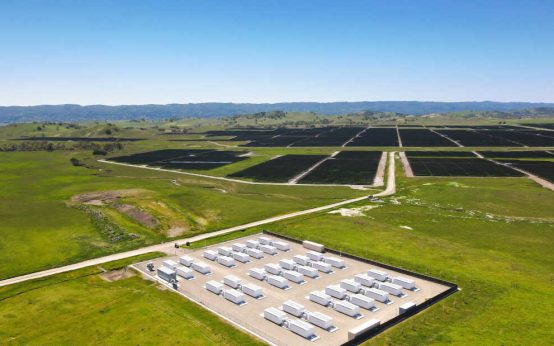 How Battery Innovations Transform Renewable Energy
  Data Centers Stir Controversy in Texas Amid Growth Boom
 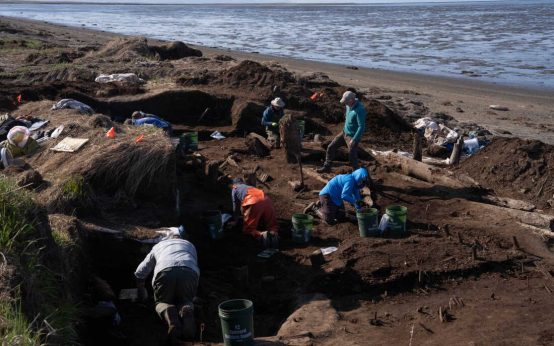 Urgent Archaeological Efforts in Quinhagak Stay Ahead of Erosion
 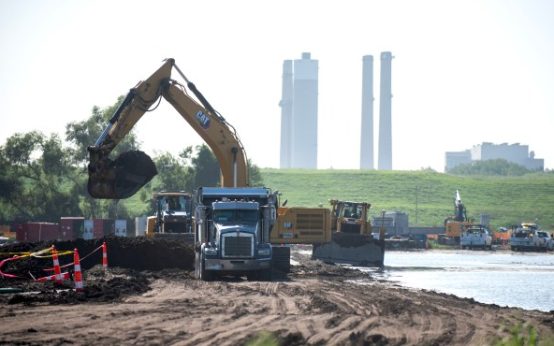 Concerns Rise Over NIPSCO Permit In Jasper County
  Reader Reactions on Grizzlies and Data Centers
  Managing the Crisis of Drying Rivers