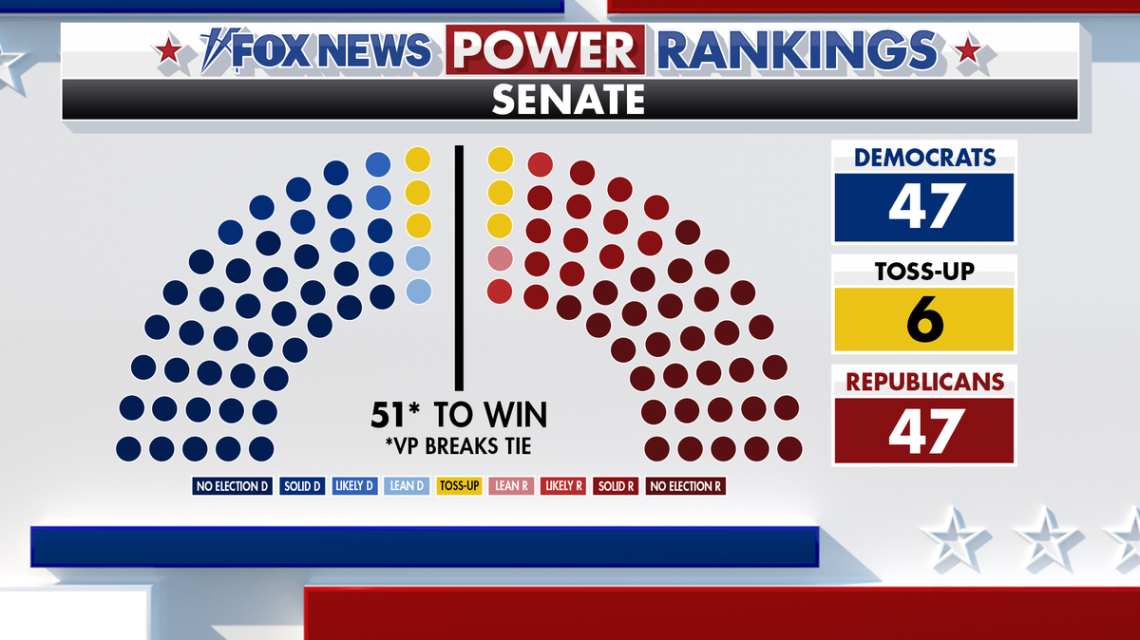
Senator Tim Scott recently joined anchor John Roberts to discuss the intense battle for control of the Senate as the midterm elections draw near. They examined the latest power rankings, key races considered toss-ups, and significant economic issues like the rising cost of living. Scott emphasized the Republican strategies to secure a majority with only nineteen days remaining before voters go to the polls.
Currently, Democrats are enhancing their efforts to regain the Senate majority. With just over two weeks until Election Day, they must win several competitive races to achieve this goal. If they experience substantial electoral success, Democrats could secure between 52 to 53 seats. However, if Republicans exceed expectations in the polls, they could maintain their current majority of 53-47.
Battlefield Analysis and Strategies
According to the latest Power Rankings, both parties are projected to obtain 47 seats, leaving six races labeled as true toss-ups. Additionally, three other races are rated as leaners, only a step away from becoming toss-ups. These nine crucial contests will likely decide whether Democrats gain the four seats necessary for Senate control or if the GOP retains its majority.
Within the six toss-up states, Republicans aim to defend seats in Alaska, Iowa, Maine, Ohio, Texas, and Michigan. In Alaska, Sen. Dan Sullivan faces Democrat Mary Peltola. Rep. Ashley Hinson is working to keep retiring Sen. Joni Ernst’s Iowa seat against Democratic state Rep. Josh Turek. In Maine, Republican Sen. Susan Collins is challenged by Democrat Troy Jackson.
In Ohio, Republican appointed Sen. Jon Husted is contesting Sherrod Brown for the remainder of a term won by now-Vice President JD Vance. In Texas, Attorney General Ken Paxton is up against Democrat James Talarico for the seat previously held by GOP Sen. John Cornyn.
“Nine races will determine control of the Senate, and based solely on polling data, any of them could be labeled as toss-ups,” stated Remy Numa, a Fox News contributor involved in Power Rankings.
Defense and Offense
Democrats are playing defense in Michigan, where Abdul El-Sayed opposes former GOP Rep. Mike Rogers for Sen. Gary Peters’ seat. In New Hampshire, Rep. Chris Pappas goes against former GOP Sen. John E. Sununu for Sen. Jeanne Shaheen’s position. Minnesota sees Democratic Lt. Gov. Peggy Flanagan striving to maintain Sen. Tina Smith’s seat with Republican Michele Tafoya gaining traction.
Meanwhile, Republicans are on defense in Kansas. Sen. Roger Marshall faces Democratic challenger Adam Hamilton in a race rated Lean Republican by the Power Rankings. With changing political dynamics in Kansas, Minnesota, and New Hampshire, the forecast indicates varying leanings.
Two states, Georgia and North Carolina, are slipping away from GOP control. Democratic Sen. Jon Ossoff leads GOP challenger Rep. Mike Collins in Georgia. Republican groups have reduced spending significantly there, rating the race Likely Democrat. In North Carolina, GOP nominee Mike Whatley trails Democratic Roy Cooper, rated Likely Democrat.
Pathways and Momentum
To gain the majority, Democrats must retain Georgia, Michigan, Minnesota, and New Hampshire, while flipping North Carolina and three of the five GOP-controlled toss-up states. “Senate Democrats are in the strongest position yet to win the majority – with multiple paths to flip GOP-held seats and growing momentum,” said Sen. Kirsten Gillibrand, Democratic Senatorial Campaign Committee chair.
Conversely, Republicans could maintain control by winning at least three of the toss-ups where they’re defending seats. With a 50-50 split, the Senate would remain GOP-controlled, with Vice President JD Vance’s tie-breaking vote.
Tim Scott, National Republican Senatorial Committee Chair, expressed optimism. “I think it’s going very well for us… momentum, frankly, is with us,” he stated. If Republicans succeed in defense and offense, holding rallies and gaining traction in battlegrounds like Michigan, where Rogers challenges El-Sayed, and Minnesota, marked as a potential flip, their Senate majority could be strengthened.
 Lessons from the Briefing Room
 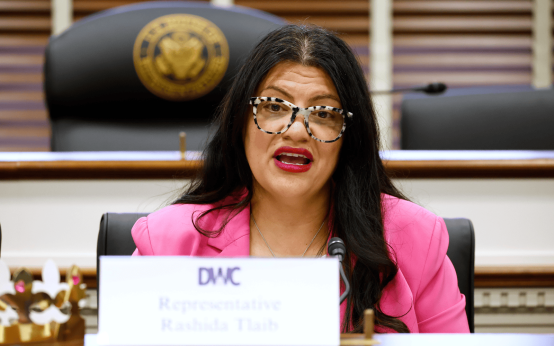 Rashida Tlaib’s Surveillance Bill Targets Federal Funding for License Plate Readers
  Religious Groups Oppose Hate Speech Training Law in California
  Addressing the High Recidivism Rates in the U.S.
  Public Execution and Its Implications
 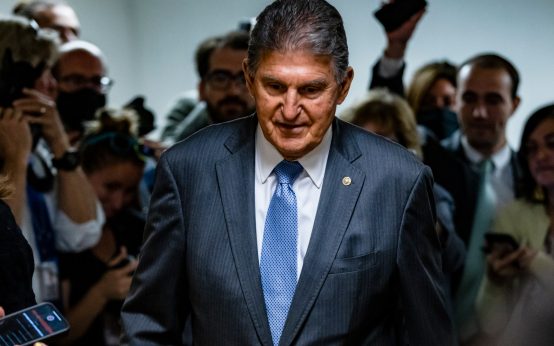 Joe Manchin Cautions Democrats on Trump Investigations