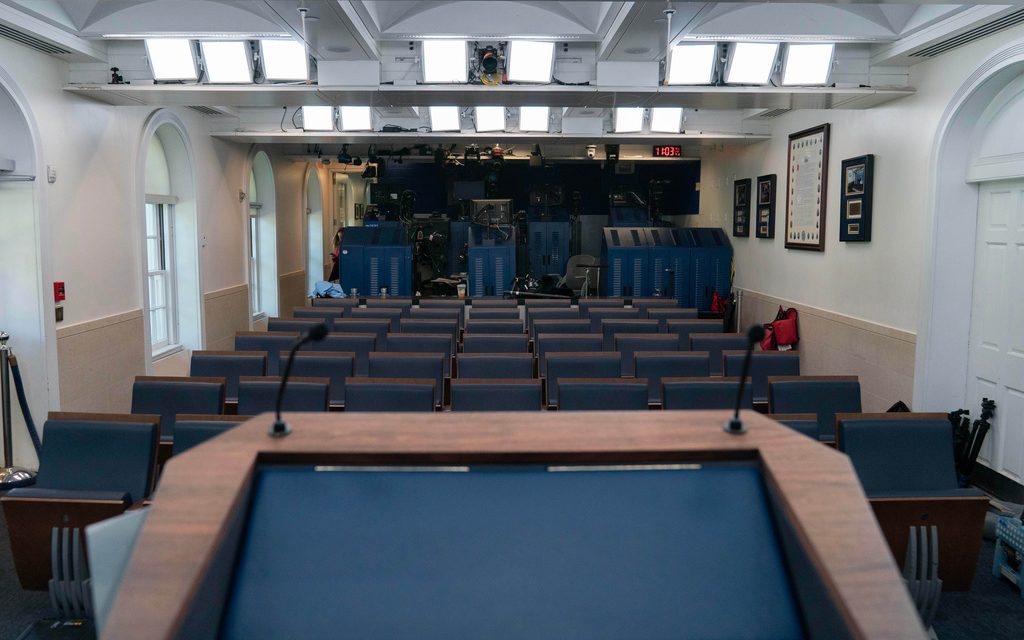
The James S. Brady Press Briefing Room at the White House offers a unique workplace environment. It is named after a press secretary, Jim Brady, who left a lasting impression despite serving only ten weeks before suffering a life-changing injury during an assassination attempt on President Reagan. This space is where the government communicates its message and motives to the public through the press. Reporters, regarded not as adversaries but instruments, play a crucial role in this exchange.
Brady excelled by being witty and genuine, fostering a respected rapport even when sparring with journalists. His career, interrupted by the attempt on Reagan’s life, bore influence far beyond his tenure. Brady’s position remained officially filled until the end of Reagan’s presidency, a testament to the loyalty and honor attributed to Brady.
The role of the press secretary was further defined by Larry Speakes and Marlin Fitzwater. Speakes, occupying the podium amid crises, highlighted the importance of preparation and factual accuracy that shields against the repercussions of misinformation. In the face of uncertainty, Fitzwater exemplified credibility, focusing on truthfulness and trust as foundations for effective communication.
The job of a press secretary involves navigating demands from three sectors: the president needing a staunch advocate, the press in need of clear responses, and the public, for whom the presidency must remain transparent. The credibility of the press secretary underpins their ability to address these sectors successfully. It remains a critical asset held in trust for the president, never to be squandered recklessly.
For future press secretaries, the advice remains steadfast. Regular briefings are vital, supported by rigorous preparation. Errors must be addressed swiftly and directly. Anticipate that experienced reporters will have extensive knowledge of the environment, providing learning opportunities as the new press secretary assumes their position. While supporting the president is fundamental, such advocacy should remain grounded in authenticity, avoiding performative animosity towards the press which undermines the room’s dignity.
The room’s namesake, Jim Brady, sacrificed deeply for the role, instilling the value of open and honest dialogue with a free press. The name above the door serves as a reminder of this duty. Each tenant of the podium holds a unique responsibility in preserving transparency and trust between the presidency and the public.
Mark Weinberg, creator of Ethos communications consultancy, served in the Reagan White House press office and authored “Movie Nights with the Reagans.”
 Rashida Tlaib’s Surveillance Bill Targets Federal Funding for License Plate Readers
  Religious Groups Oppose Hate Speech Training Law in California
  Addressing the High Recidivism Rates in the U.S.
  Public Execution and Its Implications
  Joe Manchin Cautions Democrats on Trump Investigations
  Pressure Mounts on Israel Over Settler Violence