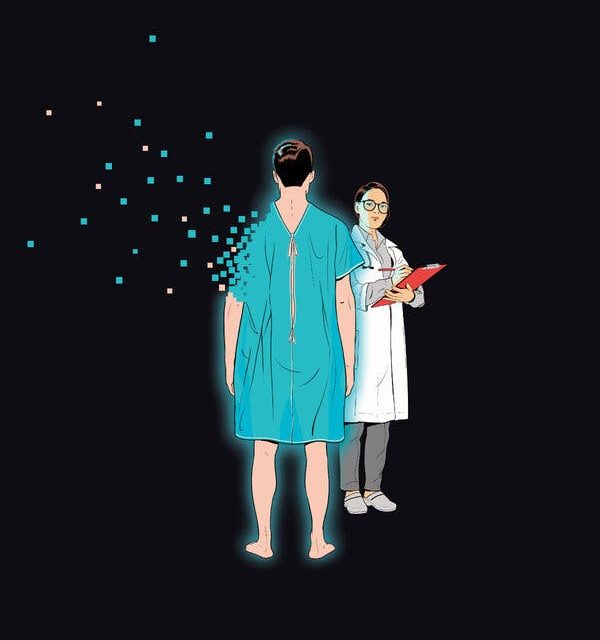
Writing a summary of a patient examination was once an essential task for physicians in making accurate diagnoses. Now, artificial intelligence is taking on this responsibility.
Helen Ouyang, a physician and associate professor, explores the impact of A.I. on clinical note-taking. Medical students traditionally learned to write clinical notes early in their education. This formative task involved capturing patient interactions in writing, including symptoms and potential diagnoses. It was a rite of passage, marking the transition into becoming a doctor.
As doctors progress from students to residents and full-fledged physicians, the time to write detailed notes becomes scarce. Instead of being a vital part of the job, note-writing can seem tedious. Removing this burden could, in theory, allow more focus on patient care.
At the hospital where Ouyang is an E.R. doctor, A.I. assistants now handle note-taking. These systems listen during consultations, generating polished notes afterward. She highlights the promise of A.I. to reduce burnout and improve efficiency. Medical start-ups have raised billions, with many U.S. health systems developing or using A.I. scribes. Some clinics report up to 80% adoption.
Adam Rodman, a professor at Harvard Medical School, describes A.I. as the fastest-adopted medical technology. A.I. scribes go beyond simple transcription. They synthesize conversation data into structured notes, benefiting patient care by saving time for doctors.
 Secure Your Internet Connection with Consistent VPN Usage While Traveling
  Mindfulness: Manage Stress by Embracing the Present
  Missouri’s Abortion Policy: Conflicting Amendments and Voter Decisions
  The Impact of Extended Job Searches on Mental Health
  Concerns Over AI’s Impact on Higher Education Learning
  Philanthropic Shift Towards Supporting Women in Midlife