
The Iran war reveals unexpected developments. A notable recent event occurred when President Trump proposed a 20 percent toll for secure passage through the Strait of Hormuz. Surprisingly, he reversed this decision the following day. This decision faced criticism, particularly from Secretary of State Marco Rubio, who pointed out it violated international law. While Trump’s alternative plan involves accepting financial investments from the Gulf States instead of tolls, this action still challenges a long-held American principle.
Since the nation’s founding, the U.S. opposed similar practices. President Trump’s new approach contradicts historical positions taken by the military and in international conflicts. His proposal to offset military expenses in the region reflects his transactional policy style, yet it overlooks a broader historical tradition that America embodies.
The U.S. Navy’s mission to ensure open seas traces back to its inception. The nation faced extortion by the Barbary pirates in North Africa during the late 1700s. To combat this, President George Washington established the Navy in 1794, promoting freedom of navigation. Despite challenges, diplomacy and later military action curbed the Barbary threat by 1815.
Presently, with Gulf States offering investments as substitutes for tolls, Trump reverts to a tribute model reminiscent of past conflicts. Although today’s Navy won’t enforce tolls counter to its mission, this path echoes the historic piracy tributes America’s founders opposed.
Beyond the Barbary Wars, free navigation significantly influenced America’s global role. In World War I, President Woodrow Wilson’s 14 points highlighted seas’ freedom. President Franklin Roosevelt and British Prime Minister Winston Churchill’s Atlantic Charter insisted on unhindered maritime passage post-World War II. President Dwight Eisenhower upheld this principle during the Suez Canal Crisis of 1956, validating Egypt’s control provided compensation was made, despite risking key alliances.
Considerations on Trump’s policy transcend party lines. Historically, America upholds navigation freedom, not soliciting tributes. This reflects deeper values integral to the country’s identity.
Michael Szalma is a retired U.S. Army officer who served in Bosnia, Iraq, and Afghanistan. He now teaches history in Central Florida.
 Court Rules Against Third-Country Deportation Policy
  Claims to Nazi-Looted Art Spark Legal Battle in California
 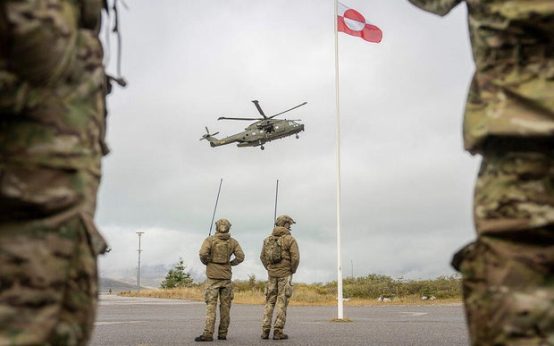 U.S. Secures Strategic Control Over Greenland
  U.S. and Denmark Move Towards Security Agreement Over Greenland
  Rising Concern Over Gender-Based Violence in South Africa
  UNIFIL’s Final Patrol in Southern Lebanon Amid Changing Borders