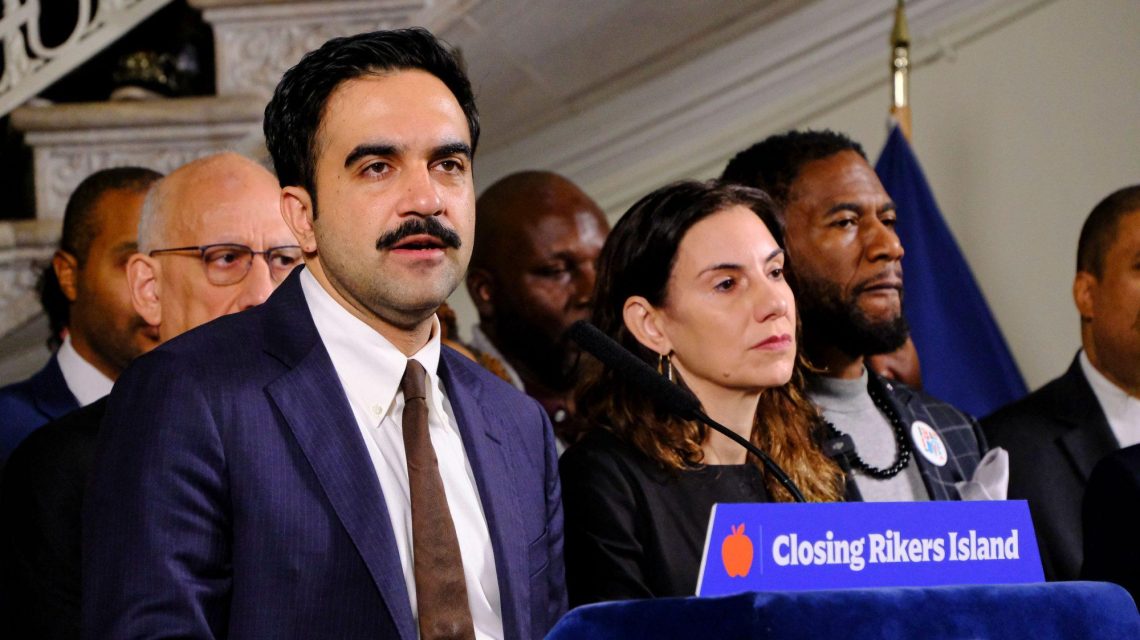
Mayor Zohran Mamdani recently announced a plan to extend the deadline for closing Rikers Island jails from 2027 to 2032. This request aims to align with New York State’s Correction Law, which requires the city to have new jail facilities in place before shutting down existing ones. The City Council’s original 2027 deadline might be impractical due to these legal constraints.
The plan to replace Rikers involves constructing four borough-based jails, which are designed to hold significantly fewer inmates than Rikers. While the current capacity of Rikers is about 15,000, the new facilities will accommodate approximately 4,100 people. This reduction is intentional, supported by an ideological shift towards ‘decarceration,’ aiming to lower reliance on incarceration as a solution to crime.
Despite the policy’s ideological underpinnings, practical and legal issues remain. New York State Correction Law mandates that jails detain individuals awaiting trial and those serving local sentences. The new facilities’ limited capacity could place the city at odds with legal requirements if they cannot accommodate court-directed detentions. This could lead to legal conflicts, including potential contempt of court for failing to meet judicial mandates.
Opposition to the current plan includes the correction officers’ union, which foresees risks to safety due to inadequate capacity. The architect of the closure plan, Elizabeth Glazer, has also expressed concerns regarding capacity limitations. Mayor Mamdani has proposed a $30 million investment to minimize re-arrests and create a task force aimed at reducing pre-trial incarceration times. However, progress on reducing the inmate population is lacking. For instance, the average jail time increased from 87 days in 2025 to 116 days in 2026.
If the inmate population unexpectedly rises, the city could quickly face a crisis scenario with no contingency capacity. Insisting on adequate jail capacity doesn’t refute the need to close Rikers nor does it oppose decarceration. It’s about ensuring compliance with state laws, which are fundamental to a working criminal justice system.
Christian Browne, an attorney and adjunct fellow at the Manhattan Institute, underscores the need for legal compliance and adequate planning in the city’s approach to replacing Rikers.
 Tragic Arizona Crash Claims Two Lives, Leaves Two Hospitalized
 Transgender Doctor’s Medical Practice Halted After Allegations
 Extreme Coastal Flooding Risks Loom Over California
 Key Developments in U.S. Politics and International Affairs
 Navigating Political Tensions During Thanksgiving Gatherings
 Amazon Enlists NYC Customers Against City Council Bill