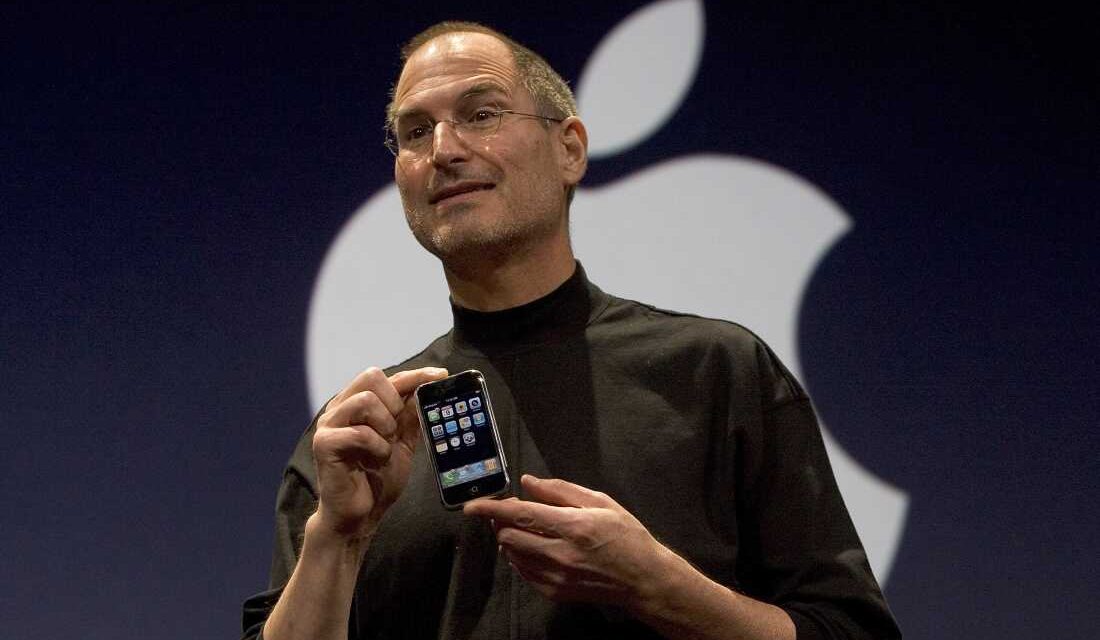
In 2007, Apple CEO Steve Jobs unveiled the iPhone, a product considered revolutionary. Nearly two decades later, a new study explores a link between the proliferation of smartphones and the ongoing decline in birth rates. Economist Caitlin Myers, along with other researchers, has been investigating this trend. Since 2007, birth rates in the U.S. have decreased by 22%.
Initially, economists attributed this decline to the Great Recession, expecting a rebound as the economy recovered. However, birth rates continued to fall despite economic recovery. Myers, a professor of economics at Middlebury College, suggests that a significant factor must coincide with 2007. This year marks the introduction of the iPhone.
“Every once in a while, a revolutionary product comes along that changes everything,” Steve Jobs declared at the iPhone launch, possibly impacting birth rates.
In a new working paper titled “Is the iPhone Birth Control?” Myers argues that the rise of smartphones could explain a substantial part of the decline in birth rates. Her research focuses on how births fell more significantly in areas where iPhones were initially available.
At the time of its release, the iPhone was only compatible with AT&T. “In regions with AT&T’s coverage, iPhones were accessible,” Myers recalls. “Birth rates began to drop in these areas, while the decline was less pronounced in places lacking coverage.” Myers controlled for variables like population density and local economics to ensure robust results.
Behavioral Changes and Teen Impact
The decline in birth rates is evident across all age groups, particularly among teenagers. Jean Twenge, a psychology professor at San Diego State University, notes the behavioral shifts due to smartphones, especially among adolescents. “Smartphones fundamentally changed how adolescents spent their time,” Twenge observes, leading to less face-to-face interaction.
Myers adds that reduced in-person interaction affects pregnancy rates. “If you’re not interacting with people, you’re less likely to become pregnant,” she explains. Additionally, smartphones provide easier access to contraceptive and abortion information.
The study, co-authored with Ezekiel Hooper, Myers’s stepson, suggests another influence: pornography access, reducing the need for physical relationships. “Students often mention that pornography serves as a substitute for in-person relationships,” Myers points out.
Apple did not comment on Myers’s study. As smartphones became widespread through various networks, Myers questions whether birth rates will stabilize or continue decreasing. “We may continue seeing the effects of smartphones on behavior and fertility,” she concludes.
Apple financially supports NPR, where this information was originally discussed.
 Dutch Euthanasia Case Sparks Global Debate on End-of-Life Decisions for Children
  Physicians Advocate Against FDA Nominee Heidi Overton
  ASU Hockey Coach on Leave After Player’s Collapse
  Managing Parenting Stress: Practical Tips from Cassidy Freitas
  Trump’s Executive Order Targets Mosquito and Tick Control
  Understanding the Impact of GLP-1 Weight-Loss Drugs on Brain Health