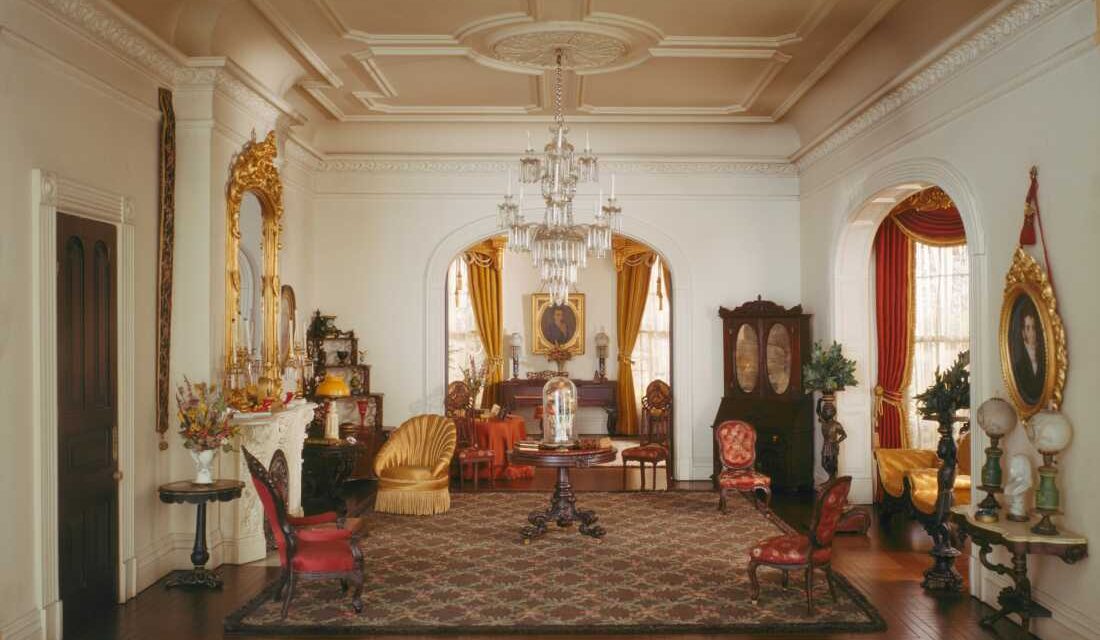
A notable miniature diorama, the Georgia Double Parlor by Mrs. James Ward Thorne, is a 1:12 scale model representing an antebellum southern plantation manor. This intricate piece is part of an exhibit courtesy of the Art Institute of Chicago.
Within the Art Institute, museum experts undertake the meticulous task of cleaning an exhibit featuring 68 diminutive rooms that narrate the evolution of interior design through different eras. These small rooms, exhibited behind numerous windows set into the gallery walls, showcase miniature furnishings exemplifying design trends from specific locations and time periods. Each room maintains a scale of 1:12, similar in size to a shoebox.
“They stand as one of the museum’s most popular galleries and are a source of pride for numerous Chicagoans,” stated Kit Maxwell, the department curator. “Many locals remember their childhood visits to the Art Institute, gazing into these small rooms.”
Narcissa Niblack Thorne, originating from a wealthy Chicago family and an avid traveler, amassed a collection of miniatures. During the 1930s, she collaborated with skilled Chicago artisans to create a series of these miniature rooms. Some of these rooms are showcased at the Art Institute. Thorne passed away in Chicago in 1966.
Department curator Kit Maxwell, pictured beside the California Hallway circa 1940, has dedicated over four years to the department. “She was insistent that these were not dollhouses. They were not something a child could ruin. They were meant to educate visitors on the principles of good taste and interior design,” Maxwell highlighted.
One room depicts London in the 1930s, featuring a lounge with a cocktail set, a Country Life magazine, and a card game beside an open window. This “English Drawing Room of the Modern Period” boasts creamy walls and high ceilings and is one of many English drawing rooms Thorne designed.
“I could absolutely imagine living in this room,” shared Maxwell. These rooms are cleaned semi-annually. The Art handler, Jonathan Worcester, oversees the preservation and exhibition of these art pieces, handling tasks from arranging storage to coordinating with mount makers. Cleaning each room involves dust and soot removal, which preserves the art pieces.
Worcester said, “The key is patience. It’s about handling the material with extreme care and diligence.” He uses a range of cleaning tools, like brushes and tweezers, and even has a miniature chandelier holder for precise cleaning.
His cleaning method is detailed. He begins by unlocking the glass front of each room, then removes the tiny furniture. He proceeds to clean the room’s interior. Many rooms contain ancillary sections that he also cleans, accessing them from the back of the gallery. Photographs assist Worcester in accurately replacing the objects.
Featuring original tiny paintings by renowned artists such as Fernand Léger, Amedée Ozenfant, and Léopold Survage, the California Hallway serves as a modern art gallery. “Though the process is repetitive, a specific mindset helps, often accompanied by an audiobook,” Worcester remarked, highlighting the meditative nature of the task.
 College Podcast Challenge: A Catalyst for Change
  Shifting Latino Demographics in Chicago’s Neighborhoods
  Kennedy Center Faces Layoffs Amid Ongoing Legal Dispute
  Disappearing Meals: How Modern Life is Changing How We Eat
  Colin Kaepernick’s Press Tour Raises Unasked Questions
  Controversial Claims in Charles Spencer’s Book about Princess Diana’s Divorce