Republican Dependence on Rural Voters
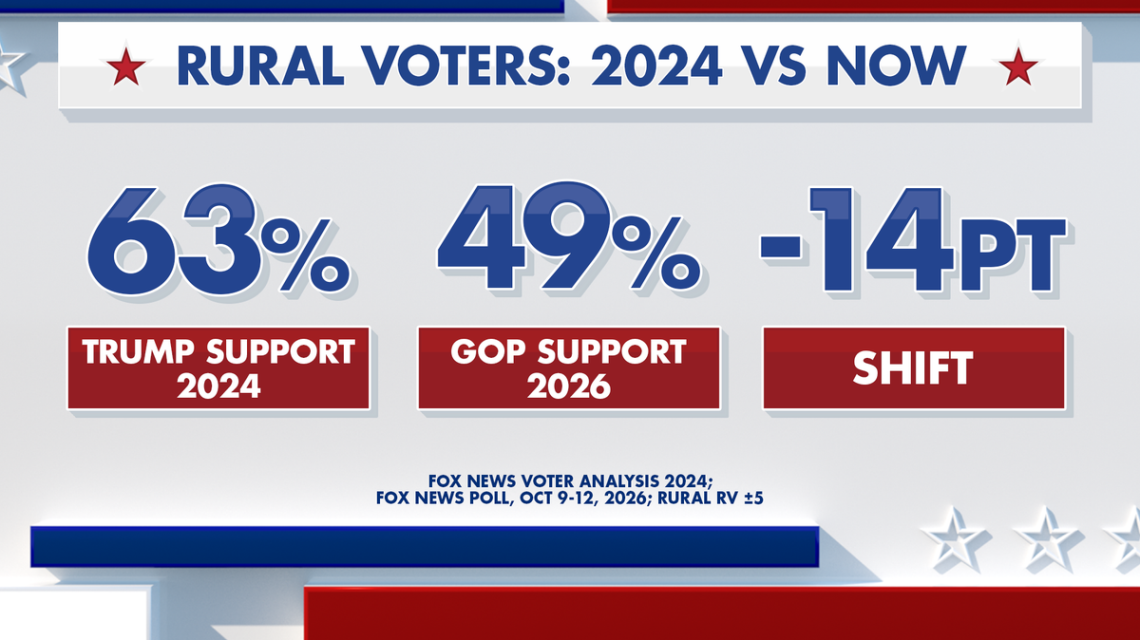
Historically, rural voters have been a reliable base for the Republican Party. In recent years, these voters have become significantly more Republican, with nearly two-thirds supporting President Trump in 2024. However, recent surveys show that less than half of rural voters plan to support GOP candidates in upcoming elections.
Economic Concerns Among Rural Communities
Rural Americans, like many others, face economic challenges. A survey indicated that 19% of rural voters identified rising living costs as their primary economic issue, followed closely by energy expenses. The Trump administration has tried to counter these concerns by promoting job growth linked to the AI industry, yet frustrations remain.
Only 24% of rural voters view the economy positively, with unemployment and job availability being significant worries. About 8% consider unemployment their major concern, with merely 28% seeing good job opportunities locally.
Data Centers and Economic Impact
Despite only 2% of rural voters citing data centers as their main economic problem, these concerns outweigh issues like housing and costs of living for them. This complicates the political landscape for Republicans, making states like Ohio and Iowa more competitive.
Rural Voting Shifts
Rural voter loyalty appears to be shifting. In Wyoming, Republican campaign ads omit mentions of Trump. In past elections, Trump dominated Wyoming vote share, but changing sentiments may create tight races in states like Florida, Mississippi, and South Carolina.
Prominent Independent Candidates
Notable independent candidates challenge Republican incumbents in Idaho, Montana, Nebraska, and South Dakota, pushing policies such as congressional term limits and anti-corruption measures. With Democratic support waning, independents could make these races more competitive.
Historical Voting Trends
States involved have shown competitiveness historically, with Democrats like Jon Tester winning in Montana during previous elections. Tight contests occurred in Nebraska and South Dakota, while Idaho’s past gubernatorial races demonstrated notable turnout.
Focus on Gubernatorial Races
Florida
Florida’s electoral dynamics remain crucial as ‘MAGA’ influences persist. Republican Gov. Ron DeSantis previously secured wins with substantial margins. However, Hispanic voter shifts indicate potential vulnerabilities for Republicans, impacting candidates like Rep. Byron Donalds regardless of DeSantis’ endorsement.
Nebraska
Gov. Jim Pillen seeks re-election in Nebraska, a state where shifts among rural and suburban voters challenge Republican dominance. The presence of independent candidate Dan Osborn could impact Democratic turnout, alongside Pillen’s local policy decisions.
Additionally, third-party candidate Brett Lindstrom enters the race, promoting an ‘America First’ ideology that influences traditional party dynamics.
 Kremlin Optimistic About Western Support for Ukraine Wavering
 Man Charged in Targeted Attack on Australian Lawmaker Helen Haines
 U.S. Lawmaker Warns of Lessons from French Riots
 Controversies and Connections in the Trump Administration
 Trump Administration Intensifies Nationwide Fraud Crackdown
 Economic Disparities in the Lead-up to Midterm Elections