
By Gianna Toboni, Camilo Montoya-Galvez
Camilo Montoya-Galvez is the Immigration Correspondent at CBS News. His reports are featured across various platforms, including national broadcasts, CBS News 24/7, CBSNews.com, and social media.
October 25, 2026 / 7:00 PM EDT / CBS News
Moussa Diawara, originally from Mali, lived in the United States for nearly half his life. He built a family and contributed to the community while paying taxes. Over the summer, however, U.S. Immigration and Customs Enforcement (ICE) deported him to Ghana, a country with which he has no ties. This decision arose as a judge ruled out deportation to Mali over fears of persecution.
“I still say to myself, ‘This isn’t real,'” Diawara expressed.
The phenomenon of third-country deportations has emerged as the Trump administration aims to execute significant deportation numbers. When immigrants cannot be deported to their home country, they are sometimes sent to a third country. A 60 Minutes investigation reported that these third countries often end up sending deportees back to nations where they risk persecution.
What Happened to Moussa Diawara
Moussa Diawara arrived in the U.S. on a tourist visa and later sought refugee protection. He feared persecution due to his conversion to Christianity in a Muslim-majority nation. Despite the absence of a criminal record, he faced deportation by ICE. On July 11, after completing a night shift as an Uber driver, ICE detained Diawara at his suburban Houston home. He spent weeks in detention, unable to communicate with his lawyer or judge, before being deported to Ghana on July 31.
Diawara found himself detained in Ghana with no means to contact his family or legal assistance. He described the detention as a form of kidnapping, and when 60 Minutes contacted him in August, he was without a home and hiding in Mali. However, local truckers managed to help him escape to another undisclosed country.
U.S officials had informed Diawara of a flight to Ghana, but his documents, including a medical form, mistakenly listed Mali as his final destination. This error, as DHS’s James Percival explained, was attributed to a clerical mistake. Despite assurances from Ghana of Diawara’s safety, his claims of persecution fears in Mali were questioned by U.S. authorities.
Democrats and Legal Experts Criticize Third-Country Deportations
Under previous administrations, deportations like Diawara’s were rare. The Trump administration’s approach has resulted in 25,000 deportations to third countries, often in exchange for U.S. aid. Legal protections, like the withholding of removal, are meant to prevent deportees from facing persecution.
An investigation by 60 Minutes revealed that out of 63 individuals on Diawara’s deportation flight, 17 were eventually forced into countries they should not have been sent to, according to U.S. judges. Immigration attorney Meredyth Yoon voiced concern about the U.S.’s awareness of Ghana’s actions.
A report from Senate Foreign Relations Committee Democrats criticized the program for being expensive and undermining U.S. interests. Senator Jeanne Shaheen asserted that U.S. taxpayer dollars were funding foreign governments while neglecting the human cost.
Homeland Security’s Response
James Percival, a DHS attorney, defended the program by highlighting its alignment with international law. Video evidence disputes this, showing deportees, such as Rabbiatu Kuyateh, forcibly sent to countries against judicial orders.
The Trump administration contends that dealing with this population of aliens concerns public safety. Around 19% of those deported from Diawara’s flight had criminal records, while many had minor offenses or none at all.
A recent court decision found these deportations unlawful, granting a temporary suspension until the Supreme Court reviews the case.
Diawara’s Battle to Reunite with His Family
Moussa Diawara’s attorney, Reuben S. Kerben, is fighting for Diawara’s return to the U.S. His family in Texas—wife Barbara, a registered nurse, and their two children—await his return.
“It feels really empty without him,” Diawara’s son, Corey, shared.
Barbara remains determined, striving to maintain normalcy and strength for her family despite the ongoing hardship.
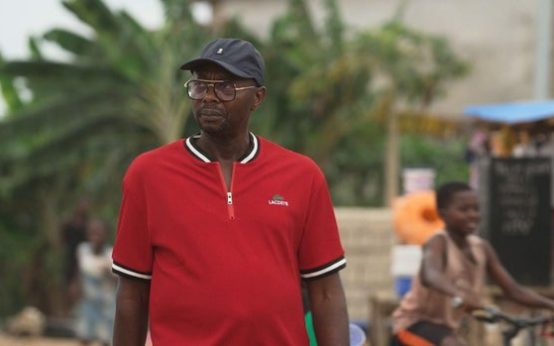 Deportations to Third Countries and the Impact on Families
 Mary Peltola’s Campaign Impacted by Car Crash
 Southwest U.S. Faces Heavy Rains and Flooding Threats
 Six Flags Implements New Safety Measures Following Tragic Incident
 East Potomac Park: A Sanctuary of Memories and Change
 Shooting near Florida A&M University Injures 12, including Juveniles