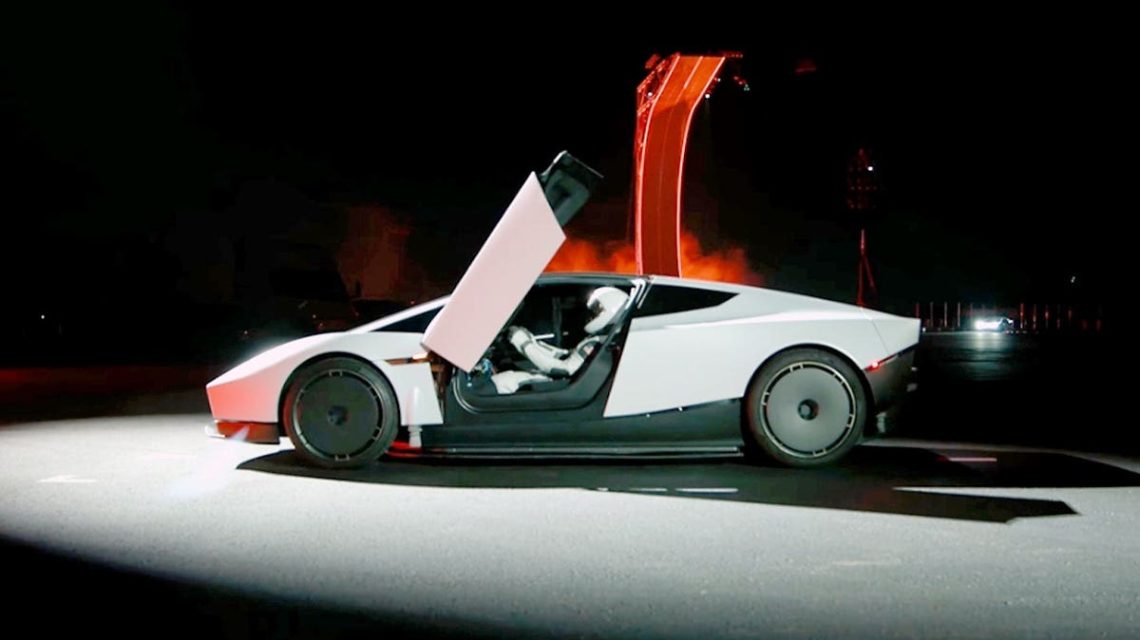
Elon Musk has unveiled the Tesla Roadster flying car prototype. Chasing Horsepower founder Mike Caudill joined ‘America Reports’ to discuss the engineering behind Tesla’s new prototype. Caudill explained its rocket-powered thrusters and impressive ability to accelerate from zero to 60 mph in under one second.
During the latest demonstration, Tesla showcased the Roadster’s capabilities, including a stunning airborne flip performed on a towering curved ramp. This maneuver was part of a broader show that highlighted the Roadster’s acceleration claim of zero to 60 mph in 0.81 seconds.
Tesla’s Roadster took center stage during a dramatic unveiling event at SpaceX’s rocket testing facility in McGregor, Texas, on Oct. 15, 2026. Engineers from both companies collaborated to reveal technology typically associated with spacecraft.
A key feature demonstrated was the Roadster’s ability to climb a massive curved ramp, where compressed-gas thrusters propelled the vehicle into the air before safely landing back on the pavement. These rocket-style thrusters, developed in collaboration with SpaceX, generate thrust using highly compressed gas. Unlike conventional rockets, they don’t burn fuel but release pressurized gas through nozzles to push the vehicle.
The vehicle also utilizes four electric fans near the rear to pull air from underneath, creating suction. This enhances grip by increasing force against the surface, assisting the vehicle with driving even while upside down.
Additionally, Tesla demonstrated another stunt. The Roadster lifted off and flew above a lineup of Tesla vehicles such as Cybercab, Cybertruck, and Model Y. Automation avoided human risk during this showcase.
Engineering Details
The Roadster utilizes cold-gas thrusters in a system using a high-pressure storage vessel behind the seats, expanding with a Rocket configuration to hold up to 600 liters. Tesla acknowledged the limitation in refilling this storage system, stating it currently takes six to seven hours.
Despite the demonstration, Tesla’s Roadster is far from achieving sustained flight akin to airplanes. The vehicle features unique driving experiences including steer-by-wire yokes, lightweight materials such as magnesium and carbon fiber, and a fixed seat base for weight reduction.
Performance Insights
Tesla claims the Roadster can accelerate from zero to 60 mph with thruster assistance in approximately 0.81 seconds during these demonstrations, although independent verification is pending. Tesla aims for more powerful Roadster configurations capable of exceeding 230 mph, with aspirations to reach half the speed of sound in the future.
Configurations
- Performance Version: Designed for conventional driving, accelerates from zero to 60 mph in less than 1.6 seconds.
- Thrust Configuration: Includes four rear-mounted thrusters, achieving zero to 60 mph in under 0.9 seconds.
- Rocket Configuration: Incorporates 10 thrusters for enhanced movement. Seats one person, offered by invitation.
Pricing and Reservations
Previously, the second-generation Roadster had a starting price around $200,000. For the Performance version, a reservation involves paying $50,000 upfront, while the Thrust version requires $250,000. The Rocket configuration’s pricing has not been disclosed.
Future of Human-Driven Cars
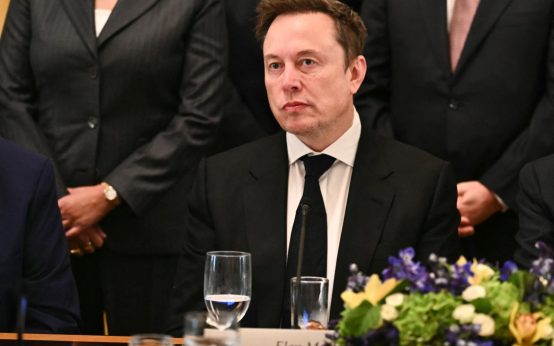
Elon Musk noted that the Roadster might be among Tesla’s final vehicles intended for human drivers, despite the company advancing toward autonomous driving technology.
Takeaway
The Roadster’s prototype presents excitement about electric sports cars tailored for driving enthusiasts. This raises questions about automotive technology’s future, especially the balance between automated driving and traditional driving experiences.
Potential buyers should scrutinize Tesla’s Roadster details and reservation terms. Specifications may change, and the Roadster is still a prototype.
 Choosing the Best Motorcycle Helmet: A Comprehensive Guide
 Organize Photos on Your Smartphone with Ease
 Tesla’s New Roadster: A Hovering Marvel Unveiled by Elon Musk
 Apple Unveils Foldable iPhone Duo with Cutting-Edge Features
 The Impact of AI on Job Quality and Economic Growth
 Trump’s Push for ‘Super Intelligence’ Gains Some Silicon Valley Support