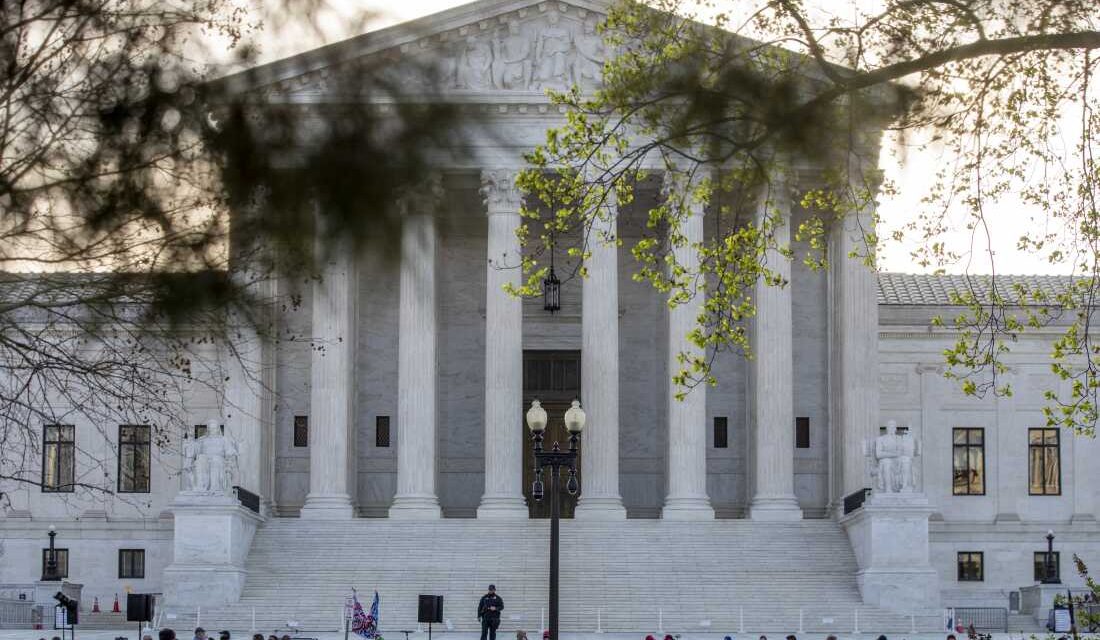
The Supreme Court in Washington, D.C., is entering a critical phase. As of April, the justices are tackling the final decisions and dissents in 23 undecided cases out of 58 argued cases. Notably, they have already issued decisions on two major cases.
Major Decisions Already Released
One decision significantly weakened the 1965 Voting Rights Act. This allowed Southern states to redraw maps, potentially reducing or eliminating majority-Black districts. Another decision struck down President Trump’s tariff program. The court ruled that Congress had not authorized the program, and Trump exceeded his authority.
Pending Cases
Some of the most challenging and controversial cases remain. The court aims to finalize these by late June or early July. New decisions are expected on June 11.
Birthright Citizenship
Trump v. Barbara questions birthright citizenship for babies born on U.S. soil. Trump signed an executive order during his second term, aiming to bar citizenship for children of noncitizen parents. Lower courts have ruled this order as unconstitutional, citing the Fourteenth Amendment. Experts agree the amendment applies broadly to all U.S.-born babies.
Transgender Bans in Sports
Little v. Hecox and West Virginia v. B.P.J. address bans on transgender women in sports at publicly funded schools. One case involves college sports, and the other high school sports. Supporters argue the bans prevent unfair advantages. Opponents claim they violate equal protection laws.
Independence of Government Agencies
Trump v. Slaughter examines firing heads of independent agencies. Previously, courts ruled such firings require cause. If decided in Trump’s favor, presidents may gain the power to fire agency leaders more freely.
In Trump v. Cook, the court considers attempts to fire Fed board member Lisa Cook. The case has raised concerns about Fed independence.
Mail-in Ballots
Watson v. Republican National Committee discusses counting ballots that arrive after Election Day. Mississippi defends this practice, while opponents claim federal law mandates elections happen on Election Day only.
Temporary Protected Status
Mullin v. Doe and Trump v. Miot consider Trump’s efforts to end TPS for migrants from certain countries. Decisions could impact thousands, resulting in deportations if the court sides with Trump.
Geofencing for Law Enforcement
Chatrie v. US evaluates geofencing, a practice involving virtual geographic boundaries for crime scenes. The court must decide if this tool aligns with privacy rights as law enforcement uses tech data.
Gun Laws
Wolford v. Lopez and US v. Hemani examine state laws requiring advance permission to bring guns onto property. Another case discusses if it’s a felony for drug users to possess guns, raising questions about Second Amendment rights.
These cases exemplify the complex issues facing the Supreme Court and their potential impact on U.S. laws and society.
 Shifting Latino Demographics in Chicago’s Neighborhoods
  Chicago’s Business Community and Civic Engagement: A Path Forward
  U.S. Strikes Security Agreement for Greenland
  Court Ruling Against Trump Administration’s Deportation Policy
  Controversy at University of Texas Over Racist Remarks
  FAA Approves Trump’s Proposed Arch in Arlington