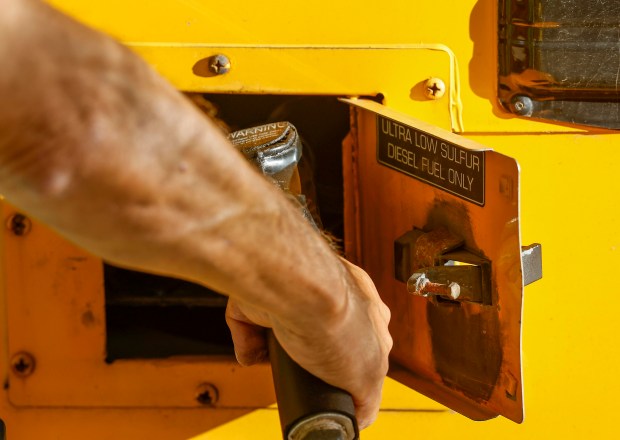
Suburban school districts managing their own buses have been severely impacted by steep diesel prices. This fall, global supply issues from conflicts in Iran and Ukraine along with a power outage at an ExxonMobil refinery spiked Illinois diesel prices. AAA reported a peak average of $6.83 per gallon on September 23. The price has since decreased to $6.58 per gallon.
Naperville Unit District 203
Naperville Unit District 203 is feeling financial pressure. The district runs over 120 diesel buses for about 16,000 students. Diesel costs may add $300,000 to their fuel bill for the 2026-27 school year if prices remain high. Lisa Xagas, the assistant superintendent, credits optimized bus routes for saving about 900 miles daily, which lessened potential expenses. She emphasized keeping field trips and transportation services intact despite cost concerns.
The district has allocated $15.6 million for transportation, making up 4.2% of its $370 million budget. Yet, rising costs concern district officials due to a $3.9 million budget shortfall caused partially by declining enrollment. Reserve funds may cover short-term increases, but decisions will be needed during budget planning for 2027-28 if diesel prices stay elevated. Planned electric bus purchases have stalled, pending overdue deliveries.
Elgin Area School District U-46
Serving over 33,000 students with 331 diesel buses, Elgin Area School District U-46 is also assessing the prolonged financial impact of diesel prices, setting aside $2.6 million for fuel in 2027. Official estimates on budget effects are not yet available. Their transportation director, Marcy Murphy, is exploring alternative fuels like electric and natural gas options to mitigate costs.
Palatine-Schaumburg Township High School District 211
District 211, serving almost 9,000 students, foresaw diesel price spikes and began switching to propane in 2018-19. Now boasting 80 propane buses out of 200, they pay $1.15 to $1.40 per gallon, saving over $5 per gallon compared to diesel. Chief Operating Officer Lauren Hummel noted reliability and reduced noise among propane’s benefits. Despite evaluating electric buses, cost concerns led them to choose propane instead.
St. Charles Community Unit District 303
District 303, with around 12,000 students, has reduced diesel reliance, operating only 12 diesel buses. Rising diesel costs prompted minor changes, such as avoiding diesel buses for long trips. Deferred expenditures may include equipment replacements if diesel prices persist.
“These changes do not impact the quality of service or safety,” said Deborah Mason, District 303’s Transportation Director.
Susan Mudd from the Environmental Law & Policy Center advocates for electric buses as environmentally friendly. Despite higher upfront costs, she highlights long-term savings and available government transition programs. The EPA’s Clean School Bus Program has distributed $2.6 billion for cleaner bus replacements since 2021.
Financial and Future Challenges
Naperville 203 faces additional challenges with reduced state funding. State law requires an 80% reimbursement but lacks sufficient appropriations, leaving Naperville 203 short by $8.4 million over five years. The district continues advocating for increased state funds to ease fuel cost pressures, though no formal progress has been achieved.
GasBuddy’s Patrick De Haan believes diesel prices might drop slightly as operations normalize at ExxonMobil’s Joliet plant. Yet, any substantial price relief is uncertain, hinging on international geopolitical developments.
 Tourist Dies in Accident at Frank Lloyd Wright’s Taliesin West
 Canadian Tourist Convicted for Flamingo Incident in Las Vegas
 ACE Scholarships Help Denver Student Excel with School Choice
 Dashcam Video Captures Plane Crash on San Jose Highway
 Jalen Hurts Faces Long Recovery Due to Blood Clots
 Cessna 177 Crash on Capitol Expressway, San Jose