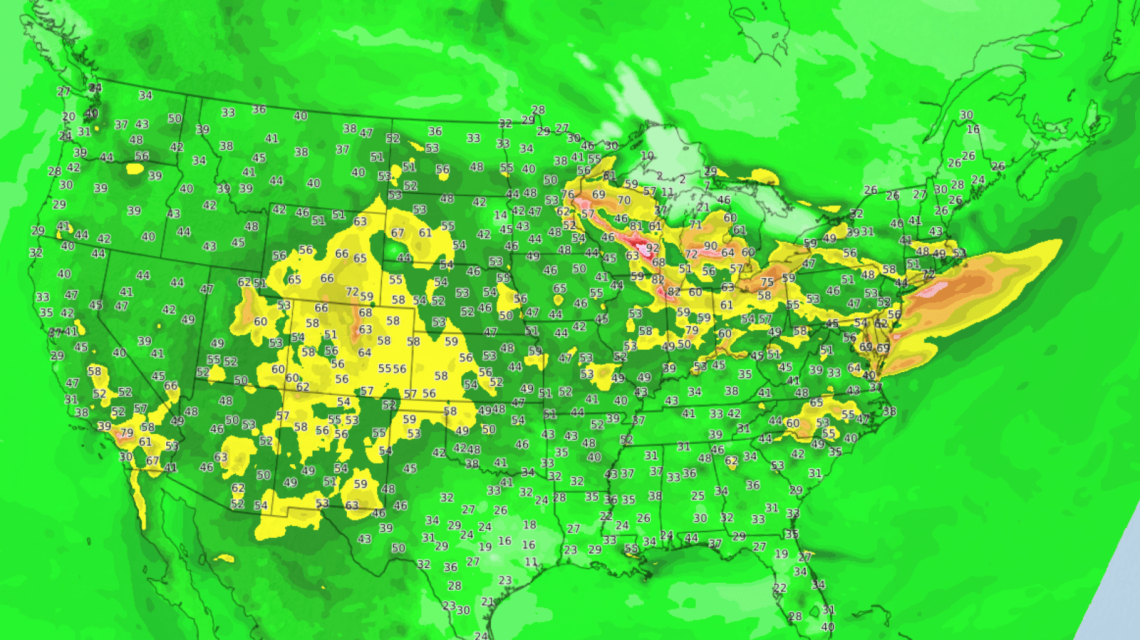
Smoke from numerous active wildfires burning in Canada continues to spread into the U.S., leading to air quality alerts across various states and casting a visible haze over parts of New York. More than 800 Canadian wildfires are contributing to this, causing reduced visibility and raising fine particulate pollution levels. Officials have warned about potential health risks, especially for children, older adults, and individuals with respiratory or cardiovascular issues.
New York’s Emergency Measures
According to ABC7, New York City expanded emergency measures in response to the smoky conditions coinciding with summer heat. Mayor Zohran Mamdani urged residents to seek air-conditioned spaces, limit outdoor activities, stay hydrated, and check on vulnerable neighbors. Free KN95 masks were distributed in the city as forecasts predicted air quality reaching the ‘Unhealthy’ category.
The New York State Department of Environmental Conservation (DEC) and Department of Health extended a statewide Air Quality Health Advisory. They cited ongoing wildfire smoke and elevated pollution levels. Governor Kathy Hochul advised residents to monitor air quality and take precautions. She emphasized that sensitive groups should be particularly cautious.
New York Under Air Quality Alerts
New York faces significant impacts from Canadian wildfire smoke, with health advisories covering large parts of the state. Areas affected include New York City, Long Island, Hudson Valley, the Capital Region, Central New York, the North Country, and western New York. The Department of Environmental Conservation noted elevated fine particulate pollution was expected to push AQI levels above 100 in many locations.
Other Areas Affected by Canadian Wildfire Smoke
The impact of Canadian wildfire smoke extended beyond New York, affecting parts of the Midwest, Great Lakes, and Northeast on Thursday. The National Weather Service and state agencies issued alerts for areas in Minnesota, Michigan, Illinois, Indiana, Ohio, Pennsylvania, and West Virginia.
In Minnesota, the Pollution Control Agency warned the Air Quality Index (AQI) might reach the ‘Maroon’ or Hazardous category. Michigan reported widespread smoke impacts, with potential to reach ‘unhealthy’ levels. Pennsylvania’s Department of Environmental Protection declared Code Red air quality alerts, with smoke expected to persist through Friday. Ohio’s Environmental Protection Agency issued a statewide advisory, cautioning about ‘unhealthy for sensitive groups’ conditions.
Health Risks from Wildfire Smoke
Wildfire smoke contains microscopic particles, known as PM2.5, that can deeply penetrate the lungs and enter the bloodstream. Health officials note that exposure may result in coughing, shortness of breath, chest tightness, dizziness, fatigue, and exacerbate conditions like asthma, COPD, and heart ailments.
Authorities advise those in affected regions to reduce strenuous outdoor activities during elevated smoke levels, keep windows and doors closed, utilize air conditioning or filtration systems if possible, and wear high-quality masks like N95 or KN95 respirators when outdoors.
What Happens Next?
Meteorologists and air quality experts are closely monitoring smoke movement across the Northeast. Residents are encouraged to stay updated with local air quality forecasts and advisories, as wind changes can swiftly alter smoke concentrations. For New Yorkers contending with summer heat, the combination of high temperatures and poor air quality remains a concern until cleaner air returns.
 Fatal Car Crash in Grand Rapids Involving ICE Agents
  Orland Park Plans Traffic Enforcement Measures
  Congressional Hearing Addresses Fatal Shootings Involving Federal Agents
  Texas Man Arrested in Shooting of 5-Year-Old Girl
  Star Meat Delivery Inc. Recalls Over 167,000 Pounds of Meat
  Debating Government Involvement in Family Homes