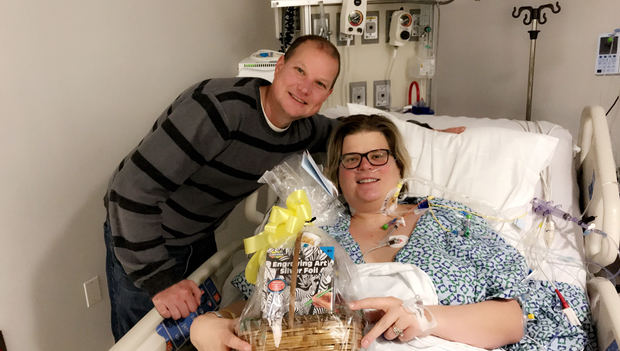
Megan Kaverman, at age 18, started experiencing unexplained weight gain and shortness of breath. Despite these symptoms, her family doctor couldn’t determine the cause. As the symptoms persisted and intensified, her visits to various doctors brought no clarity.
At 25, fatigue and breathing difficulties began to dominate her life. When she sought medical advice, many dismissed her concerns. One physician noted her weight gain without offering an explanation. Another assumed her high blood pressure was due to anxiety. Multiple emergency room visits yielded no answers. Doctors reassured her she was too young for serious heart issues. However, by age 27, her symptoms worsened, prompting another ER visit where tests indicated early heart failure.
“They just kind of pushed it aside, ‘You’re too young to have a heart problem,'” Kaverman recalled.
Determined to uncover the truth, Kaverman refused to leave the hospital without a diagnosis. Intensive testing in the ICU led to the identification of her rare heart condition, heritable pulmonary arterial hypertension. This genetic disorder, which involves mutations that cause lung artery narrowing, elevates blood pressure and strains the heart.
Following her diagnosis, she received treatment at the Cleveland Clinic. Her commitment to recovery earned her a new perspective, regarding the diagnosis day as her “rebirth.” When her sister Katie Gusching, at 32, began experiencing similar symptoms, she recalled Kaverman’s encouragement to consider pulmonary hypertension.
Gusching faced shortness of breath, leg swelling, and faint vision episodes. Upon Kaverman’s advice, she underwent the same tests, leading to her diagnosis with the same condition. Gusching credited her sister’s persistence for helping her identify the problem and seek treatment.
“If she hadn’t gone through hell and back to figure out what she had, who knows if I’d be here,” Gusching said.
The sisters discovered their condition is part of less than 4% of cases of heritable pulmonary arterial hypertension, affecting fewer than one in a million people globally. Most are diagnosed during heart failure stages, but treatments exist that can manage the condition.
Both sisters have become advocates for awareness of pulmonary hypertension. Kaverman’s ongoing efforts aim to enhance understanding and identification of the disease to help others avoid similar struggles.
Both women actively participate in clinical trials at the Cleveland Clinic, working with pulmonologists Dr. Kristen Highland and Dr. Adriano Tonelli. Recent advancements in treatment options give hope, which both sisters embody as they partake in research efforts.
Today, their condition is under control. Gusching has resumed activities she once thought impossible, such as hiking. Kaverman’s new medication facilitates her running in 5Ks, a feat she could not have imagined before.
Throughout this ordeal, their bond has strengthened. They often schedule their Cleveland Clinic appointments together, making the trips an opportunity for both medical care and sisterly connection.
“We have things to share whenever we go to the clinic. If we don’t go together, we’ll call each other and explain our results,” Kaverman said. “Katie and I have always shared a lot, and I just feel like this brings us closer together.”
 Florida Man Claims ‘Lion Diet’ Transformed Health and Life
  Concerns Over Food Safety and Its Impact on Families
  A Mother’s Tragic Journey Under Abortion Ban
  Medical Diagnosis Errors: Understanding the Crisis
  Lymphatic Drainage and Ice Sculpting: Emerging Wellness Trends
  The Rising Trend of GLP-1 Medications Among College Students