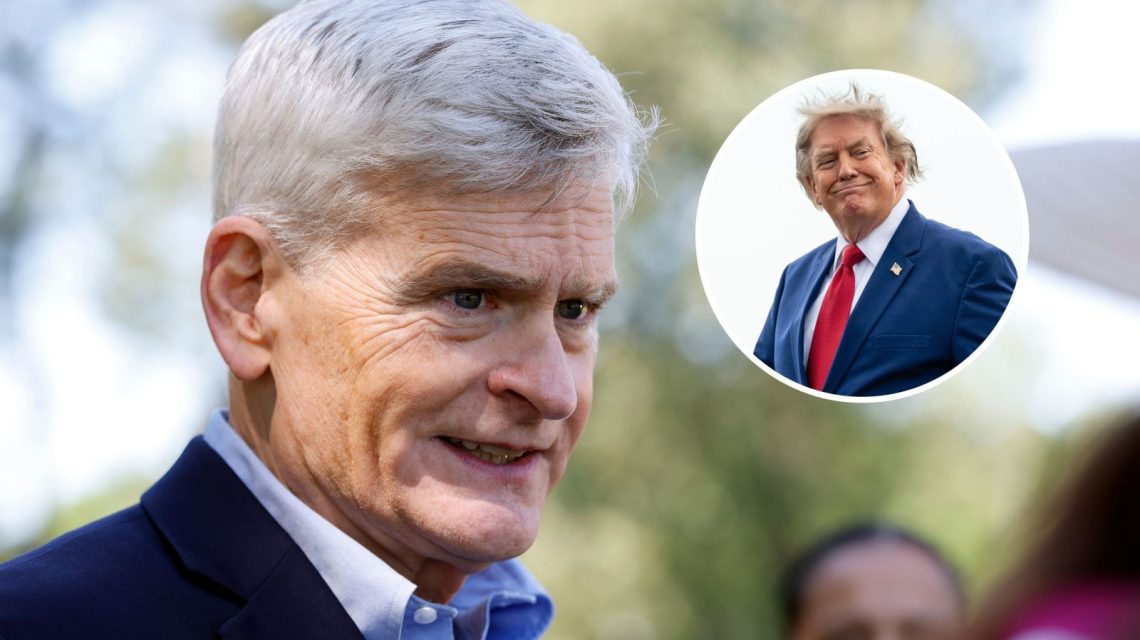
Republican Senator Bill Cassidy has openly criticized President Donald Trump’s recent changes to childhood vaccination policy. Calling it a “stupid policy,” Cassidy voiced strong opposition during an interview on ABC’s This Week. The policy mandates splitting the combined measles, mumps, and rubella (MMR) vaccine into separate shots. Cassidy, a doctor and consistent advocate for vaccine science, argues this creates inconvenience for parents.
Cassidy’s critique is notable given his significant role in confirming Health and Human Services Secretary Robert F. Kennedy Jr. This comes despite Kennedy’s controversial views on vaccines. Less than a week prior, Trump issued an executive order to modify vaccine recommendations, which sparked this debate.
Cassidy Opposes Vaccine Plan
Cassidy asserts the policy will inflate costs, necessitate extra doctor’s appointments, and increase injection frequency without any scientific merit. “Instead of your child getting two shots, she has to get six shots,” he explained. Cassidy counters Trump’s and Kennedy’s claims linking vaccines to autism, affirming there is no evidence supporting such claims.
Cassidy emphasizes the practical implications for parents, pointing out, “You’ve lost sight of affordability and parental convenience.” This resonates with his previous arguments against the executive order. Cassidy believes combination vaccines decrease the number of doctor’s visits, missed workdays, and costs, while still effectively protecting children.
Trump’s Defense and Expert Opinions
Despite Cassidy’s opposition, Trump continues to defend the policy changes. He described vaccines as being “the size of a bottle of soda” injected into children. Medical experts have strongly refuted this description. Melissa Stockwell from Columbia University mentioned that routine vaccinations are much less in volume than claimed by Trump, amounting to approximately two teaspoons in total across early childhood.
The executive order aims to split the MMR vaccine into individual shots where available and shift certain vaccine recommendations to a more individualized decision-making approach. Experts warn this could delay vaccinations and reduce immunization rates amid a significant measles outbreak.
Republican Tensions Over Vaccines
The backdrop of Cassidy’s criticism reflects his complex interactions with Trump and Kennedy. Cassidy was among a few Republicans who voted to convict Trump after the Capitol riot. He has also questioned Kennedy’s vaccine policies but hesitated to accuse him of failing to meet promises made during confirmation discussions. Cassidy highlighted guarantees to uphold existing vaccine recommendations and scientific review processes.
Cassidy remains a significant Republican voice opposing Kennedy’s vaccine agenda, defending the scientific consensus that vaccines are not linked to autism. Yet, he does not fully diverge from Trump on other policies. With his Senate term nearing its end in January, Cassidy experiences less political pressure than Republicans relying on Trump’s support.
Implications of Cassidy’s Criticism
Cassidy’s comments underscore growing divides in the Republican Party over vaccines and Kennedy’s health agenda. As a physician and Senate Health Committee chair, his words carry substantial political weight. His criticism offers a rare glimpse of discord within the GOP as federal vaccine recommendations are being reshaped.
By focusing on parental convenience, affordability, and public trust, Cassidy warns that the political fallout could extend beyond health policies. “This is why the president’s poll numbers are down,” he remarked, indicating broader implications for Trump’s administration.
 Trump’s Use of Taxpayer Dollars for Political Advertising Sparks Controversy
  Reforming the Jones Act: Evidence for Change
  J. Dennis Hastert’s Legacy and Controversies
  Growing Support for White Nationalism Among Young White Men in the U.S.
  Choosing the Best Probiotic Powder for Your Gut Health
  Erratic Policy Shifts Before Midterms Reflect Tensions in Trump Administration