
Thousands of cases of a potentially deadly, drug-resistant fungus have emerged across 27 states in the United States this year. Provisional data from the Centers for Disease Control and Prevention (CDC) reports 3,437 clinical cases of Candida auris (C. auris) as of July 25, 2026.
Key States Affected
California reports the highest number with 873 cases, accounting for about one-quarter of the total cases nationwide. Other states with significant numbers include Texas with 433 cases, Tennessee with 283, and Ohio with 279. Georgia, Louisiana, Illinois, Arizona, Michigan, Virginia, and Pennsylvania also have substantial case numbers, according to the CDC.
Transmission and Risks
Candida auris is a yeast causing serious infections primarily in healthcare settings like hospitals and nursing homes. The fungus can persist on surfaces and is highly transmissible through contact with contaminated surfaces or objects. It can spread via bedrails, doorknobs, and shared medical equipment. Colonization occurs when individuals carry the fungus without symptoms.
Clinical cases include detection of C. auris in medical specimens, but may not always indicate an active infection. Health impacts can range from symptomless colonization to severe, potentially deadly infections like bloodstream infections. Patients with severe medical conditions and those using breathing tubes, feeding tubes, IVs, or catheters are at a higher risk, especially during prolonged hospitalizations.
Medical Concerns and Resistance
Dr. Marc Siegel, a senior medical analyst and clinical professor at NYU Langone, highlights C. auris as an emerging, concerning issue. The fungus shows resistance to multiple antifungal drugs and spreads in hospitals, often affecting patients with weakened immune systems through equipment like ventilators and catheters.
Invasive C. auris infections have mortality rates between 30% and 72%, often affecting already seriously ill patients, complicating the determination of its direct impact on mortality.
The CDC labels C. auris as an urgent antimicrobial-resistance threat due to its resistance against common antifungal medications, like fluconazole. Echinocandins serve as the primary treatment option, though some strains resist all primary antifungal classes.
Dr. Siegel stresses ongoing research efforts to develop new treatments. At the same time, improving sterilization and disinfection protocols in hospitals can mitigate the spread of C. auris and other antibiotic-resistant infections.
 Concerns and Legal Actions Arise Over GLP-1 Drugs and Vision Loss
  Partner’s GLP-1 Use Spurs Financial and Dietary Concerns
  Starbucks Faces Lawsuit Over ‘Sugar-Free’ Protein Drinks
 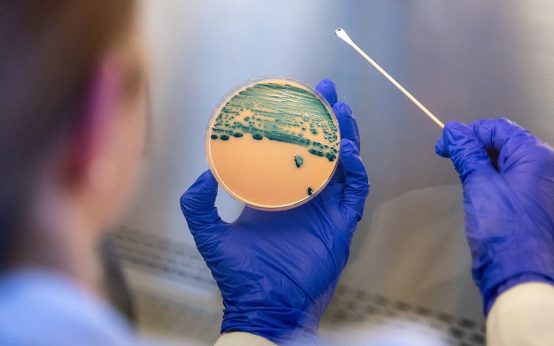 Rising Antibiotic Resistance in Shigella Infections
  Parent’s Journey Through Their Child’s Congenital Cataract Diagnosis
  Vicky Titcomb’s Cancer Journey and Treatment Advances