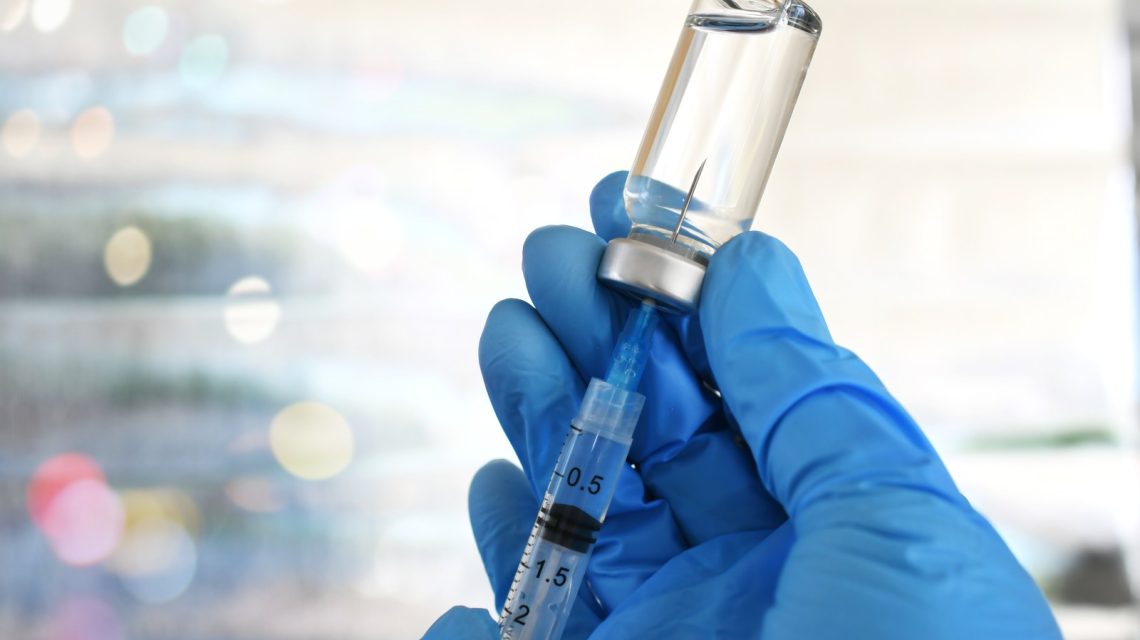
Researchers in Denmark have crafted a new vaccine aimed at protecting against multiple food allergies with only a single treatment. This experimental vaccine has shown promising results in mice, prompting the production of protective antibodies against several related food allergens. The team is currently refining the technology, preparing for human trials.
Over 220 million people worldwide suffer from food allergies, according to United Nations figures. These allergies occur when the immune system mistakenly identifies harmless food proteins as threats, leading to reactions ranging from vomiting and a runny nose to potentially life-threatening anaphylaxis.
Current treatment options involve gradually exposing patients to increasing amounts of the allergen over several years, using injections or tablets, to foster immune system tolerance. However, this process can be uncomfortable and time-consuming, causing many to avoid allergen-triggering foods altogether.
Researchers at the Technical University of Denmark (DTU) have come up with a vaccine containing a synthetic allergen designed to target several related allergens found in foods such as peaches and certain nuts. Associate Professor Esperanza Rivera de Torre from DTU Bioengineering explains, “The idea is to take the common molecular structure of different allergens, produce an artificial version, and incorporate it into a vaccine.”
The vaccine utilizes messenger RNA (mRNA), the same technology used in COVID-19 vaccines. Instead of exposing patients directly to allergens, mRNA instructs the body to produce antibodies that recognize and block allergens before reactions occur. This approach aims to help those reacting to foods with structurally similar allergens. “We use mRNA as a Trojan horse,” said Rivera de Torre. “The goal is for patients to eat without checking ingredient lists.”
Kristi Miley, a virologist at the University of South Florida College of Public Health, cautions that research is in early stages for mRNA immunizations targeting food allergies. “Developing a robust vaccine for multiple allergens is complex, needing precise calculations on how many allergens can be safely included in one injection without adverse effects.”
The study published in Nature Communications in February 2026 tested the vaccine on both healthy and allergic mice.
Healthy mice produced large quantities of protective antibodies after the first dose. After three doses, given three weeks apart, the animals were exposed to various allergens targeted by the vaccine. Results showed a strong antibody response covering a broad range of allergens. Allergic mice also had a significant increase in protective antibodies, with minimal observed side effects. Despite these successes, the treatment did not completely protect against anaphylaxis at the tested doses and concentrations.
Laboratory tests involving cells and blood from allergic patients also yielded encouraging data. Protective antibodies from vaccinated mice prevented allergic reactions in human samples. These findings provide proof of concept, proving the technical feasibility of the vaccine approach. Researchers are now refining the formulation, including improving the lipid particles that deliver the immune-activating components.
Miley mentions crucial unanswered questions about moving from mouse studies to human treatments, particularly regarding dosing, effectiveness, and safety. Concerns exist whether this approach can protect against anaphylaxis and at what dose. “Including allergen-encoding genetic material could also lead to unintended inflammatory responses.”
The team plans further studies with larger mice groups to determine the optimal dosage and vaccination schedule, especially to achieve protection against severe reactions like anaphylaxis. Beyond peaches and some nuts, researchers aim to apply the approach to other groups of cross-reactive allergens, such as those related to apples, carrots, and hazelnuts.
For further information, reach out to Newsweek editors Kara Dolman and Paul Donnelley.
 Hormone Contamination Prompts Toothpaste and Mouthwash Recall
 Christina Applegate Discusses Possible Link Between Breast Implants and Misdiagnosed MS
 French Protests Prompt Calls to Examine Tear Gas Impact on Women’s Health
 Transgender Doctor’s Medical Practice Halted After Allegations
 Navigating the Holidays with GLP-1 Medications
 Migration, Politics, Peace Talks, Health Alerts, Legal Settlements, and Fire Conviction News