Investigating the Ease of Establishing Private Schools
Journalists at ProPublica were curious about the regulatory environment surrounding private schools. They explored the notion that anyone could open a private school without needing experience, training, or a curriculum. This investigation stemmed from reports showing a rapid increase in unmonitored private schools receiving taxpayer money.
The Inspiration Behind the Experiment
The idea of founding a school drew parallels to past investigative efforts, such as John Oliver’s tax-exempt church and the Mirage Tavern case in Chicago. Both demonstrated how easy it was to circumvent regulations, sparking ProPublica’s interest in testing school opening procedures.
Setting the Ground Rules
The aim wasn’t to run actual schools but to investigate the process. Transparency was crucial, with journalists openly identifying themselves in applications. The experiment would halt if anything illegal or inappropriate was required.
Partnering with Local Newsrooms
Collaborating with local outlets in Arkansas, West Virginia, and North Carolina provided valuable insights. Journalists worked alongside local reporters, drawing on their knowledge and using their newsroom addresses for applications.
Creating Curiosity Academies
Schools were named Curiosity Academies to reflect the investigative spirit. Names varied slightly based on state-specific requirements. Applications illustrated the minimal barriers involved.
Examining State Regulations
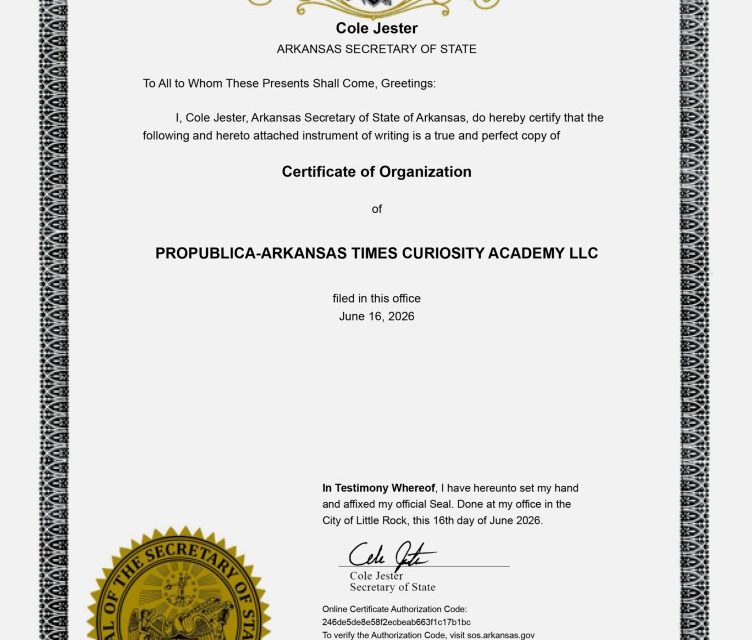
In Arkansas, no permission was needed from the Education Department; a simple online form sufficed to establish a school business. The academy’s status was confirmed with a certificate from the secretary of state’s office. Attempts to qualify for public funds unveiled differing requirements for private and microschools.
In West Virginia, establishing a microschool proved straightforward. Proof of education was necessary, leading to submission of a college transcript. The Department of Education provided limited oversight, with no approval mechanism for microschool operations.
North Carolina posed ethical challenges, leading to the abandonment of the project. Stricter requirements for fire and sanitation inspections at specific locations were incongruent with the project’s ethical standards.
The Outcome of the Experiment
Although journalists technically became school administrators, plans were in place to close the academies, avoiding potential confusion with real educational institutions. School pens and a website reflected the brief endeavor.
Your Turn to Test the Process
Readers were invited to explore whether they could replicate the process via a quiz, prompting interaction with ProPublica through email or social media.
 Reevaluating the Value of a College Education
  Satisfaction with K-12 Education Hits Record Low
  Understanding Misperceptions and Inaction in Sexual Assault Prevention
  Understanding the Impact of Race-Conscious Admissions Changes on College Enrollment
  Cornell University Faces Scrutiny Over Handling of Sexual Assault Case
  Gen Z Freshmen Opt for Online Classes Over Traditional Campus Life