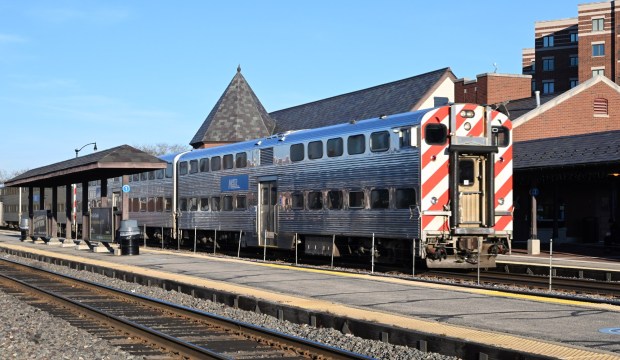
The COVID-19 pandemic brought significant changes to many sectors, including public transportation. Metra, the regional rail service, used the downturn in ridership as an opportunity to initiate an impressive transformation. The pandemic led Metra to devise a $9 billion Systemwide Network Plan (SNP). This plan aims to offer faster and more frequent train services, while expanding routes to O’Hare International Airport.
Transforming Service Paradigms
Metra plans to shift its service paradigm, which traditionally focused on suburbs-to-Chicago rush-hour transportation. The new approach, termed ‘Regional Rail,’ will provide diverse trip options throughout the day across six counties. The focus is on all-day availability, maintaining robust rush-hour services, and adapting to modern commuter needs.
The SNP outlines initial steps, known as Regional Rail 1.0, and longer-term advancements under Regional Rail 2.0.
Regional Rail 1.0
In the immediate term, Metra intends to implement ‘inner-zone’ services, increasing train frequencies in Chicago and nearby suburbs. This includes ‘outer-zone’ services for farther suburbs. For instance, on the Union Pacific North Line, an inner zone might cover Winnetka to downtown Chicago, while the outer zone extends from Kenosha to Winnetka. Transfer stations will facilitate access between zones.
For inner-zone services, Metra aims to offer trains every 30 minutes, including weekends. Outer-zone trains will stop at all stations until Winnetka, then run express to downtown Chicago.
Zoning Opportunities
Metra identifies the Milwaukee District North Line as another candidate for zoning, with over half of trips centered in stations closest to downtown. This line could feature two outer zones with turning points at Glenview and Libertyville. Other recommended lines for zoning include the Rock Island and Metra Electric lines.
Routes like the BNSF and Union Pacific West lines won’t adopt the inner/outer model due to high freight traffic. Instead, these will focus on streamlined stop patterns for consistent service.
North Central Service
The SNP suggests upgrades for the North Central Service, including new tracks for 30-minute train service between O’Hare Airport and Union Station. The Milwaukee District West route will benefit from shared tracks and proposed transfers at River Grove.
Regional Rail 2.0
Looking further, Regional Rail 2.0 aims to increase train frequency to every 15 to 30 minutes, requiring $6.4 billion in funding. A significant portion, about $5.1 billion, will expand O’Hare routes with crosstown services through Union Station and connections to the Rock Island line.
This phase includes enhancements on the NCS, Milwaukee District lines, and Rock Island line, with potential additional tracks or flyovers to reduce congestion. Plans also call for more locomotives and coaches on the UP Northwest and North lines, and turning tracks at Arlington Heights for more daily UP Northwest services.
Challenges and Opportunities
Despite the ambitious plans, funding remains a challenge. The Northern Illinois Transit Authority’s five-year budget for all transit services, including Metra, is only $9.7 billion. Coordination with freight railroads like BNSF, UP, and CPKC is also critical.
Metra faces a unique challenge as the sole U.S. transit operator interfacing with all Class One railroads. Nevertheless, increasing train frequency has historically boosted ridership, making the effort worthwhile, as noted by Aaron Maertins, Director of Operations Planning and Project Management.