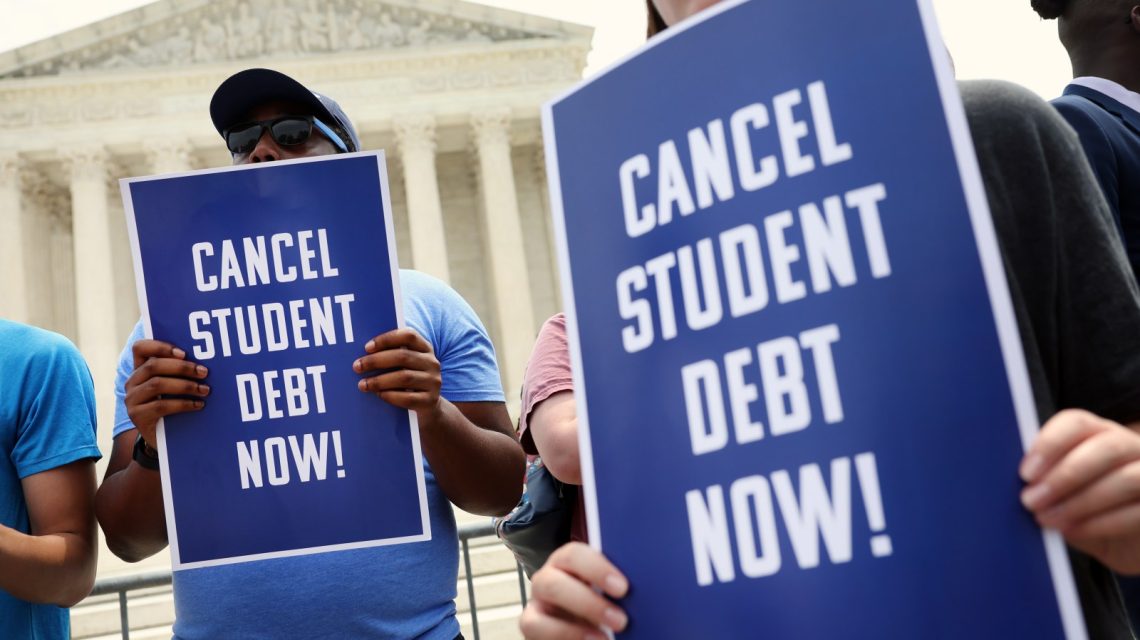
Millions of Americans with federal student loans could see their monthly payments decrease through a new congressional proposal. The Student Loan Interest Elimination Act, supported by two Democrats, Senator Peter Welch of Vermont and Representative Joe Courtney of Connecticut, aims to eliminate interest on federal student loans completely.
Why It Matters
If passed, this legislation would represent a major reform in student loan policies, different from past proposals that only reduced interest rates. Eliminating interest entirely is intended to help borrowers, as interest accumulation significantly increases repayment amounts.
What To Know
The proposal includes refinancing existing federal loans to 0 percent interest and restructuring future loan financing. In 2026, student loan defaults reached record highs. According to Courtney, high interest rates have become a massive burden for the 42 million student loan borrowers in the U.S.
“Student loan defaults have hit record highs in 2026. When we are already in an affordability crisis, bad policies have made crushing student loan debt with record-level interest rates an even greater burden for the 42 million student loan borrowers in the United States,” Courtney said.
Currently, 43 million Americans with federal loans would benefit from this legislation. Unlike forgiveness proposals, borrowers must repay their principal, but the interest would vanish. This change would allow payments to reduce the principal, shortening repayment terms and preventing balance growth, according to Alex Beene, a financial literacy instructor.
A Department of Education trust fund is another feature of the proposal, where borrower payments would be invested in safe assets like Treasury and municipal bonds. Earnings from these investments would help fund federal student loan operations.
How Much Could Borrowers Save?
Savings depend on a borrower’s balance, interest rate, and repayment schedule. Based on EducationData.org, an average borrower with a balance of about $39,547 would typically pay around $14,074 in interest over ten years at 6.39 percent.
If interest is eliminated, costs diminish substantially. Graduate students or those with larger balances stand to save more. On average, borrowers take 20 years to repay, which considerably adds to interest costs.
Who Would Qualify?
The legislation applies to federal loans only, not private ones. Existing federal borrowers can refinance to a zero percent rate, and future borrowers will also benefit. However, private loan borrowers or those who refinanced into private loans will not experience these changes.
Who Supports the Bill?
Welch and Courtney advocate for the bill, emphasizing borrowers should not carry excessive interest debt. The U.S. faces nearly $2 trillion in outstanding federal student loan debt, with average borrowers holding $40,000 in debt.
However, critics doubt the bill’s political or financial viability. Kevin Thompson, CEO of 9i Capital Group, argues that offering zero interest loans could lead to potential misuse of funds by borrowers seeking risk-free returns elsewhere.
Have Similar Proposals Been Introduced Before?
This legislation isn’t new. A previous version appeared in an earlier Congress and was reintroduced. Other proposals focused on lowering rates, such as Representative Mike Thompson’s Lowering Student Loans Act, which proposed a fixed 2 percent rate instead.
What Are the Chances of Passage?
The bill faces challenges in a Republican-controlled Congress. While appealing to borrowers, it fundamentally alters how federal loans are financed and raises cost concerns.
For now, borrowers will not see immediate changes. If the legislation passes, it could save borrowers thousands in interest over their loan lifetimes. However, Kevin Thompson suggests this change might push more borrowers towards the private lending market.
 Fatal Car Crash in Grand Rapids Involving ICE Agents
  Orland Park Plans Traffic Enforcement Measures
  Congressional Hearing Addresses Fatal Shootings Involving Federal Agents
  Texas Man Arrested in Shooting of 5-Year-Old Girl
  Implications of Stripping Tax-Exempt Status from Schools Engaging in Racial Admissions Policies
  Star Meat Delivery Inc. Recalls Over 167,000 Pounds of Meat