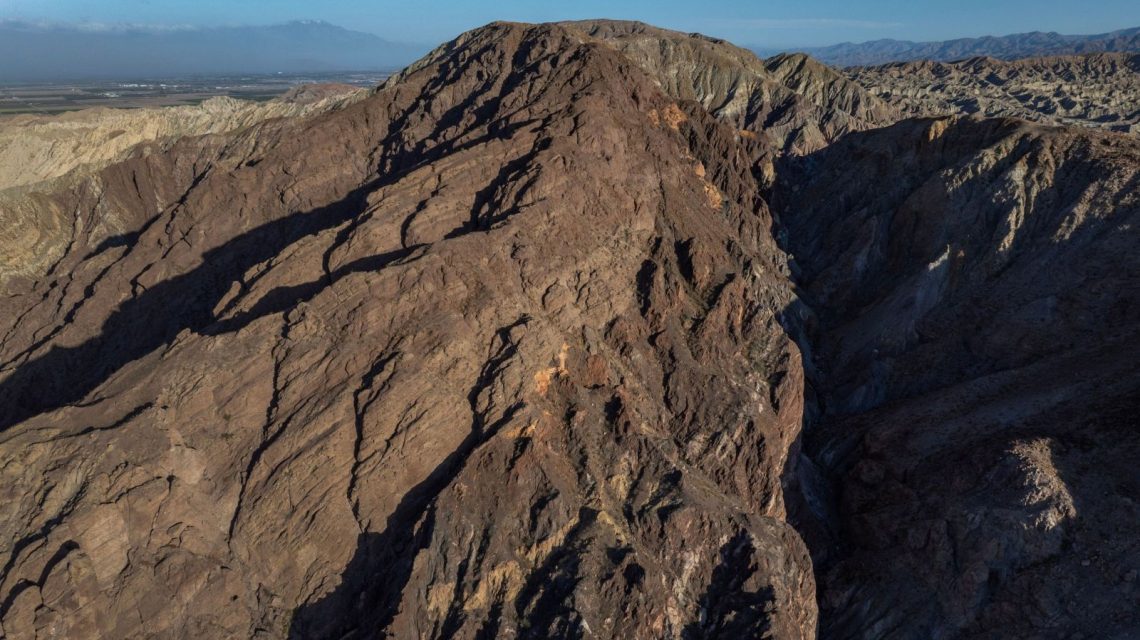
New research from earth scientists at the University of Hawaiʻi at Mānoa reveals that tectonic stress along the San Andreas and San Jacinto fault systems in Southern California has reached unprecedented levels. This study indicates significant seismic risk for the region. Researchers have found that several fault segments have reached or surpassed their peak stress levels over the past millennium. This signals a ‘critically loaded state’ of the fault systems.
Importance of the Findings
The research holds significant implications for seismic risk analysis. Southern California is densely populated and has vital infrastructure. The study highlights concerns about potential earthquake impacts in the region. Cajon Pass, a crucial junction between the faults, might act as an ‘earthquake gate.’ It can sometimes stop a rupture from continuing, or allow it to proceed through both faults in a single event. A joint rupture could have more severe consequences than an earthquake on one fault alone. Areas like Los Angeles, San Bernardino, Riverside, and the Coachella Valley might be affected.
Details of the Research
The study, published in the Journal of Geophysical Research: Solid Earth, used a physics-based earthquake cycle model. It simulates stress buildup and release over about 1,000 years along the San Andreas and San Jacinto systems, including Cajon Pass. Researchers used a millennium-long earthquake history from geological records, such as radiocarbon-dated displaced sediments and tree-ring evidence. The simulation helped estimate the current loading.
According to lead author Liliane Burkhard, stress levels on multiple fault segments now exceed the highest values seen in the past millennium. The region may be capable of a large through-going rupture. Cajon Pass could be an ‘earthquake gate,’ possibly blocking large ruptures or letting them affect both fault systems simultaneously.
Urgency and Preparedness
Burkhard emphasized the urgency of preparedness, stating this is not a theoretical risk. She noted that the stress driving large earthquakes has been accumulating since 1857. The model indicates it now exceeds any previous stress levels in a thousand-year record. While an earthquake may not happen imminently, the system is as loaded as ever, making preparedness crucial.
Burkhard suggests Southern California residents should take preparedness seriously. They should know evacuation routes and have communication plans and emergency kits with essential items like water, food, and medication.
Future Implications
The University of Hawaiʻi states this stress modeling can improve seismic hazard evaluations. It can guide infrastructure design, emergency planning, and building standards. The modeling approach developed in this study might apply to other complex fault intersections globally.
 Fire Amoeba Discovery Challenges Limits of Complex Organisms
  Impact of Sleep Types on Disease Risk
  Ice Age Mastodon Tooth Unearthed in California Creek
  The Unique Challenges of the Pumpkin Toadlet
  Animal Self-Medication Insights
  Carlo Rovelli’s Perspective on Physics and Ultimate Reality