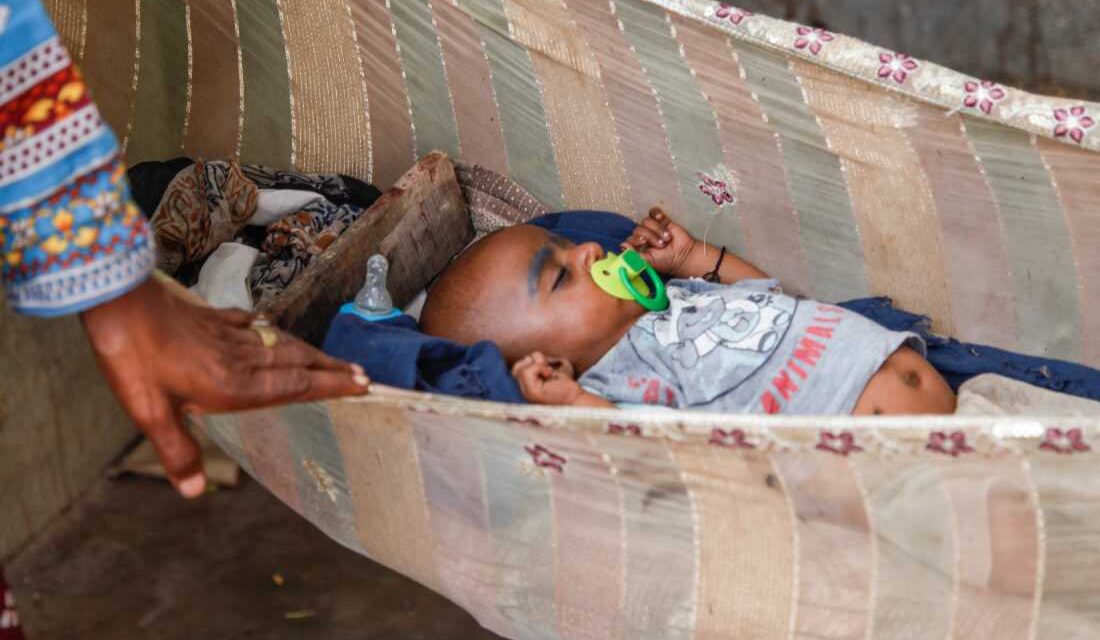
In the fishing settlement of Rehri Goth, Pakistan, premature births are alarmingly common. About 25% of babies are born early, which is nearly double the national rate of 14%. This rate ranks among the highest globally. Mariam, a young mother at 17, gave birth to her son Ladoo prematurely at around seven months. With no means for follow-up medical care, she brought him home, hoping for the best. Her story is common in Rehri Goth.
Dr. Fyezah Jehan, a maternal health expert from Agha Khan University, points to malnutrition, extreme heat, and poor sanitation as major factors contributing to early births in this area. Other countries with similar conditions do not have such high rates of prematurity, prompting researchers to investigate further. Jehan and her team focused on the microbiome, particularly the presence of a bacterium, Prevotella copri, which appears less in women giving birth prematurely. Their study involved 108 stool samples from women in the area over two decades, half of whom delivered prematurely.
The initial findings, while intriguing, are not ready to influence policy. Experiments are ongoing to replicate results with local samples and different years of collection. The aim is to cultivate Prevotella copri in the lab to test if it helps at-risk women carry pregnancies to term. However, Dr. Vincent B. Young from the University of Michigan cautions that association does not imply causation. Even if this bacterium plays a role in premature births, supplementing it may not provide a solution due to other interacting factors.
For mothers like Mariam, the challenges are immediate and severe. Without the resources for hospital care, Mariam relies on rudimentary and potentially harmful advice from local health workers. When Ladoo encountered diarrhea, advice misguided her to avoid breastfeeding and instead use formula. The water in Rehri Goth is unsafe for preparing formula. Cerelac, a commercial rice and milk powder mix not intended as a sole diet, becomes her only affordable option, though unsuitable for infants.
The World Health Organization emphasizes breastfeeding’s importance in building a baby’s immunity. Incorrect guidance poses significant risks in areas without clean water access. Addressing these complex issues requires broader interventions like improving education, water, and sanitation, tasks that face funding hurdles amid perceptions of governmental corruption.
Mariam’s struggle epitomizes the wider crisis in Rehri Goth. Amid inadequate resources and conflicting advice, she and her family strive to keep her son Ladoo alive. This reflects a broader narrative where scientific inquiry into the microbiome seeks to provide some answers, yet systemic improvements remain crucial.
 Florida Man Claims ‘Lion Diet’ Transformed Health and Life
  Concerns Over Food Safety and Its Impact on Families
  A Mother’s Tragic Journey Under Abortion Ban
  Medical Diagnosis Errors: Understanding the Crisis
  Lymphatic Drainage and Ice Sculpting: Emerging Wellness Trends
  The Rising Trend of GLP-1 Medications Among College Students