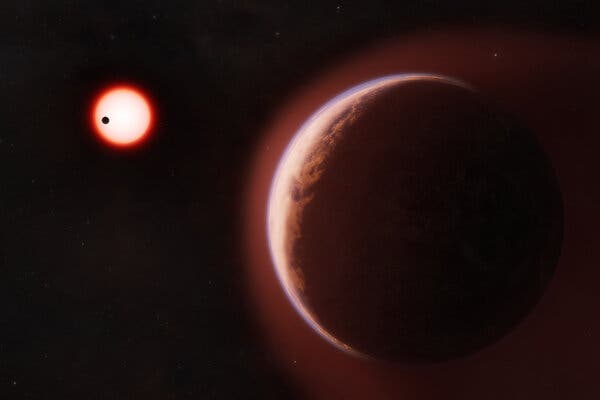
Scientists have identified a potentially habitable world, LHS 1140b, which possesses the key features conducive to life as known on Earth: a rocky surface, suitable temperature for liquid water, and an atmosphere.
Collin Cherubim, a planetary scientist from Harvard University, stated, “At this point, we have absolutely no evidence for life on the planet. But we think all of the really important, essential ingredients are there.”
LHS 1140b is located a few dozen light-years away from our solar system. The exoplanet orbits a star within the habitable zone, making the temperature range ideal for liquid water existence. Although first discovered in 2017, recent data underscores its potential habitability. The planet is cooler than Earth but larger in both size and mass.
New research published in Science journal suggests LHS 1140b has a helium-rich atmosphere. This marks the first evidence of a potentially habitable world with such an atmosphere. This discovery supports the theory that other planets with life-sustaining traits similar to ours may exist.
“When there’s one, there’s more in exoplanets,” said Sara Seager, an astrophysicist at M.I.T. “Hopefully this is the start of something new.”
Having an atmosphere is crucial for habitability because it retains water, regulates climate, and shields the surface from space radiation. While atmospheres are recognized on giant gas planets, scientists have been uncertain about rocky worlds maintaining them due to their smaller size and detection challenges.
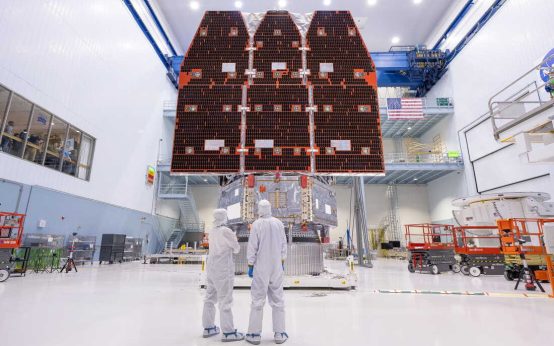 NASA’s Challenges Amid Goddard Space Flight Center Relocations
  Lost City Linked to Jesus Discovered Near the Sea of Galilee
  NASA’s Launch of the Nancy Grace Roman Space Telescope
  NASA Launches Nancy Grace Roman Space Telescope to Explore Universe’s Mysteries
 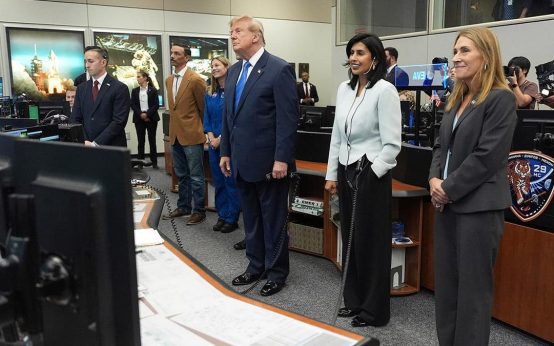 Trump Engages with Astronauts and Honors Artemis II Crew
  NASA’s Nancy Grace Roman Telescope Prepares for Launch