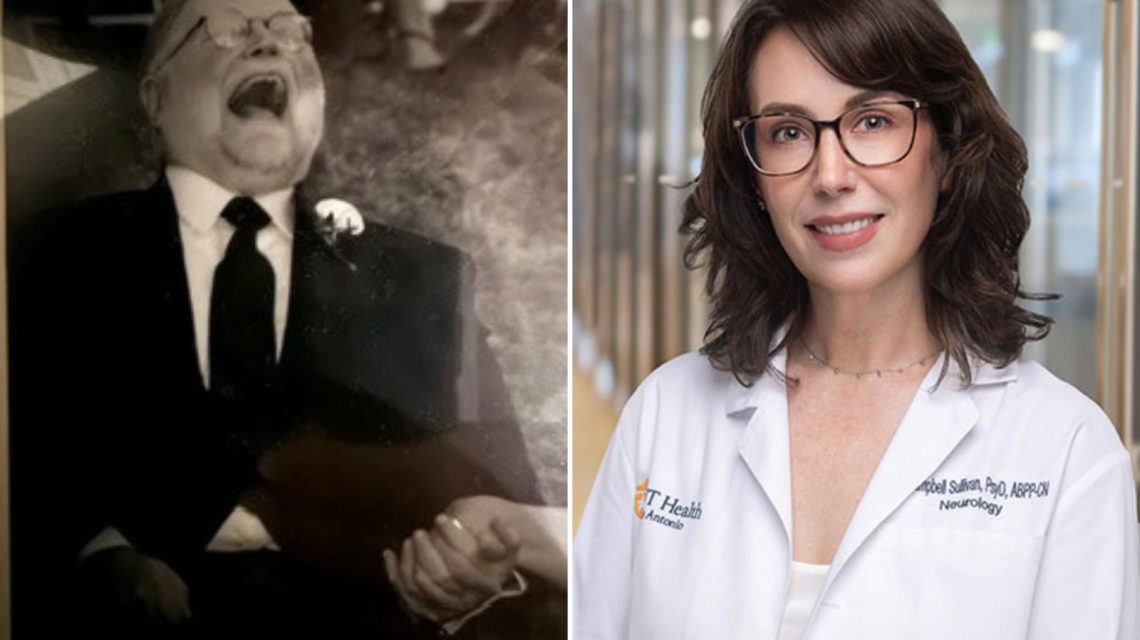
Growing up in Bellville, a small town in central Texas, the world of psychology was unfamiliar to me. I didn’t know any psychologists, let alone neuropsychologists, who treat conditions such as dementia. My journey into this field was unexpected.
I was pursuing my first master’s degree and needed a job, so I began working as a psychometrist. This role involved administering neuropsychological tests, and I found it suited me well. My training continued at the University of California, San Francisco, at the Memory and Aging Center, renowned for its focus on frontotemporal dementias (FTD). These disorders gradually affect the frontal and temporal lobes of the brain, altering thought, behavior, and movement. It was there I discovered my natural ability to engage with patients with strong personalities, likely influenced by my upbringing.
My family was filled with vibrant personalities. My father enjoyed being provocative with humor, despite his genteel upbringing. His encouragement shaped my character long before I realized how his illness would impact my career path.
‘Around 2003, my dad’s mobility issues began’
At first, we attributed his challenges to post-surgery complications. His condition worsened, progressing from using a cane to being wheelchair-bound by 2009. His behavior also shifted markedly, becoming superficial and juvenile. An incident at a Christmas dinner, where he licked his plate, was shockingly out of character.
As his judgment declined, he made poor financial choices, unconcerned about losing his lifestyle. These changes were linked to amyotrophic lateral sclerosis (ALS) paired with FTD, a connection not widely recognized at the time. While I evaluated patients with FTD, I hadn’t encountered anyone with both ALS and FTD. When my father passed away in 2011, I was a fellow at Johns Hopkins School of Medicine and decided to focus my training on atypical neurodegenerative diseases. I later moved to San Antonio to help start a new clinic.
‘FTD and ALS remain largely misunderstood’
Our clinic now predominantly assists patients with atypical cases and provides support to their families. Despite advancements, there’s still widespread misunderstanding of FTD and ALS, even among medical professionals. Patients exhibit diverse symptoms, such as changes in personality, judgment, language, motivation, and movement, diverging from typical dementia symptoms. Families often spend years figuring out their loved ones’ conditions alone.
Having witnessed these changes with my dad, I am particularly attuned to personality shifts and complicated familial dynamics. I became drawn to patients experiencing behavioral symptoms, feeling an understanding of their family’s experiences.
In 2021, my aunt started facing mobility issues. Following the COVID lockdown, her condition surprised me at my daughters’ birthday. Previously, she had made poor financial decisions and had lost insurance coverage. Fortunately, the Biggs Institute has a fund for uninsured individuals, which eventually helped diagnose her as having familial ALS-FTD from a TARDBP gene variant. This variant accounts for only two to five percent of familial ALS cases.
‘Sharing the diagnosis with her daughters was especially difficult’
Telling her about the prognosis wasn’t as challenging as informing her twin daughters. Understanding the genetic implications made me reconsider whether I wanted such knowledge about myself and my daughters.
In my work now, I approach genetic testing discussions with empathy, comprehending the complexity of this decision. Research and understanding of these diseases greatly benefit from patients and families, like my aunt’s, who contribute their time and biological data.
My support for families facing ALS and FTD has intensified. Numerous non-profit organizations offer valuable assistance, and I assure families they’re not alone in navigating these diseases.
A. Campbell Sullivan, 48, is a board-certified clinical neuropsychologist and associate professor of neurology at UT Health San Antonio’s Glenn Biggs Institute for Alzheimer’s and Neurodegenerative Diseases. She is also the Clinical Core Director at the South Texas Alzheimer’s Disease Research Center and co-director of the South Texas Frontotemporal Dementia Program. Residing in San Antonio, Texas, Sullivan has three daughters and enjoys listening to non-scientific podcasts in her free time.
 Great Lakes Face Beach Hazards Due to Dangerous Currents
  Artist Speaks Out on Rare Condition Impacting Her Career
  OpenAI’s Complex Solution to Navier-Stokes Equations Stirs Debate
  Mindfulness: Manage Stress by Embracing the Present
  Missouri’s Abortion Policy: Conflicting Amendments and Voter Decisions
  The Impact of Extended Job Searches on Mental Health