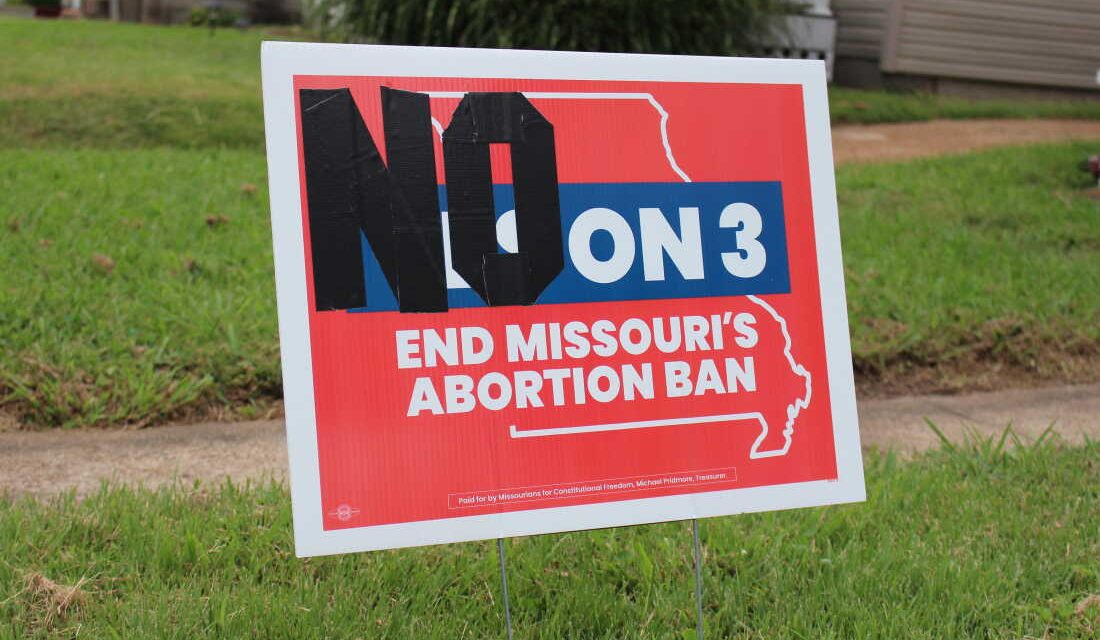
MAPLEWOOD, Mo. — In Missouri, voters face confusion over abortion legislation labeled as Amendment 3. In 2024, a ‘yes’ vote on Amendment 3 added protections for abortion to the state constitution. However, in 2026, a ‘no’ vote is necessary to maintain those protections. Kelly McCoomb, a resident of Maplewood, Missouri, adapted her yard sign from 2024 by covering ‘YES’ with ‘NO’ using duct tape.
After Missouri voters decided to include abortion protections in the constitution in 2024, McCoomb stored her sign supporting the amendment in her basement. She values abortion access for her daughter’s potential future needs and viewed the sign as a keepsake from when Missouri voters reversed the near-total abortion ban.
“I have little faith in our Missouri government,” McCoomb said on her front porch.
The state’s legislature, with a Republican majority, now asks voters to repeal the abortion protections they supported. Both 2024 and 2026 measures are titled Amendment 3. McCoomb adjusted her sign to reflect the necessary ‘no’ vote to keep the protections.
In the November general election, voters across Missouri and three other states will decide on abortion policy. Missouri and Nevada revisit the issue for the second time since 2024. Amendment 3 repeals the protections guaranteeing access through fetal viability and proposes exceptions for medical emergencies, fetal anomalies, and specific cases like rape or incest.
The repercussions of the 2022 Dobbs v. Jackson Women’s Health Organization Supreme Court ruling have led to varied abortion rules among states. Some states now uphold ‘shield laws’ protecting providers from prosecution. Kristi Hamrick, vice president of Students for Life Action, expressed concern over inconsistent state standards regarding human legal protection.
Efforts to Clarify Abortion Rules Across States
In Nevada, initiatives like Nevadans for Reproductive Freedom aim to cement existing laws up to 24 weeks into the state constitution. Denise Lopez, president of the coalition, noted previous strong voter support but requires another majority vote for enactment.
Idaho faces strict abortion bans and upcoming voter decisions on allowing abortion through fetal viability. Utah allows abortion up to 18 weeks amidst legal challenges. Virginia voters will decide whether to constitutionalize rights allowing abortion up to 28 weeks.
Missouri’s Voting Confusion
Margot Riphagen-Dunn, CEO of Planned Parenthood Great Rivers, shared that a second Missouri vote on abortion fosters confusion both for patients and voters. Tactics used by different factions exacerbate this confusion.
Anti-abortion advocate Reagan Barklage identifies the necessity for clarity among voters. Having corrected voters on the impending ‘yes’ vote this year, she acknowledges the challenge posed by identical amendment titles.
McCoomb expressed satisfaction in her sign receiving attention, hoping it encourages voter recall and participation.
KFF Health News, part of KFF, offers comprehensive journalism on health issues, contributing to health policy insights.
 Mindfulness: Manage Stress by Embracing the Present
  The Impact of Extended Job Searches on Mental Health
  Philanthropic Shift Towards Supporting Women in Midlife
  Remote Work Benefits Students and Societies Alike
  Challenges and Changes in the 911 Call Taking System
  Measles Exposure in Philadelphia Raises Health Concerns