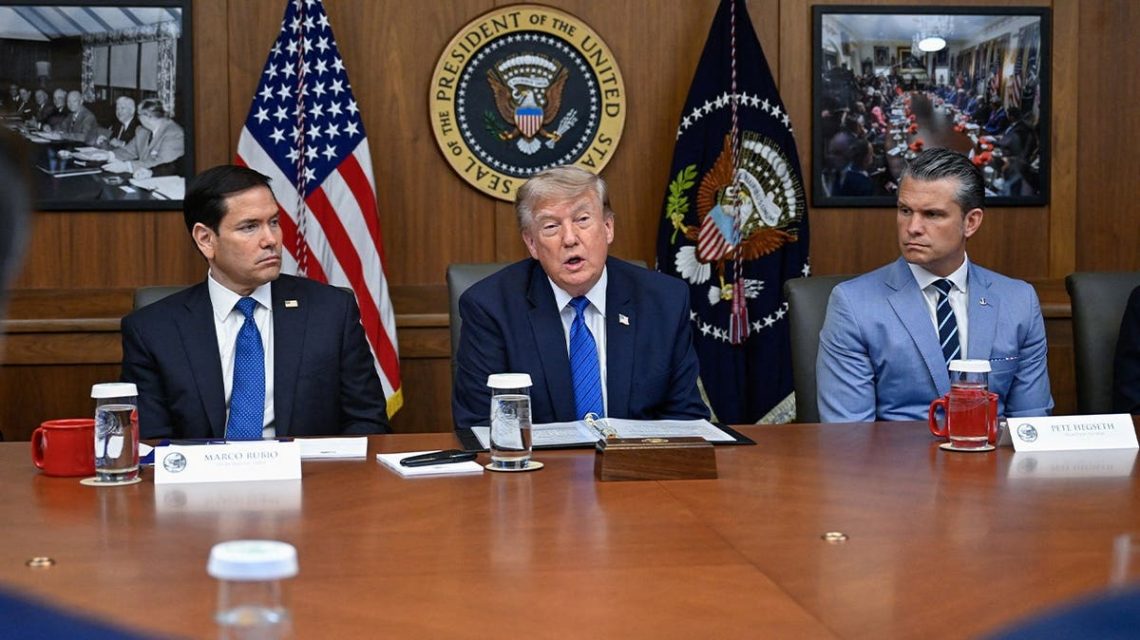
President Donald Trump indicated on Friday that Americans should brace for continued conflict with Iran. He predicted that Iran’s ability to retaliate would diminish over time due to U.S. military actions.
When questioned about the longevity of these conflicts until Iran’s military capabilities are overwhelmed, Trump responded affirmatively. He emphasized the need for vigilance, stating, “You know, you always have to keep your guard up.” According to Trump, Iran’s forces would “get weaker,” despite potential temporary reinforcements, eventually leading to their reduction in power.
ARMY IDS 2 victims killed in Jordan air base attack; Trump: Iran will pay ‘many times over’
The president’s remarks during a Cabinet meeting at Camp David, Maryland, acknowledged the possibility that the conflict could persist. This stands in contrast to his previous claims of significant damage to Iran’s military capabilities and earlier optimism about renewed negotiations.
Trump noted the U.S.’s ongoing effort to “win,” describing the adversarial situation as a decimation of Iranian forces. He pointed out that Iran lacks traditional military elements like a navy and air force. However, he also admitted, “They have some capability, but very little.” This acknowledgment complicates earlier statements from the administration about having eliminated Iran’s military power.
Earlier in the year, the White House stated that Operation Epic Fury achieved its objectives by dismantling Iran’s naval and missile capabilities. Despite these claims, Iran has continued military actions, including missile and drone attacks, against U.S. bases and has posed threats to commercial shipping.
TRUMP SAYS IRAN DEAL ‘LARGELY NEGOTIATED’ AS 84-DAY WAR NEARS POSSIBLE END
President Trump expressed doubt about securing a deal with Iran, criticizing Tehran for deception in negotiations. He shared his frustration, saying, “All they do is make me angry.” The ongoing hostilities have fueled uncertainty, especially as the U.S. approaches the November midterm elections, increasing political pressure on Trump to clarify the war’s conclusion.
As tensions rise, military activities continue in the region. U.S. strikes targeted Iranian military sites, including facilities associated with the Islamic Revolutionary Guard Corps, impacting command centers, missile and drone operations, coastal defenses, and maritime capabilities.
Despite efforts to restart negotiations and revive the collapsed June agreement aimed at ending hostilities, issues over control of the Strait of Hormuz, sanctions relief, and nuclear program discussions have hindered progress. Emerging attacks have further reduced prospects for a resolution.
 The Cost of Challenging Beijing
 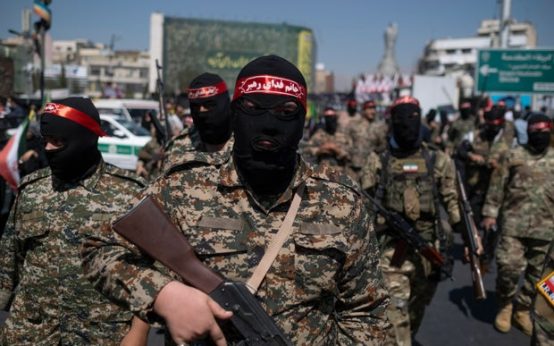 Tensions Escalate in Iran Conflict as Global Leaders Weigh Options
 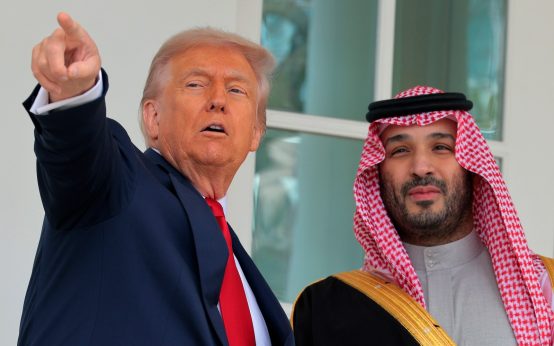 White House Approves F-35 Sales to Saudi Arabia Amidst Regional Tensions
  Inside the Secret Deals Powering the President’s Push to Deport Migrants to Countries Not Their Own
  Navigating the Challenges of Third-Country Deportations
  Midair Altercation on Bangladesh to London Flight