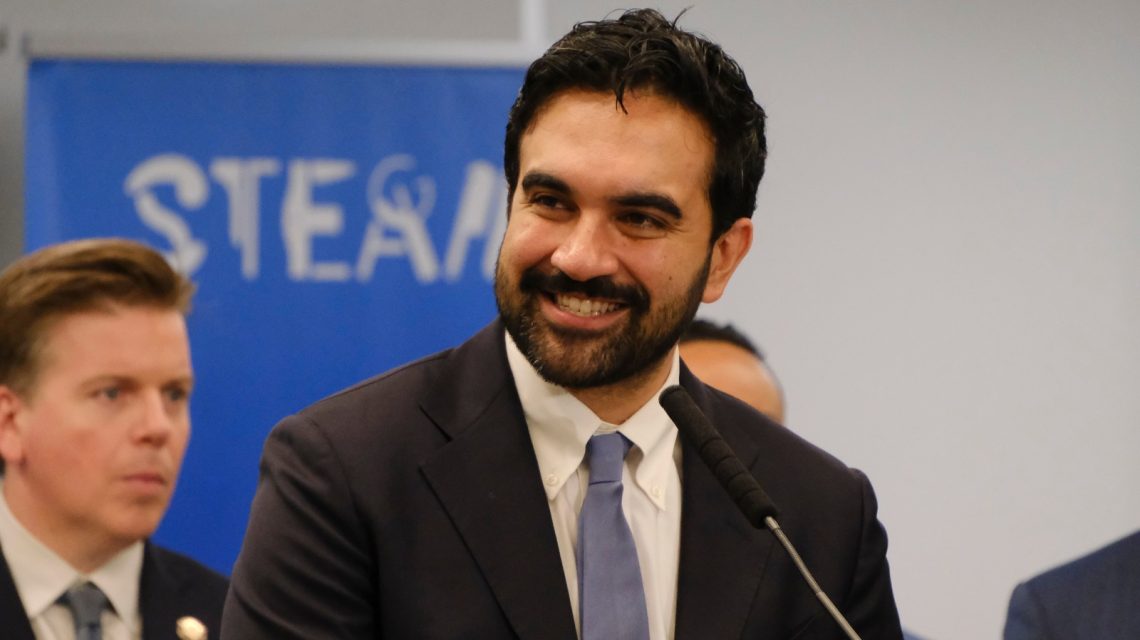
New York City Public Schools, the largest school district in the US, is instituting a one-year pause on student-facing generative artificial intelligence tools through eighth grade. This decision, one of the most stringent restrictions on AI in American classrooms, was announced by Mayor Zohran Mamdani and Schools Chancellor Kamar Samuels. They stated that the district would halt the use of these AI tools for younger students to assess their effects on learning and child development.
The moratorium will affect around 600,000 students and prohibits AI chatbots across all grades. Mayor Mamdani emphasized the importance of teacher-student interactions, saying, “Children need teachers and human connection to learn and grow. They need to develop skills alongside their peers, build relationships with educators, and tackle difficult problems independently.”
Chancellor Samuels added, “We’re implementing safeguards to preserve the human connection, curiosity, and creativity essential for children’s growth. Over the next year, we’ll ensure that technology supports learning rather than replaces it.” This stance highlights the ongoing debate among educators, parents, and policymakers over AI’s role in education.
AI Moratorium Details
The policy, which applies to students from pre-K through eighth grade, will commence with the 2026-27 school year. The Technology in Schools coalition, comprising students, educators, parent leaders, officials, advocates, union partners, and experts, will evaluate the policy’s impact. They will release a report outlining their findings.
The plan also features five limited AI pilot programs for high school students, utilizing tools like Quill for English, Edia for math, Brisk Teaching for instruction, and Playlab. Governor Kathy Hochul supported the move, asserting that New York State is committed to focusing on learning and growing rather than screen time.
Restrictive AI Policies in Other Districts
Beyond New York City, other districts have also implemented restrictive AI measures. Los Angeles Unified School District, the country’s second-largest, limits AI for students under 13, while Fairfax County, Virginia, bans AI in grades K-5. These measures align with growing concerns about technology’s impact on attention and learning.
Katy Independent School District in Texas also plans to restrict AI use for younger students in 2026. Regulations will require students to develop critical skills before using generative AI tools. Seventh graders may use such tools with supervision, while older students can utilize them for specific educational purposes.
Similarly, Fairfax County has approved AI restrictions, limiting use among elementary and secondary students. The policy reflects caution as more AI tools enter classrooms without comprehensive policies in place.
State-Level Responses
Some states are also enacting broad measures to regulate AI in education. Oklahoma’s Responsible Technology in Schools Act mandates districts to adopt AI policies, addressing approved uses, data protection, and transparency. In Idaho, legislation directs the education department to create a statewide AI framework, which will tackle privacy, integrity, transparency, and AI literacy issues.
Arguments for and Against Classroom AI
While many agree AI will continue to play a role in education and employment, opinions diverge on classroom usage. Advocates argue that AI can enhance skills, offer personalized help, and prepare students for AI-integrated careers.
Conversely, there are concerns about cognitive offloading, social-emotional development, and privacy. Meredith Coffey, of the Thomas B. Fordham Institute, highlighted these risks, advising caution with student-facing AI tools. Despite these concerns, the potential of educational tools using AI suggests a need for more thorough research and evidence.
 Nikole Hannah-Jones Reflects on Educational Choices for Her Daughter
  The Rising Trend of GLP-1 Medications Among College Students
  Seton Hall National Security Graduate Fellowship Provides Hands-On Experience
  California High School Coach Arrested Over Secret Recording in Locker Room
  Student’s Coffee Incident Sparks Policy Review in New York School
  Hillcrest High School’s Academic Success in 2026-27