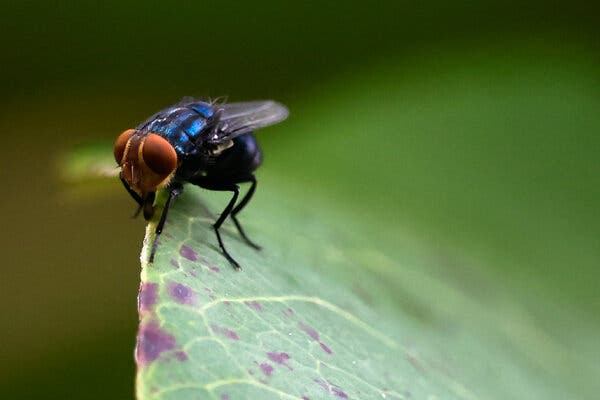
The New World screwworm, an insect whose larvae consume the tissue of livestock, wildlife, and pets, has surfaced in a 3-week-old calf in La Pryor, Texas. This is the first detection in U.S. cattle since its eradication in the 1960s, as confirmed by the Agriculture Department on Wednesday.
Brooke Rollins, the agriculture secretary, stated the department is acting immediately to contain and eradicate the screwworm in South Texas. A wider outbreak could severely impact the U.S. cattle industry, since untreated infections are fatal.
Although eradicated in North and Central America by the mid-2000s, the screwworm has gradually moved northward. It was first noticed near the Mexican-Guatemalan border in late 2024. Over 20,000 instances have since been identified in Mexico, prompting a ban on Mexican cattle imports to the U.S. for more than a year.
Screwworm flies do not infest crops, and the Agriculture Department assures that beef, poultry, and eggs remain safe for consumption under its Food Safety and Inspection Service.
A 20-kilometer infested zone around the infected calf’s location is under quarantine. Increased surveillance and animal movement restrictions are in place, with veterinarians and health officials actively involved.
Sterile New World screwworm flies are being released in the region, both by air and land. Sterilization hinders reproduction of the wild population and helps in eradication efforts. Currently, only a Panamanian facility produces about 100 million sterile flies weekly.
The U.S. Army Corps of Engineers is constructing a new $750 million production facility at Moore Air Base in Edinburg, Texas. When completed, it will start producing 100 million flies weekly by late 2027, with plans to scale up to 300 million.
 Tickborne Alpha-gal Syndrome Impacting Martha’s Vineyard
  Collapse of Holei Sea Arch on Hawaii’s Big Island
  Contentious Tax Incentives Spark Debate Over Iowa Steel Plant
  Evaluating the Choice of Electric Vehicles Amid Rising Fuel Costs
  New article title
  Drought Pushes Bears Closer to Human Habitats