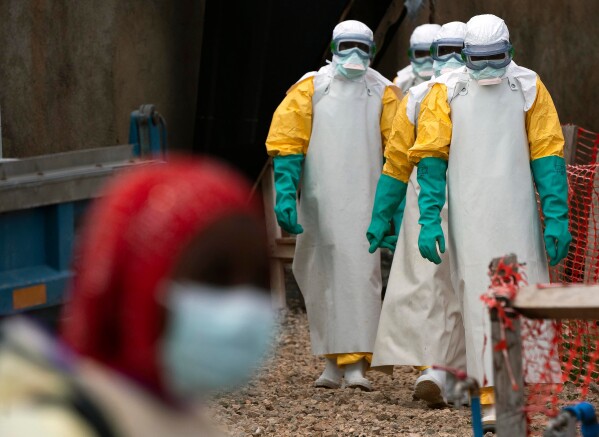
The World Health Organization has declared a new Ebola outbreak in the Central African country of Congo as a public health emergency of international concern. Health authorities in Congo have reported over 300 suspected cases, resulting in at least 88 deaths. This outbreak extends to neighboring Uganda.
Ebola is a severe and often fatal disease first identified in 1976, originating from outbreaks in present-day South Sudan and Congo. Major outbreaks have consistently been located in sub-Saharan Africa, where the viruses responsible are native. Large outbreaks have predominantly occurred in West and Central Africa.
Causes and Transmission of Ebola
Ebola disease results from a group of viruses, three of which—Ebola virus, Sudan virus, and Bundibugyo virus—are known to cause large outbreaks. The current outbreak in Congo is attributed to the Bundibugyo virus, which has previously caused only two outbreaks. Fruit bats are considered natural hosts for Ebola viruses, which can also infect animals like apes and monkeys. Human infection can occur through contact with infected animals or the body fluids of infected individuals.
Once contracted, the viruses spread between humans through contact with body fluids or contaminated surfaces. Symptoms typically emerge between two days and three weeks post-exposure, commonly beginning with flu-like signs such as fever, fatigue, and sore throat. Progression may include gastrointestinal issues, rashes, seizures, and bleeding.
The average fatality rate for Ebola stands around 50%, though past outbreaks have ranged between 25% and 90%. Currently, vaccines and treatments are available solely for the Ebola virus, not for the Bundibugyo strain.
Historical Context: Major Ebola Outbreaks
2013-2016: Deadliest Outbreak on Record
The worst recorded outbreak occurred in West Africa from 2013 to 2016. It saw over 28,000 cases and 11,000 deaths across Guinea, Liberia, and Sierra Leone, with further spread to neighboring countries. This epidemic began in southeastern Guinea after “patient zero”—a child—came into contact with infected fruit bats. A small number of cases were also reported in non-African countries.
2018-2020: Congo and Uganda
The second-largest outbreak followed in Congo’s North Kivu, South Kivu, and Ituri provinces, affecting neighboring Uganda. The fatality rate reached 66%, with more than 3,400 cases and over 2,200 deaths. The current outbreak also emerged in the Ituri region near Uganda’s border.
2007-2008: Bundibugyo Strain in Uganda
Uganda’s first reported Bundibugyo strain outbreak occurred in 2007 near the Congo border, with 131 cases and 42 deaths. The Bundibugyo virus has a lower fatality rate compared to other strains, but lacks specific treatments or vaccines.
1976: First Known Ebola Outbreaks
Ebola’s initial known appearance was in 1976 in Sudan and northern Congo (then Zaire), leading to 280 deaths. Scientists first identified the Ebola virus following an outbreak that started near the Ebola River. The Sudan virus was behind the outbreak in Sudan and led to 151 deaths. That same year, a British lab technician survived after accidental exposure outside Africa, marking a rare occurrence beyond the continent.
 Mindfulness: Manage Stress by Embracing the Present
  Missouri’s Abortion Policy: Conflicting Amendments and Voter Decisions
  The Impact of Extended Job Searches on Mental Health
  Philanthropic Shift Towards Supporting Women in Midlife
  Google Fined for Breaching EU Privacy Rules
  South China Sea Tensions Rise after Collision between Chinese and Philippine Ships