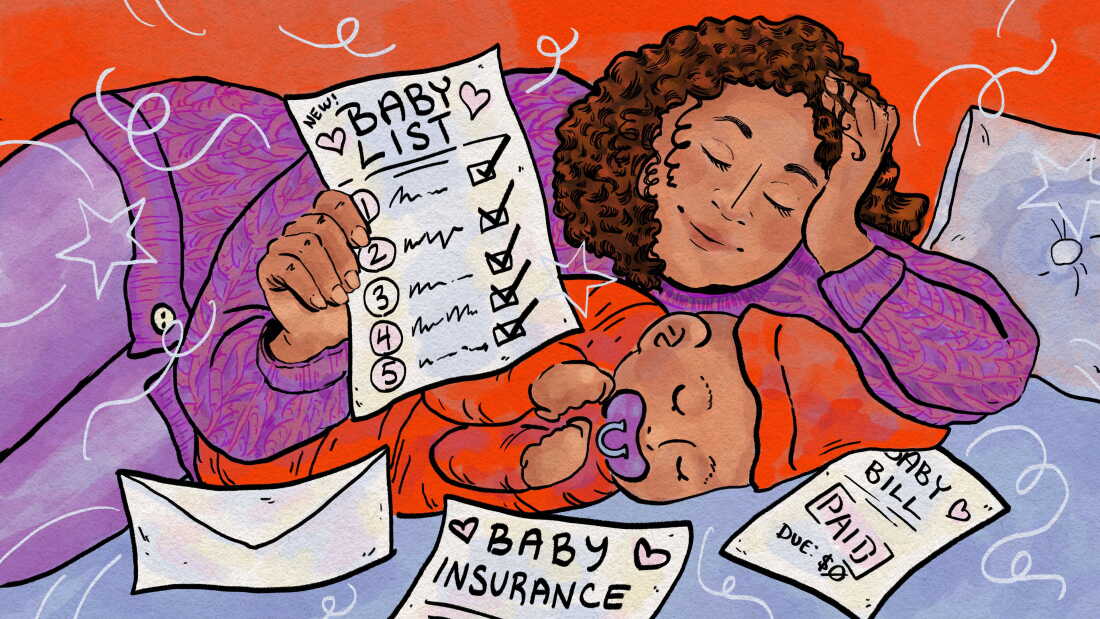
Grace and Daniel Griffin, a couple from Calumet, Michigan, were eagerly anticipating the arrival of their first child, a daughter. However, the joy of welcoming their baby was accompanied by financial concerns. Grace found herself sleepless, pondering whether they could afford to expand their family further.
At 26, both Grace and Daniel understood that their finances would be squeezed with a new baby. Thus, before trying to conceive, they diligently examined the costs associated with pregnancy. Grace explained their intention to save enough to pay medical bills promptly. She used a cost estimator linked to her UnitedHealthcare student plan, but it required medical billing codes she didn’t possess.
With the household limited to one income, they had to create a realistic budget. Grace checked her health plan website for estimated out-of-pocket expenses, which suggested around $2,700 for a routine pregnancy and delivery. This seemed manageable, so they planned to save that amount. However, the actual costs were much higher than anticipated.
“When I started getting lab work is when we started realizing expenses would add up quickly,” Grace recalled.
Early on, Grace reached her $500 deductible, meaning she had to pay this amount before insurance covered any costs. The plan also demanded a 20% coinsurance for in-network care, translating to $20 out of every $100 billed. Regular blood tests incurred significant costs, adding to their financial strain.
After a typical pregnancy and delivery in June, the Griffins were shocked by an explanation of benefits notice. The hospital charged about $18,000 for the delivery, with the family responsible for a considerable portion. By October, their out-of-pocket expenses had exceeded $9,000, far surpassing the insurer’s general estimate.
Sabrina Corlette, a research professor at Georgetown University’s Center on Health Insurance Reforms, explained ongoing federal efforts to improve cost transparency. The 2020 No Surprises Act required insurers to provide individualized cost estimates for scheduled care, but this has yet to be enforced.
A pending change, effective January 2027, will replace old maternity billing codes with more detailed ones, facilitating better cost understanding for specific services. However, Corlette remains uncertain about this change’s impact on patient budgeting.
Tips for Managing Pregnancy Costs:
1. Enroll Your Baby Promptly
After birth, enroll your newborn in a health plan quickly. Birth qualifies as a special enrollment period, allowing immediate sign-up outside annual open-enrollment periods. Employer plans typically provide 30 days, while marketplace plans offer 60 days for enrollment. Missing these deadlines leaves the baby uninsured until the next enrollment cycle.
2. Understand Important Financial Terms
Knowing financial terms like deductible, copayments, and coinsurance is essential. The maximum out-of-pocket (MOOP) limit is critical; it’s the highest amount you’ll pay annually for covered services. Under the Affordable Care Act, MOOP is capped at $10,600 for individuals and $21,200 for families in 2026.
3. Choose In-Network Providers
Select in-network providers to avoid unexpected expenses. Verify that all members of your care team, including hospitals and labs, are in-network. The law protects patients from unexpected out-of-network bills if they receive care at in-network facilities.
4. Review Bills Carefully
The Affordable Care Act mandates certain prenatal services, such as prenatal visits and folic acid, be covered without extra cost. Incorrect billing can occur, so examine all bills and consider appealing any erroneous charges.
5. Seek Financial Assistance
Many hospitals have financial assistance programs. Discuss possible reduction or payment plans with them. Ensure all agreements are documented to prevent collection issues. Additionally, explore eligibility for assistance programs like Michigan’s Rx Kids program, which supported Grace’s family with funds during pregnancy and the baby’s early months.
 Ebola Case Confirmed in Nigeria Amid Regional Outbreak
 Struggle for Self-Directed Home Care in Canada
 Trump Administration’s Kidney Care National Plan
 ADHD and Increased Risk of Early Death
 Brighten Your Smile: Crest 3D Whitestrips on Sale
 Ebola Case in Nigeria Highlights Challenges in Regional Response