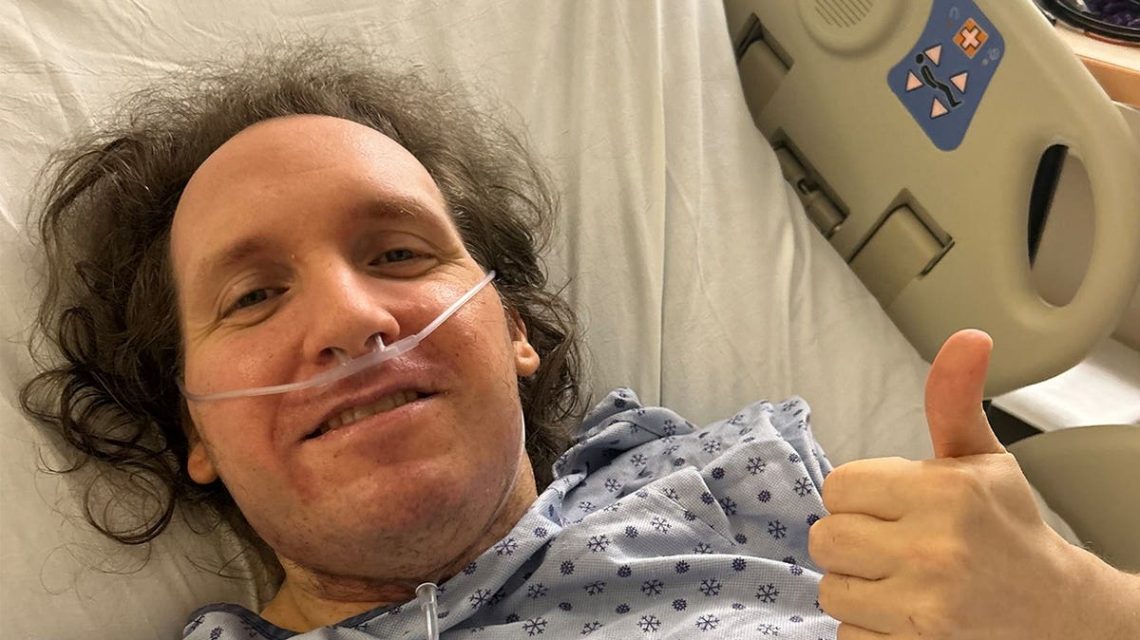
Roger Foley, a Canadian resident with a severe neurological illness, has publicly shared his struggle to secure adequate home care. Foley, diagnosed with spinocerebellar ataxia, has been hospitalized for several years at Victoria Hospital, part of the London Health Sciences Centre in Ontario. Despite his medical stability, he remains in the hospital due to the lack of suitable home care options.
Foley’s attending physician, Dr. George K. Dresser, has indicated that Foley could leave the hospital if the Ontario government authorizes a personalized home-care arrangement. In a letter from July 2026, Dresser stated that Foley’s complex needs cannot be fulfilled by the current community programs.
“By any reasonable clinical standard, you could be discharged from our hospital if you had adequate support at home,” wrote Dr. George K. Dresser.
Foley has criticized the hospital’s standard care model, emphasizing the need for consistent caregivers and individualized assistance. He alleged that throughout his fight for home care, hospital staff repeatedly raised the possibility of medically assisted death, which he has firmly opposed.
Reportedly, Foley faced pressure during a disputed discharge process in 2017, including threats of incurring significant hospital charges if he refused offered care arrangements. Foley has continued to advocate for self-directed funding, which he believes would allow him to manage his caregivers and receive more suitable care.
Foley has also encountered difficulties related to the removal of specific lighting accommodations crucial for his condition. The withdrawal of amber-spectrum lighting in May 2025 has forced him to rely on protective goggles, complicating routine activities such as eating and drinking.
Undeterred, Foley remains hopeful about acquiring the necessary support to return home, where he maintains an accessible apartment equipped for his mobility needs. His ultimate aim is to secure funds to hire personal support workers and leave the hospital.
Foley’s experience has highlighted flaws in Canada’s Medical Assistance in Dying (MAID) program, arguing that without proper community care alternatives, the system fails to safeguard patients adequately.
Despite his challenges, Foley encourages others with disabilities not to lose hope and to continue believing in themselves. His advocacy work through the “Bring Roger Home” campaign seeks both to secure his own return home and to help others in similar situations.
 Gen Z Turns to Spiritual Practices in Modern Dating
 Whistleblower Reacts to Elizabeth Holmes Documentary
 Trump Establishes Women’s Health Division and Task Force
 The Emergence of Cychlorphine: A New Synthetic Opioid Crisis
 Infections Linked to 1 in 8 Cancer Cases Globally, Study Finds
 Cancer Concerns Rise Among Iowa Voters Due to Environmental Factors