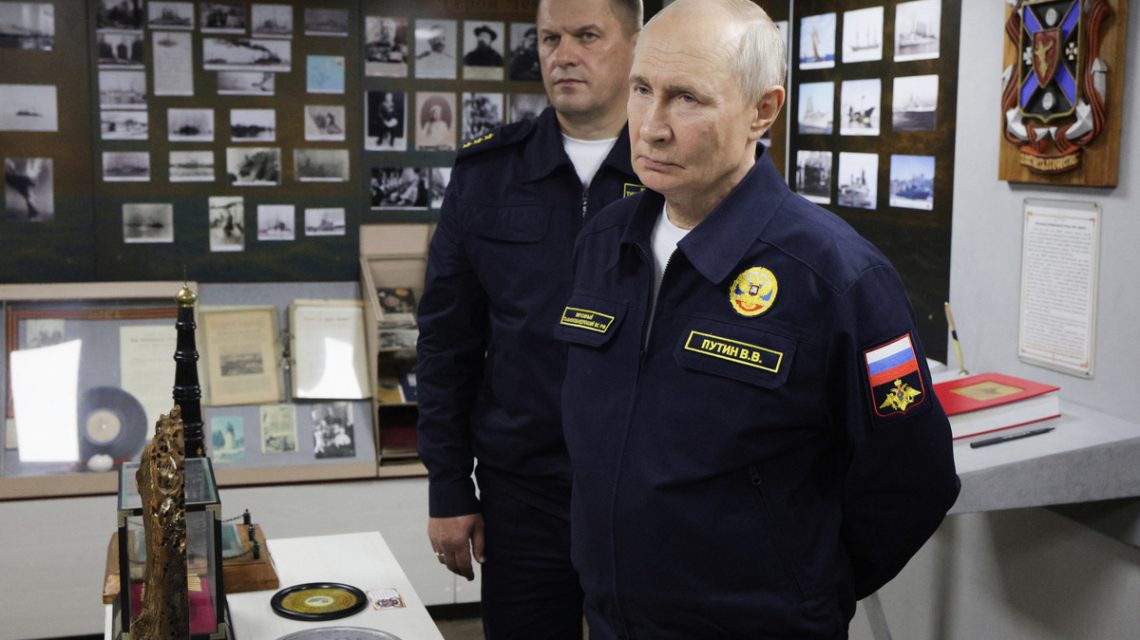
Russian President Vladimir Putin expressed concerns about NATO’s plans to deploy new weapons in the Pacific region, stating it poses a threat to Russia. As he noted, the potential for conflict appears to be rising with NATO’s increasing presence.
While specific weapon systems mentioned by Putin remain unspecified, the focus of the United States, a key NATO member, is shifting toward the Indo-Pacific area. This is in response to China’s expanding military capabilities.
In late March, the U.S. stationed advanced F-35 fighter jets permanently in northern Japan, marking a significant military move. These jets can deploy sophisticated U.S. weapons systems. In May, a long-range missile was test-fired from the Typhon system in the Philippines. Known as the Mid-Range Capability, this system can launch Tomahawk cruise missiles with a range of approximately 1,000 miles, alongside shorter-range SM-6 missiles.
NATO countries have increased military presence, sending ships, planes, and troops for rotations in the Pacific throughout the year. Italy joined in by deploying an air defense ship to the region in early May. Collaborative exercises between thirty nations, including NATO members, and the U.S. Pacific Fleet lasted until July.
Despite past tension under President Donald Trump’s administration, where U.S. allies faced uncertain relations, North Korea’s advancing nuclear and missile programs, along with strengthened ties to Russia, have prompted nations like Japan and South Korea to boost military budgets while maintaining U.S. alliances.
Putin highlighted the deployment of new weapon systems in the region, claiming they pose a threat to Russia. In response, a NATO spokesperson emphasized the alliance’s defensive nature, insisting it offers no threat to Russia.
Putin’s comments came during observation of Russia’s Pacific Fleet drills near Yuzhno-Sakhalinsk, Sakhalin Island’s largest city, just north of Japan. Reports have surfaced about Russia enhancing anti-drone defenses at Rybachiy submarine base, the primary hub for its Pacific Fleet located on Kamchatka Peninsula.
Satellite imagery showed two submarines at Rybachiy draped with anti-drone nets since May, signaling Russia’s concerns over potential threats to its high-value submarine assets.
The base houses many of Russia’s nuclear submarines, capable of nuclear-armed missile launches. With the fleet stationed approximately 4,600 miles from Ukraine, it’s improbable for Kyiv to replicate drone tactics used against Russia’s Black Sea Fleet.
Ukraine’s strategy included remotely detonating drones near Russian airfields, claiming damage to over 41 Russian aircraft. President Volodymyr Zelensky reported a recent drone attack on Novorossiysk naval base, involving Neptune long-range cruise missiles.
Novorossiysk, located over 180 miles from Ukraine’s front lines, serves as the last major Black Sea Fleet bastion. Due to repeated Ukrainian strikes on Sevastopol in Crimea, Russia began relocating ships to Novorossiysk.
Since Russia’s annexation of Crimea in 2014, Ukraine vowed to reclaim the region. Satellite imagery from March 2024, released by the British Defense Ministry, allegedly showed a Kilo-class submarine at Novorossiysk with a decoy silhouette to thwart Ukrainian attacks.
 Tucker Carlson’s Remarks on Britain and WWII Spark Backlash
 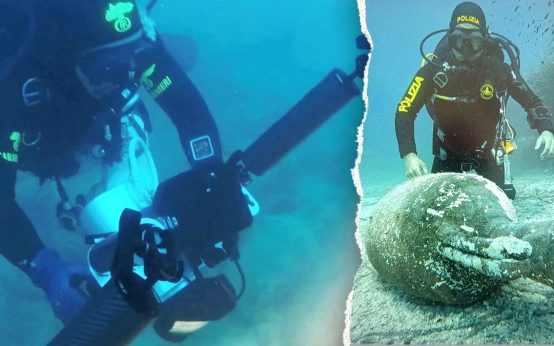 Police Divers Uncover Ancient Roman Artifacts in Sardinia Waters
  Conservative Activist Urges AI Safety Measures
  G7 Nations to Release 100 Million Barrels of Oil Amid Fuel Price Surge
  Attempted Hijacking on FlyDubai Flight to Tel Aviv
 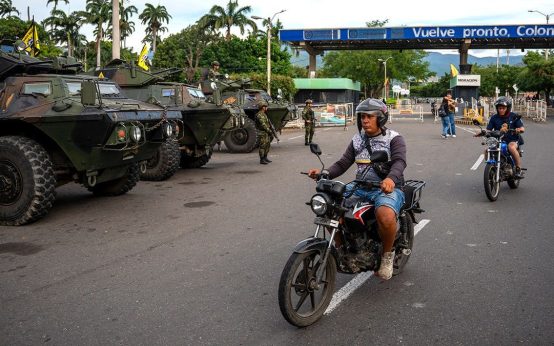 U.S. Officials Warn Against Travel to Colombia’s Norte de Santander