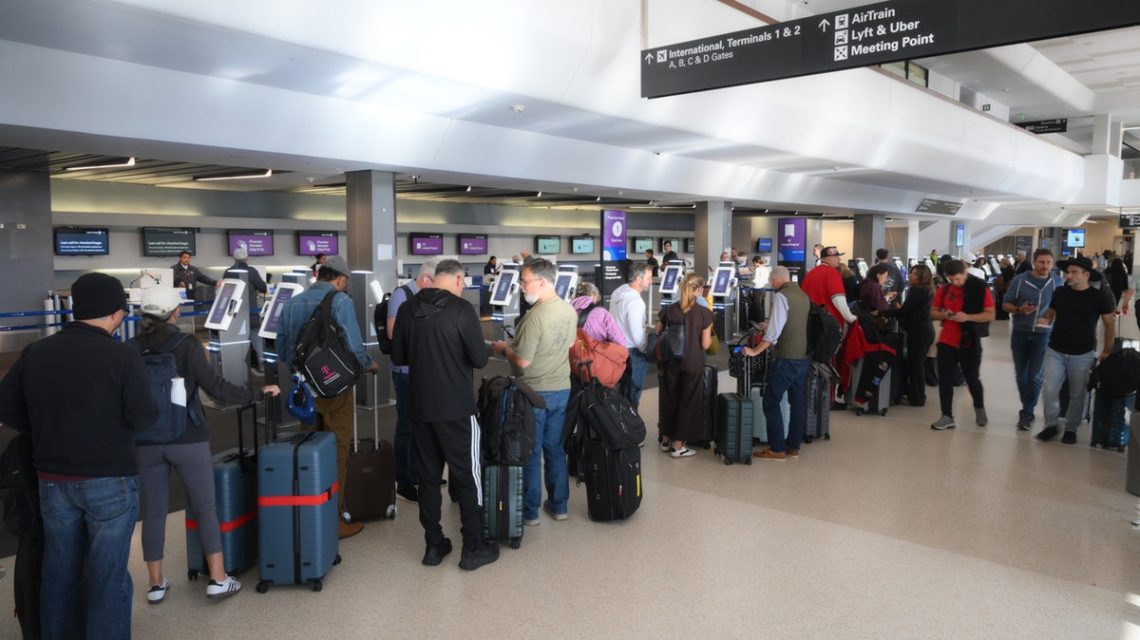
On Friday, a communication issue halted departures nationwide, causing delays for travelers and sports teams. This was the longest nationwide ground stop in 25 years and lasted more than four hours. The fallout continued through the weekend as airlines dealt with cancellations and investigators looked into the causes of the outage.
Timeline of Events
All times are Eastern:
Friday Afternoon, Nov. 13
At 3:36 p.m., officials detected instability in radar data and communications. This affected facilities that guide planes approaching airports and traveling between them. The FAA halted departures at 3:54 p.m., leaving around 3,500 flights in the air. Transportation Secretary Sean Duffy stressed that not all radar feeds or telecommunications were lost, but the inconsistent information warranted the shutdown for safety.
“A communication issue impacted all Air Route Traffic Control Centers,” Duffy said.
Technicians investigated whether the issue involved malicious activity. President Trump coordinated a response with intelligence officials, the FBI, and the Cybersecurity and Infrastructure Security Agency. Intelligence suggested it was not a cyberattack.
Friday Evening
The aviation halt disrupted sports teams’ travel plans, including college football games scheduled for Saturday. Teams like Texas, Tennessee, and others faced challenges reaching their destinations. Professional teams, including the Brooklyn Nets and Cleveland Cavaliers, experienced similar disruptions.
Friday, 8:15 p.m.
The FAA lifted the ground stop at 8:15 p.m., but normal operations resumed slowly. Airlines needed crews in position, which led to delays continuing late into the night. Passengers at Reagan National Airport and others faced long waits.
Late Friday into Saturday
College football games were rescheduled as some teams struggled with travel logistics. For instance, the Ole Miss-Oklahoma game was moved to Sunday due to the delays.
Investigation and Recovery
Saturday, Nov. 14
Officials highlighted that maintenance work replaced aging copper lines with fiber-optic connections. A malfunctioning router caused connection attempts that overwhelmed systems. Investigators evaluated if the failure resulted from installation errors or faulty equipment.
FAA Administrator Bryan Bedford assured recovery by Sunday. However, flights faced ongoing disruptions as airlines repositioned aircraft and crews. Officials advised checking directly with airlines for flight information.
Sunday, Nov. 15
Duffy updated that air travel would likely normalize by Monday. Investigators tested routers involved in the malfunction. Duffy sought additional funding from Congress for upgrades, indicating the current allocation did not cover telecommunications needs.
By 2 p.m. Sunday, many flights remained delayed or canceled. United CEO Scott Kirby urged action to modernize the Air Traffic Control system, emphasizing its impact on safety and the economy.
Massive efforts to restore normalcy showcased the complexity and challenges in managing nationwide air travel.
 Concerns Over Cybersecurity in America’s Infrastructure
 California Man Convicted for Sparking Devastating Fire
 Man Found Guilty for Pacific Palisades Wildfire
 Trump Criticizes Nobel Prize Exclusion Amid Claims of Conflict Resolution
 7 Live Developing Stories: News and Updates
 New York City Plans to Close Rikers Island Jail