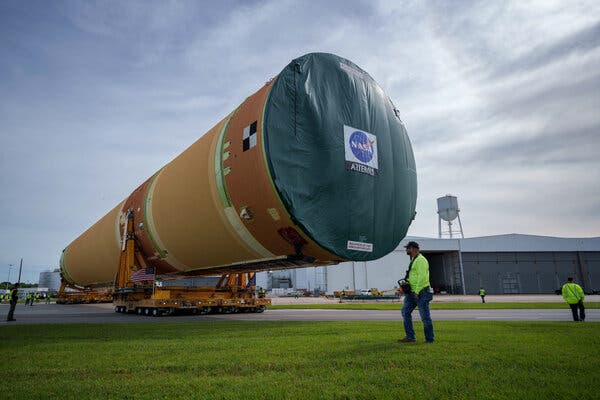
NASA aims to return humans to the moon, setting the stage for long-term exploration. Artemis III, the third mission in the series, is designed to bring this goal closer.
In April, Artemis II completed a 10-day journey around the moon’s far side. Artemis III will focus on earth-orbit operations instead. The mission’s primary objective is to test the Orion spacecraft’s capability to connect with lunar landers, crucial for future lunar landings.
These operational tests are essential. They enable NASA to refine procedures necessary for a lunar landing. During such a landing, astronauts move from Orion to a docked lunar lander, then proceed to the moon’s surface.
SpaceX and Blue Origin are developing the landers for Artemis missions. NASA considers utilizing both for Artemis III, enhancing reliability and versatility.
Initially set for 2028, the timeline for Artemis III has been updated to mid-2027. This adjustment prioritizes tests in low-Earth orbit, reducing complexity and risks.
Frequent launches with NASA’s Space Launch System and Orion are beneficial. They offer opportunities to identify and resolve technical issues.
Several aspects of Artemis III remain uncertain, such as mission duration and the possibility of lunar lander operations. NASA plans to address these during the crew announcement.
Science reporter Katrina Miller contributes insights from NASA’s Johnson Space Center. She holds a physics Ph.D. from the University of Chicago.