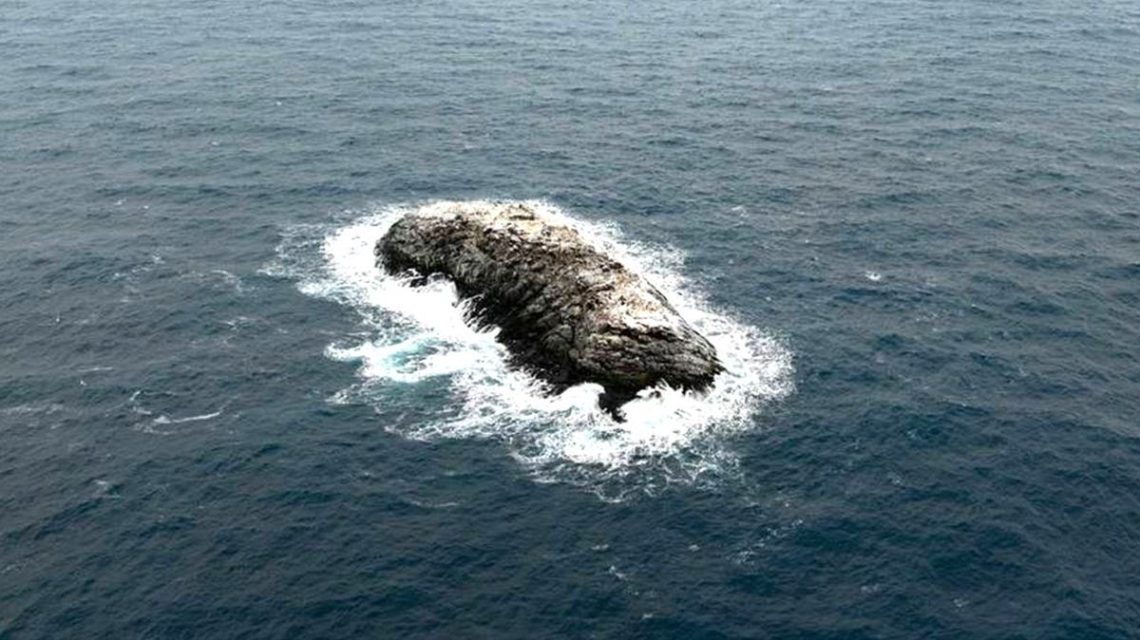
Researchers have redefined what was long thought to be a dangerous area in Antarctica, now discovering it to be an island. This discovery, made by the Alfred Wegener Institute (AWI) in April, marks a significant update to the geographical understanding of the region.
The Expedition’s Discovery
The island, found in the northwestern Weddell Sea, was identified during a journey on the AWI’s icebreaker ship, Polarstern. Initially, the team was investigating the reduction in sea ice when they were met with unfavorable weather. They took refuge on Joinville Island, where they first noticed what they later identified as the island.
We realized that a ‘dirty iceberg’ was actually rock,said Simon Dreutter, a bathymetry data engineer at the institute.
Upon realizing the iceberg’s true nature, the team used drone imaging and echo sounding technology for a detailed survey. The island measures roughly 426 feet long by 164 feet wide and stands over 50 feet above sea level.
Mapping and Naming the Island
The discovery marks the first comprehensive survey and documentation of the island. Despite its proximity to other icebergs, it is uniquely identified through advanced imaging techniques. The island’s unknown status previously labeled it a danger zone. This may relate to the presence of uncharted seafloor features that change depth rapidly.
An AWI representative noted that most current maps are derived from low-resolution satellite data, leading to incomplete maritime charts. The Scientific Committee on Antarctic Research (SCAR) will receive a proposal to officially name the island.
Uncharted Waters and Further Exploration
While exploration might seem outdated, less than a quarter of the Weddell Sea has been fully mapped. Many areas, especially near the shore, remain charted only in parts, potentially hiding other unknown features. This discovery highlights the ongoing need for detailed surveying to fully understand such remote regions.
 Fire Amoeba Discovery Challenges Limits of Complex Organisms
  Impact of Sleep Types on Disease Risk
  Ice Age Mastodon Tooth Unearthed in California Creek
  The Unique Challenges of the Pumpkin Toadlet
  Animal Self-Medication Insights
  Carlo Rovelli’s Perspective on Physics and Ultimate Reality