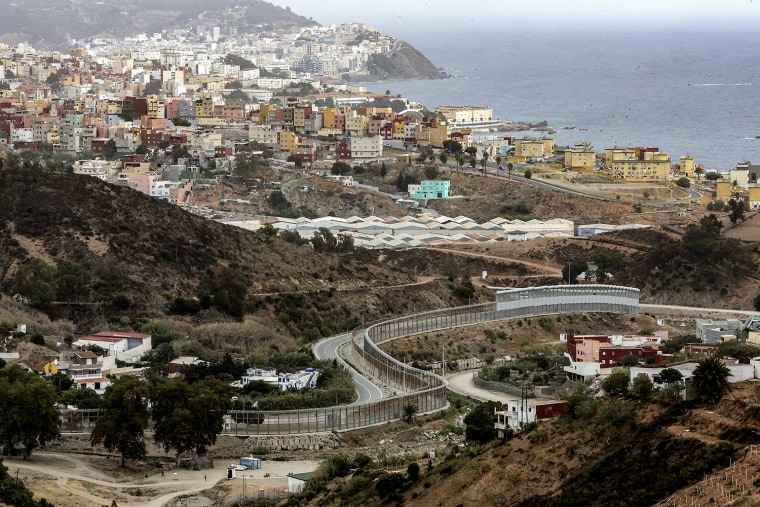
On July 30 and 31, tens of thousands of migrants crossed from Morocco into Ceuta, a Spanish territory in North Africa. This unexpected event overwhelmed local authorities and infrastructure. It was the first challenge for the European Union’s new Pact on Migration and Asylum. The scale and speed of the crossing revealed weakness in Europe’s migration system. The quick retaking of control sparked debate on whether the EU system is failing or functioning as intended.
Washington and European capitals criticized the surge. The U.S. State Department blamed Spain for facilitating mass illegal migration into Europe. Denmark and Italy led a similar criticism within the EU. They, along with 22 member states, called for coordinated EU border measures. They accused Spain of implementing policies that attract undocumented migrants. Throughout Europe, far-right parties used the crisis to criticize Spain and EU migration policy.
Charles A. Kupchan, a European affairs expert at CFR, noted that the surge surprised many because EU migration typically sees smaller numbers. “This rush of people, all within 48 hours, is quite unusual,” he said. Most migrants have since returned to Morocco, but the incident reignited debate over European migration policy.
What Happened in Ceuta?
According to Spain’s interior minister, about 72,000 migrants crossed into Ceuta from Morocco in a matter of days. Other reports suggest numbers between 50,000 and 60,000. Most migrants reached Ceuta by sea, using improvised flotation devices. Tragically, over 80 people died, either by drowning or in stampedes.
Ceuta has a population of 84,000 and is a known migration hotspot. Alongside Melilla, it is one of two Spanish cities on Africa’s northern coast. While both cities have experienced migration waves, the size of this event was unprecedented. The last significant surge was in 2021 when 12,000 people crossed into Ceuta over two days.
What Caused the Surge?
Experts cite multiple reasons for the surge. A recent Spanish Supreme Court ruling stated that migrants who arrive in Ceuta or Melilla by sea cannot be summarily returned. They must be placed into Spain’s regular deportation proceedings. Misinformation about this decision spread online, leading thousands to attempt the journey. Many believed reaching the cities would prevent deportation.
CFR migration expert Rita Fernández pointed out that online rumors, not smuggling networks, mainly drove the crossing. This misinformation has similarly spread in the Western Hemisphere. Critics also blame Spain’s progressive policies under Prime Minister Pedro Sánchez. In April 2026, his government launched a regularization program allowing undocumented migrants to apply for residency and work permits. Over 1 million applied before the window closed in June.
Most EU member states are tightening immigration; Spain stands out with more liberal policies. Kupchan notes this difference in Spain’s approach to migration.
Spain’s Response
Spain deployed armed forces and police to Ceuta, confronting migrants with water cannons and tear gas before escorting them back. Ceuta’s leader declared a humanitarian and security emergency. The city’s migrant reception center, already crowded, struggled to accommodate the influx.
Sánchez visited Ceuta on July 31, describing the migrant surge as a violation of Spain’s territorial sovereignty. He defended Spain’s migration policy and blamed smugglers for misinterpreting the court ruling. Post-crisis, Spain built a 1640-foot sea barrier off Ceuta’s coast to deter future crossings.
About 1,100 unaccompanied minors remain in Ceuta, even after the mass return to Morocco. The Spanish government allocated $29 million to support these minors, many of whom found temporary shelter in warehouses or slept on the streets.
Implications for Europe’s Migration Policy
The Ceuta incident was the first substantial test of the EU’s Pact on Migration and Asylum. Some member states favored unilateral Schengen suspensions over using the pact’s mechanisms. “More time is needed to build trust in the new system,” Fernández said. Irregular migration has become a contentious topic in European politics, exacerbated by sudden influxes like the one in Ceuta.
In response, 22 EU member states issued a joint letter calling for a coordinated response. Italy suspended its Schengen policy with Spain, strengthening border patrols. France increased police presence on its Spanish border, and Portugal tightened control over its southern borders.
The EU held an emergency meeting on August 4 to address the situation. Officials discussed improving shared awareness and developing early warning systems and social media monitoring. EU migration chief Magnus Brunner expressed solidarity with Spain and criticized attempts to politicize illegal migration debates.
In the initial months of 2026, Frontex reported a 40% decrease in irregular EU border crossings compared to 2025. Kupchan viewed the Ceuta situation as a temporary breach. Spain’s quick response, including swift migrant removal, indicates the system’s effectiveness. “While improvements in border control are needed, this was not a crisis event,” he concluded.
 ABC News Faces Backlash Over Trump Family Report
  Pope Leo XIV Undergoes Lung Surgery
  U.S. Missile Developments and Hypersonic Weapons
  Illegal Immigrant Couple Accused of Jewelry Theft Spree Across Four States
  President Trump Shares Graphic Video on Social Media
  Senators Urge President Trump to Cancel Russian Diesel Agreement